Home Blog Page 9

4 Actions HR Leaders Can Take to Harness the Potential of AI

0
4 Actions HR Leaders Can Take to Harness the Potential of AI

Even as AI becomes more pervasive in business, people are still a core competitive advantage. But business leaders are facing a host of talent-related challenges, from the skills gap to shifting employee expectations to the need for new operating models, a global study from the IBM Institute for Business Value (IBV) reveals.

The global skills gap is real and growing. Surveyed executives estimate 40% of their workforce will need to reskill over the next three years as a result of implementing AI and automation. That could translate to 1.4 billion of the 3.4 billion people in the global workforce, according to World Bank statistics. Respondents also report that building new skills for existing employees is a top talent issue.

AI could open up more opportunities for employees by enhancing their capabilities. In fact, 87% of the executives surveyed believe generative AI is more likely to augment employees than replace them. That varies across functions—97% of those executives think generative AI is more likely to augment than replace employees in procurement, compared with 93% for employees in risk and compliance, 93% for finance, 77% for customer service, and 73% for marketing.

Employees care more about doing meaningful work than about flexibility and growth opportunities, but leaders aren’t always in lockstep with their needs. With AI primed to take on more manual and repetitive tasks, surveyed employees report engaging in impactful work is the top factor they care about beyond compensation and job security—more important than flexible work arrangements, growth opportunities, and equity. Nearly half of surveyed employees believe the work they do is far more important than whom they work for or with.

However, employers seem to have missed the memo about what matters. Surveyed executives said doing impactful work was the least important factor to their employees, and that having flexible work arrangements was the most important, beyond compensation and job security.

The world of work has changed from even six months ago. Leaders are starting to believe that the enterprise of tomorrow may not run as before—and tomorrow’s talent cannot rely on yesterday’s ways of working.

Human resources (HR) leaders can play a critical role in how organizations adapt to the changes driven by generative AI. These leaders can help navigate these challenges, redesigning work and operating models to shepherd their organizations into the future.

Here are four actions for HR leaders to take.

Redesign the work, starting with the operating model. Automating bad processes won’t make them better. Rather than automating legacy activities, i.e., old processes that may be repetitive, manual, or simply outdated, look for a better way forward.

Process mining can analyze how work is done and where bottlenecks or other inefficiencies exist. From there, you can rethink and reengineer how work gets done, identifying where to apply AI or automation for repetitive or highly manual tasks to free up employee time and brainpower for higher-value tasks.

IBM’s HR team reexamined the highly manual and data-intensive quarterly promotions process, applying a custom watsonx Orchestrate solution to automate data gathering, which empowered human staff to devote more time and energy to high-value tasks.

Invest in talent as much as technology, preparing the workforce for AI and other technology disruption. This is a pivotal moment for HR leaders to help define their organization’s transformation strategy and how their people will use AI to deliver it.

HR leaders will drive workforce planning, design, and strategy by defining higher-value work, identifying the critical roles and skills of the future, and managing hiring, shifting people into new roles, retention, and more. These shifts in workforce planning, design, and strategy can include identifying and eliminating repetitive tasks that can be handled by AI. They can also include reviewing and changing roles to merge them or create new ones, and expanding existing roles to include tasks like applying or managing AI tools. With AI, HR leaders can create targeted skill development for the higher-level tasks driven by people.

Put skills at the center of workforce strategy—for today and for tomorrow. Leaders should be thinking about how to increase the overall technical acumen of the workforce. That can serve as a broad foundation for employees to build new skills, such as how to work creatively and responsibly with AI.

That doesn’t mean every employee will have to learn how to code, but most will need to familiarize themselves with new AI solutions. And it’s very important for all employees to have a basic understanding of AI and its capabilities so they can be both critical thinkers and users of the technology. Everyone should be empowered to ask questions about a model’s training data, how it made its predictions, its potential risks, and more.

Technology can help employees develop their skills and careers, too. Interactive career roadmaps with dynamic prompts can help employees see what’s expected for them to progress. At Delta Airlines, IBM Consulting implemented a skills foundation and a talent platform that enabled their IT workforce to upskill into critical new technologies.

The future pipeline of talent is an important consideration, too. The global AI skills gap is an urgent need industry-wide, and closing this gap will require strategic investments.

Give jobs more meaning by putting the employee in the driver’s seat. AI has the potential to transform the employee experience. It could automate repetitive tasks, letting people focus on what they are passionate about; free up their time for skills development or work-life balance; and create exciting new job roles and career paths.

It’s important to engage employees in this process. Give teams a forum to recommend tasks that could be automated to make their jobs easier and more fulfilling, using digital channels for a continuous and open feedback loop. This kind of openness to feedback and company-wide growth mindset can also help your organization develop its next generation of leaders. Cultivate an environment that encourages leaders at all levels to bring new ideas and creatively apply technology within their roles.

We’re at a pivotal point in the world of work. HR leaders have a massive opportunity in front of them, but there are risks as well. As businesses further embrace AI, successful change will only come if organizations—by way of HR leaders—prioritize a new approach to talent and operating models that puts people and technology together to boost productivity and drive business value.


Keep your business at the forefront of AI innovation by subscribing to email updates about AI advancements, strategies, how-tos, expert perspectives, and new AI Academy insights.

 

How Meta, Youtube, X plan to preserve election integrity in 2024

0
How Meta, Youtube, X plan to preserve election integrity in 2024

In late September 2020, a series of photos started spreading on Twitter, showing what looked like at least 1,000 mail-in ballots sitting in dumpsters in Sonoma County, California. The photos, which were being interpreted online as clear evidence of election fraud, caught the attention of misinformation researchers at the University of Washington, who quickly put in a call to Sonoma County election officials. 

The photos, they found out, actually showed empty mail-in ballots from 2018, which were being disposed of in accordance with state law. In fact, the state of California had yet to even distribute mail-in ballots for the 2020 election. Sonoma County corrected the record hours later, and the researchers, who were part of an academic coalition called the Election Integrity Partnership, shared the news with tech platforms, which then removed the original tweet. 

For Kate Starbird, one of the leaders of the Partnership and co-founder of the University of Washington’s Center for an Informed Public, that incident is just one of many that illustrates how important it is for tech platforms, researchers, and government officials to keep lines of communication open during elections that are increasingly clouded by online misinformation. And yet, three years later, Starbird says, “It’s an open question going into 2024 if [election officials] are going to pick up the phone.” 

Since the 2020 race, the landscape for election integrity work has changed dramatically. Over the last year, researchers doing this work — including most notably Starbird and a group of Stanford researchers who were also part of the Election Integrity Partnership — have been pummeled with subpoenas and public records requests, sued for allegedly conspiring with the government to censor people, and accused by House Republicans of being the masterminds behind the so-called “censorship industrial complex.” 

At the same time, courts are questioning whether government agencies can pressure social media companies to remove misinformation without violating the First Amendment; the Supreme Court will soon take up the issue, but a lower court’s ruling in that case has already put a chill on collaboration between platforms and government officials. Tech companies, meanwhile, have undergone massive changes of their own, culling the ranks of trust and safety workers and walking back safeguards at a time when generative AI is making the mass dissemination of misleading text, audio, and imagery easier than ever. 

All of it has pushed people who fight online misinformation for a living into uncharted territory. “There’s no playbook that seems to be up to the challenge of the new moment,” Starbird says. So, as the 2024 election cycle gets underway, she and others in the space are hard at work writing a new one.

One clear difference between the last presidential election’s playbook and the next one is that researchers will likely do far less rapid response reporting directly to tech companies, as it becomes increasingly politically untenable. Just this month, the House Select Subcommittee on the Weaponization of the Federal Government published hundreds of examples of reports that Stanford researchers made to tech platforms in 2020, citing them as evidence of the researchers’ alleged efforts to censor Americans at the behest of the U.S. government. “The federal government, disinformation ‘experts’ at universities, Big Tech, and others worked together through the Election Integrity Partnership to monitor & censor Americans’ speech,” Rep. Jim Jordan, who chairs the committee, wrote on X.

But the challenge isn’t just a political one; this kind of monitoring is also more technically difficult now than it was three years ago. A big reason for that is the fact that both Twitter and Reddit have hiked prices on their APIs, effectively cutting off access to tools that once offered a real-time view on breaking news. “Twitter has often been the bellwether for problems. You see this stuff starting to spread on Twitter, and then you can track how it flows on the other platforms,” says Rebekah Tromble, director of the Institute for Data, Democracy and Politics at George Washington University and co-founder of the Coalition for Independent Technology Research. “We’re just in a world right now where it’s incredibly difficult, if not impossible in many instances, to do the sort of monitoring the researchers used to do.”

Starbird, for one, says she believes direct reporting to tech companies was never the most important part of her job, anyway. “I always thought the platforms should be doing their own work,” she says. She also says that the crux of her work — identifying viral rumors and tracing their spread — isn’t changing in 2024. What is changing, though, in 2024 is how she’ll share that information, which will likely happen on public feeds rather than in backchannels with tech companies and election officials. And yet, she notes, that doing this kind of work publicly can also slow it down. “We have to be so careful and parse every word,” she says. 

It’s not just collaboration with tech companies that will need to change in 2024. It’s also the way researchers share information with election officials. An injunction ordered by a federal judge in Louisiana this summer temporarily blocked federal officials from working with social media companies on issues related to “protected speech.” While the Supreme Court has lifted the restrictions and will soon take up the underlying case, the uncertainty surrounding the case has inhibited communication between government officials and outside experts. 

This, too, has prompted some election officials to come up with new approaches, says Jocelyn Benson, secretary of state of Michigan. “There have been deterrents to collaboration, but at the same time there’s been more incentive for collaboration than ever before,” she said on stage at the Aspen Institute’s Cyber Summit last week, in response to a question from Fast Company. One example of this, she noted, is a collaboration among six battleground states, as well as local government officials. 

Academics and government officials aren’t the only ones shifting strategy. Jesse Lehrich, co-founder of the advocacy group Accountable Tech, says the last year has also required his organization to “adapt to the realities of the moment.” While in the past, Accountable Tech has been a particularly pugnacious critic of major tech platforms’ decisions regarding specific posts or people — going so far as to run television ads urging Meta to “keep Trump off Facebook” — now, Lehrich says, “We’re really trying to figure out ways to avoid the political and partisan landmines.” 

To that end, Accountable Tech recently convened a coalition of nine other civil society groups to come up with what they call a “content-agnostic” election framework for tech companies in 2024. Rather than proposing specific rules on what kind of speech should or shouldn’t be allowed on the platforms — rules Accountable Tech has been quick to push in the past — the paper outlines a set of structural safeguards platforms should implement. That includes interventions like virality “circuit breakers” to slow the spread of fast-moving posts or limiting mass resharing to curb the proliferation of falsehoods. 

Lehrich hopes that by proposing these technical solutions, rather than granular policies about what users can and can’t say, his coalition can help companies do more with less.  “Removing reshare buttons can be implemented with code, as opposed to 30,000 content moderators,” he says.

Nathalie Maréchal, co-director of the privacy and data project the Center for Democracy and Technology, worked with Lehrich on the paper and said she believes this “content-agnostic” approach is the right way forward for the research community. That’s not just because of the current political risks, but because, she says, the old whack-a-mole approach was always fraught, particularly in countries outside of the U.S. that don’t have the same speech rights as Americans do. Groups like CDT and other free expression organizations have historically been uncomfortable with efforts to pressure platforms into censoring one form of speech or another.

 “Our group has such deep, long-standing expertise in how well-intentioned efforts to control online expression go wrong and end up hurting more people,” she says. But CDT was willing to work with Accountable Tech on its most recent framework because, she says she saw it as a way to “bridge that divide.”

Of course, both Lehrich and Maréchal realize it’s one thing to suggest “content-agnostic” changes in theory. It’s another thing entirely to actually apply them in the wild, where the nuance behind platforms’ policies is often lost. As Lehrich acknowledges, “It’s impossible for this stuff to be entirely content-agnostic.”

The question now is how responsive tech platforms will be to any of these new approaches. X is widely understood to be lost to the research community. Under Elon Musk’s leadership, the company has already gone through two trust and safety leaders, one of whom was forced to flee his home last year after Musk attacked him online. (Asked for comment, X’s press office sent an auto-response: “Busy now, please check back later.”)

But it’s not just X. Other platforms are also dialing back election integrity policies they stood by steadfastly just three years ago. Last week, The Wall Street Journal reported that Meta now allows political ads that claim the 2020 election was rigged. YouTube, meanwhile, announced in June that it would no longer prohibit videos containing false claims of “widespread fraud, errors, or glitches” related to U.S. presidential elections. 

Google didn’t respond to a request for comment. In a statement, a Meta spokesperson said, “We remain focused on advancing our industry-leading integrity efforts and continue to invest in teams and technologies to protect our community – this includes our efforts to prepare for elections around the world.”

The spokesperson also pointed Fast Company to a series of new research tools and initiatives that the company unveiled Tuesday. As part of those announcements, Meta said it is giving researchers associated with “qualified institutions” access to its Content Library and API, which will enable approved researchers to search through public content on Facebook and Instagram and view engagement data on posts. “To understand the impact social media apps like Facebook and Instagram have on the world, it’s important to support rigorous, independent research,” Clegg wrote in a blog post announcing the new tools.

Supporting researchers heading into 2024, however, will require much more than just data access. It may well require things like legal defense funds and communications strategies to help people studying misinformation navigate an environment that is significantly more adversarial than anyone signed up for just a few years ago. “These things can take a heavy emotional toll,” Starbird says of the barrage of attacks she’s faced over the last year. 

While she remains as committed as ever to the cause, she acknowledges these “smear campaigns” have had precisely the chilling effect on the field that they were intended to have. Not everyone has the appetite — or the legal cover — to assume the same amount of risk. “Some people are like, I can go study something else and write research papers. Why would I subject myself to this?” she says. 

And yet, she says there are enough people — herself included — who continue to view election integrity as one of the biggest challenges of our time. “I don’t think we’re gonna walk away,” she says.

‘Overhang of 15 year-old-image’: When Gautam Singhania defended his image of a man who likes parties, flashy cars

0
‘Overhang of 15 year-old-image’: When Gautam Singhania defended his image of a man who likes parties, flashy cars

Gautam Singhania, Chairman of Raymond Ltd, currently embroiled in a messy separation proceeding with his partner of 32 years, Nawaz Modi Singhania, had said earlier that he really is not the way media has made him out to be. He is not a party-animal, as is perceived, but he still loves his cars very much. 

In an interview with Business Today’s Global Business Editor, Udayan Mukherjee, a year ago, Singhania opened up about people’s perception of him and the reality. “Everybody loves the good life but you know, I am not what the media makes me out to be. There’s a perception and there’s a reality and I am going to take this head-on. There’s an overhang of a 15-year-old image. You talk about parties and all, and you would be surprised to know that my wife and I do not go to more than 3 parties in a year,” he said, also referring to Nawaz Modi Singhania. 

He said that there is a perception and there’s a reality, and that everyone works for a good life. “Everybody loves the good life…we all work for the good life. What’s wrong with that? I have a passion for cars…my personal passion, what’s wrong with that? I don’t flaunt it,” he had said.

When one is part of the public life, the perception is very different from reality, he explained. “When you are in a position like I am in, you know people talk about 101 things because they want to talk…I mean, I hear things everyday, which is news to me. It’s okay…you gotta live with that,” he acknowledged.

Singhania, however, did acknowledge that he has changed over time. “People change with time. When I was 30 years old, I used to go out and party…I used to have a good time. When I was 25, I did it. But nobody really cares whether you have changed or not…I am not really interested in answering anybody. I have to be true to myself. I have to believe in what I am doing. That’s all I am interested in,” he said.

The Raymond chief said that he still has a passion for cars but does not get the time anymore because of his commitment to the business. “I have love and passion for cars since I was 4 years old and I don’t think it is going to go away. I enjoy my cars…anything to do with auto…it is in my blood I guess,” he said. 

Gautam Singhania announced his separation with Nawaz Modi Singhania on social media. He said that there has been a lot of “unsubstantiated rumour mongering and gossip” surrounding their lives. “I am parting ways with her while we continue to do what is best for our two precious diamonds Niharika and Nisa,” he said in the statement.

Also read: Raymond’s Gautam Singhania’s separation from wife brings his feud with father Vijaypat back in focus

Also read: Who is Nawaz Modi Singhania? Here’s all you need to know about Gautam Singhania’s estranged wife

Also read: Nawaz Modi Singhania demands 75% of Gautam Singhania’s $1.4 bn net worth in settlement: Report

Baidu trades higher after Q3 beat, to prioritize investments in AI but focus on efficiency

0
Baidu trades higher after Q3 beat, to prioritize investments in AI but focus on efficiency

V2images

Baidu (NASDAQ:BIDU) stock rose about 2% pre-market on Tuesday after the company’s third quarter results beat estimates.

Meanwhile, several Chinese stock were in the red; Alibaba (BABA), JD.Com (JD) and Bilibili (BILI) were all down about 1%.

Baidu’s non-GAAP earnings per American depositary

Netcare shares buoyed by strong results

0
Netcare shares buoyed by strong results

Netcare – the second largest JSE-listed private hospital group in terms of market cap – saw its share price firm over 4% on Monday, after it reported a robust set of annual results with headline earnings and dividends up by double-digits.

Group CEO Richard Friedland told Moneyweb the results represent Netcare’s best financial performance yet post-Covid and in the face of tough economic conditions.

ADVERTISEMENT

CONTINUE READING BELOW

Read:

Netcare reported that full-year adjusted headline earnings per share (Heps) to the end of September 2023 had surged 27% (from 83.2c in FY2022 to 105.7c), on the back of revenue increasing 9.5% to R23.7 billion.

The group declared a gross final dividend of 35c per ordinary out of income reserves. This brought its total dividend per share for the year to 65c, 30% up on the prior financial year.

It also highlighted that group Ebitda(earnings before interest, taxes, depreciation, and amortisation) was up 14.5% for the year, to R4 billion.

Its share price hit a two-month high on Monday, trading 4.6% up and around the R13.60 mark just before 2pm.

Netcare’s share price

“Netcare is encouraged by the ongoing improvement in the group’s financial performance as demand continues to normalise from the impact of the Covid-19 pandemic,”

“The higher activity levels, coupled with ongoing efficiencies, resulted in strong operating leverage and an improvement in group Ebitda margins of 120 basis points to 17.4%, from 16.2% in FY 2022,” the group noted in its results media statement.

Friedland told Moneyweb that while the group’s performance was strong, it could not be compared to the pre-Covid period due to “a totally different operating environment”.

“Notwithstanding the constrained macro environment, with SA’s low economic growth, Netcare Group has delivered a robust performance, delivering on all operational and strategic targets over the past financial year,” he reiterated.

Outlook

He said although the macro environment remains impacted by load shedding, global supply chain limitations, constrained consumers, high levels of unemployment as well as high inflation and interest rates, Netcare has several measures in place to mitigate these challenges and remains focused on optimising the progress made into its new financial year.

ADVERTISEMENT

CONTINUE READING BELOW

For FY2024, the group expects revenue growth of between 7.5% and 9.5%. Total patient days are expected to grow by between 2.5% and 3.5% off a largely normalised base.

“The increased activity will drive further Ebitda margin expansion, improved earnings and a higher return on invested capital,” it said.

“We are confident that our strategy remains relevant, and we are firmly committed to realising growth opportunities, improving returns and the successful execution and completion of our key strategic projects. Notwithstanding the fluid economic environment, we expect ongoing improvements in the operational and financial performance of the business in FY 2024 and beyond,” Friedland.

New CEO update

Meanwhile, Netcare announced that Friedland will be staying on longer as CEO, with the group only expected to have its new CEO coming on board in 2025.

“After an extensive search, Netcare has identified a preferred CEO candidate. Given that the candidate is unavailable for an extended period, details will remain confidential at this stage,” the group said in its results Sens announcement.

“At the board’s request, Dr Richard Friedland has agreed to continue as CEO beyond September 2024 for a further six months,” it added.

Friedland has been Netcare CEO since 2005, having been with the group for three decades.

Gift a Lifetime of Learning for $20, This Month Only

0
Gift a Lifetime of Learning for , This Month Only

Disclosure: Our goal is to feature products and services that we think you’ll find interesting and useful. If you purchase them, Entrepreneur may get a small share of the revenue from the sale from our commerce partners.

The holiday season can be tough for a busy entrepreneur. How do you show your employees, co-workers, colleagues, or peers that you care and value them? How do you keep your gift-buying cost-effective? Can your gift inspire a more enlightened worker? The answer to each of these questions is yes. Through December 3rd only, you can get this StackSkills Unlimited Lifetime Access membership for just $19.97 (reg. $600).

Get ahead of Black Friday and the holiday shopping rush with this limited-time deal. Ongoing education is a great and potentially valuable gift to give to people you work with, and this membership covers a wide range of universally valuable topics.

StackSkills members can access more than 1,000 StackSkills courses for life, and new ones are added to the catalog every month. The topics covered and taught by experts vary and cover iOS development, growth hacking, marketing, finance, business, IT, development, graphic design, and a whole lot more.

These courses are taught by a selection of over 350 of the internet’s top instructors with ratings to back up how they’ve influenced students. The platform offers progress-tracking tools, customer support, course certifications, and even quarterly instructor webinars with Q&As.

If you want to check on the quality of this program, we recommend looking at the reviews. StackSkills has an average rating of 4.6/5 stars on Trustpilot. One write-up on PCMag includes a quote that reads, “Lifetime access to StackSkills Unlimited empowers you to discover your potential.”

Don’t forget, you can only get this StackSkills Unlimited: Lifetime Access membership for just $19.97 (reg. $600) through December 3rd at 11:59 p.m. PT.

Prices subject to change.

Mint alternative Monarch is making it easy to switch financial tools

0
Mint alternative Monarch is making it easy to switch financial tools

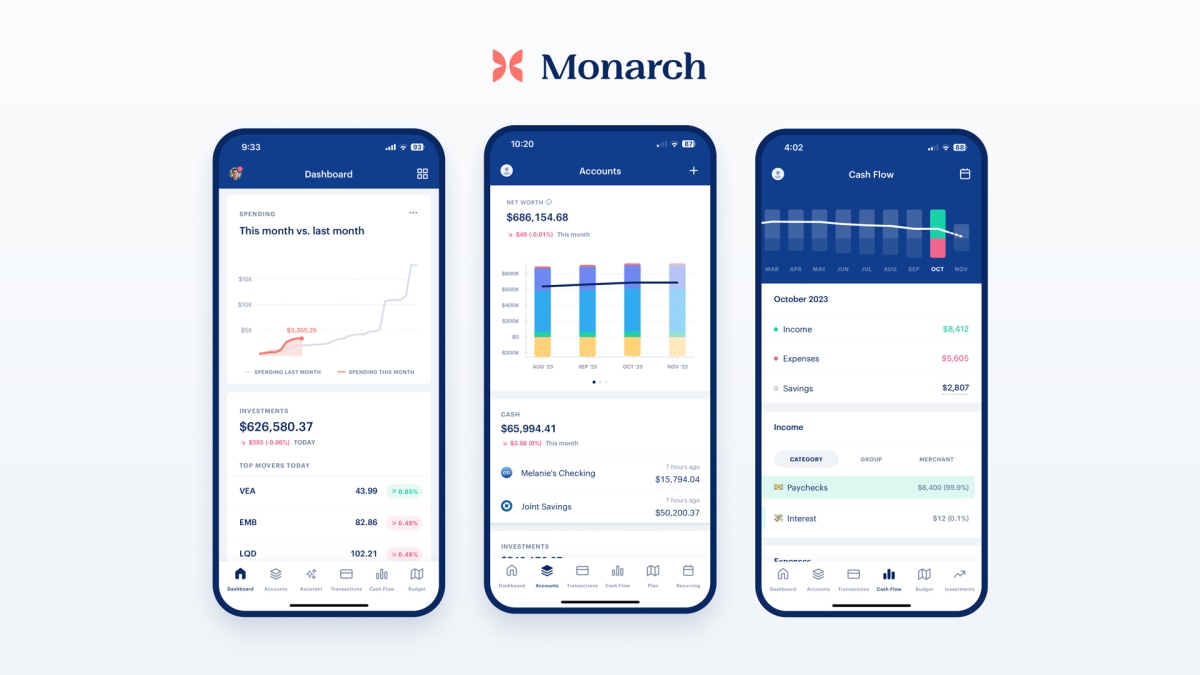
When Intuit announced it was shutting down the popular financial tracker Mint on January 1, it left millions of users scrambling for an alternative. Fortunately for them, lesser-known rival Monarch quickly released an open source Chrome extension to let users easily export data from their Mint accounts, ready for import at Monarch or potentially other services.

According to Monarch CEO Val Agostino, the company has already seen an influx of new customers since Intuit announced Mint’s impending closure late last month. Agostino was once director of product at Mint, which Intuit acquired in 2009. “Our signup volume has gone up 20 times since the announcement, so it’s definitely been drinking from the firehose a bit,” he says, adding that Monarch has been expanding server and customer service capacity since Intuit’s announcement. Both Mint and Monarch help users with financial tracking and budgeting, aggregating data on income, spending, and balances from accounts at banks, brokerages, and other financial institutions. Monarch declined to say how many users it has or how many newly signed up, and Mint user numbers are also a bit unclear: The Mint site mentions “25 million users,” but Bloomberg reports the company cited 3.6 million active users in a 2021 presentation.

[Photo: Monarch]

While Mint does offer its own export tools, Agostino says its extension, which users must install on Chrome and use while visiting  the Mint website, is a bit more flexible, able to download more complete record of a customer’s financial history in just one click, while Mint’s official tools can require multiple steps to download all the data on file. “A lot of people have been using Mint for 10 or in some cases 15 years, and they’re understandably very attached to their financial journey,” he says.

The extension downloads data into CSV files saved on users’ computers, so users can simply open them in spreadsheets or potentially upload them to compatible competing services if they don’t want to use Monarch, which unlike Mint charges a monthly or annual fee. If they do choose to use Monarch, they can upload the files in a few clicks—and take advantage of a Monarch special offering a 30-day free trial and 50% discount on the first year of service. 

Since Monarch’s extension is open source and available on GitHub, users have already submitted some pull requests fixing various issues like formatting unusual characters in account names, Agostino says. “We had a few bugs, as you always do,” he says. “Folks have chipped in and helped us identify quirky things.”

Monarch isn’t the only Mint rival taking advantage of the impending shutdown to woo new business. Quicken Simplifi is offering a free three months of service, budgeting tool YNAB is promoting a month-long free trial, and financial tracker Copilot has announced a waitlist for a feature enabling Mint users to easily import their data to its service. Intuit itself, meanwhile, is inviting users to import their data into Credit Karma, another free service which it acquired in December 2020, though it has acknowledged Credit Karma doesn’t include the budgeting features many Mint users rely on.

“We’re excited to welcome all Intuit Mint users to join Intuit Credit Karma where they will have access to Credit Karma’s suite of products, features, tools and services, including the ability to connect their financial accounts so they can track their transactions, cash flow and spending, broken down by category,” an Intuit spokesperson said in an email to Fast Company. “We are giving Mint users ample time to prepare for this change, before their access to Mint ends.”

Since Mint was free for those who didn’t opt in to paid premium or ad-free plans, many of its users will likely want to use that time to weigh whether it’s worth signing up for a paid rival. Agostino argues the paid model eliminates a conflict between serving the needs of advertisers like credit card issuers and those of consumers looking for good financial options. And while consumers weigh Credit Karma’s offerings, free trials, and other alternatives, they can ensure their data is safely stored on their own devices.

“It downloads it to your computer, so you can do what you want with it,” he says. 

Tinder redesigns profile pages with prompts, info tags and quiz

0
Tinder redesigns profile pages with prompts, info tags and quiz

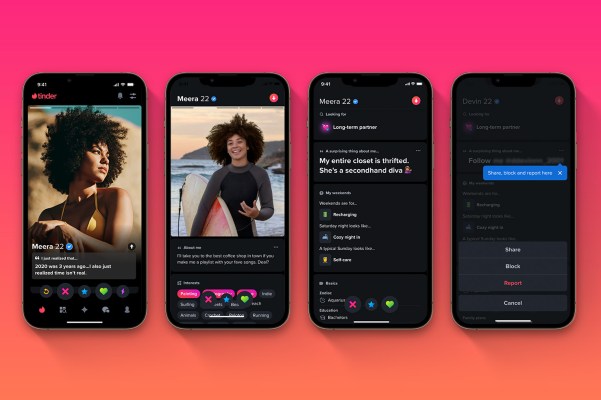
Tinder is revamping its profile pages to make them more informative and create easier starting points for conversations. The company is launching features like profile prompts as conversation starters, profile quizzes, basic info tags, and dark mode.

Let’s look at these new features in details. The Match-group-owned app is rolling out profile prompts so that users can put up prompts and answers such as “The key to my heart is,” “The first item on my bucket list is,” and “Two truths and a lie.” If this sounds familiar, it is because Hinge, another one of Match’s properties, uses this kind of prompts.

Users can also create a quiz about themselves so potential matches can learn about them. Tinder is not the only one to use a question-and-answer mechanism to drive matches. Apps, like Hatched, are using the method to uncover profiles by answering personality-related questions.

Plus, Tinder is adding a way for users to share basic information through profile tags. These tags can be about a user’s interests, pets, drinking habits, and zodiac signs. Tinder’s rival Bumble already has a feature to share details about yourself through tags.

While Tinder is rolling out new features and sections in the profile, the company said it is giving the option to report specific content in these sections as well.

Tinder is also updating other elements in the app, such as changes in the user interface, new animations including the one for the “It’s a Match!” screen, and a dark mode setting.

Last month, Tinder rolled out a feature to let your friends play matchmakers by viewing and suggesting potential matches.

Musk Defends Himself on X After Antisemitic Furor Deepens

0
Musk Defends Himself on X After Antisemitic Furor Deepens

(Bloomberg) — Elon Musk railed against “bogus” media reports accusing him of antisemitism, issuing his strongest response yet after endorsing antisemitic content in a post on X that provoked outrage and alienated advertisers like Apple Inc.

Most Read from Bloomberg

The backlash erupted last week after the billionaire Tesla Inc. chief and X-owner agreed with a post that said Jewish people hold a “dialectical hatred” of white people. That message has since drawn criticism from the White House as well as several Tesla investors. Walt Disney Co. was among the big corporate names that’ve distanced themselves from the platform formerly known as Twitter.

On Sunday, the entrepreneur tweeted that he wished “only the best for humanity.” Hedge fund manager Bill Ackman was among those who’ve leapt to Musk’s defense. The financier said last month he would be interested in pursuing a deal with X Corp. as part of a new investment vehicle that targets private companies seeking to raise $1.5 billion or more and possibly take them public, according to the Wall Street Journal.

Musk has long drawn fire for promoting hate speech. His latest post prompted criticism from both politicians and some of the world’s biggest companies, who’ve urged the billionaire to better control content on his platform. A range of advertisers also halted spending on X after a Media Matters report found that several companies ran ads on the social media platform next to pro-Nazi content.

Several advertising executives privately urged X CEO Linda Yaccarino over the weekend to resign in order to save her reputation, the Financial Times reported, citing unidentified people familiar with the matter. But she’s refused to quit, saying she believes in the company’s mission, the FT reported.

Read More: Bill Ackman Defends Musk After Antisemitism Backlash on X

–With assistance from Dana Hull.

(Updates with more advertiser pressure in the fourth paragraph)

Most Read from Bloomberg Businessweek

©2023 Bloomberg L.P.

Signature Bank’s apartment loans all set for discounted sale – report

0
Signature Bank’s apartment loans all set for discounted sale – report

Spencer Platt/Getty Images News

A joint venture of Related Fund Management and two non-profits are expected to win an auction of billions of dollars of Signature Bank (OTCPK:SBNY) loans backed by New York apartments, according to a WSJ report that cites people familiar with

Affinity Data Is The Missing Link In Pharmaceutical Marketing

0
Affinity Data Is The Missing Link In Pharmaceutical Marketing

Hemal Somaiya is the head of omnichannel marketing with 15+ years of pharmaceutical marketing experience.

In my opinion, there is a huge problem in the world of pharmaceutical marketing. Last year, companies spent just under $8.1 billion on marketing campaigns, with over $4 billion allocated to target healthcare providers. But that is not the problem. The problem is that lacking the correct strategy, it seems most of that $4 billion was wasted.

Since the global pandemic largely shifted pharmaceutical marketing into a digital space, physicians and healthcare providers have been inundated with an overwhelming amount of digital marketing materials.

Unfortunately, overwhelming marketing can sometimes lead to complete disengagement by busy healthcare providers. Between seeing patients within a 15-minute window, trudging through a mountain of paperwork and taking on extra shifts, the last thing healthcare providers need is to be haphazardly bombarded with marketing content.

Like all great orators know, understanding your target audience is critical for the success of delivering any message. An astrophysicist actively seeking information about the newest advances in the field does not want to be marketed the latest furniture collection at Macy’s, just like an oncologist seeking a novel lymphoma treatment does not want to hear about a new children’s allergy medication. Messages must be tailored to match the audience for them to truly resonate. And to effectively engage with physicians and other healthcare professionals, you’ll need to tap into the power of affinity data.

Affinity data is a treasure trove of information about healthcare providers, revealing their interests, preferences, behaviors and more. It takes the next step past mundane demographics and truly understands what they like and how they engage with the world around them.

By analyzing how your target physicians interact, choose and engage with products, services or content, affinity data helps you understand their unique needs. In turn, this information empowers you to smartly develop and tailor marketing content in a way that they can relate to.

Such personalized content may include anything that will cater to their interests, current professional state and future career goals, such as informative webinars, innovative educational materials or groundbreaking medical articles.

Leveraging affinity data, whether through professional networks, email campaigns or social media interactions, allows one to captivate physicians and other healthcare providers through the channels they actively engage with. With this strategy, it increases the chance of earning their attention—and keeping it.

Companies can leverage affinity data for healthcare providers in the United States to bring a new strategy to the world of pharmaceutical marketing. For example, my company used AI and affinity data to develop the Next Best Action (NBA), a strategy that recommends the best course of action for each individual healthcare provider. Essentially, it tells you what to do next in a customer’s message journey based on their previous interactions.

The creation of the NBA strategy is only one of many ways companies can seek to enhance marketing campaign efficiency and optimize resource allocation. Other best practices when leveraging affinity data include:

1. Having a holistic target list or target specialties in mind before running the affinity analysis for the output to be very meaningful.

2. Keeping in mind budget and resource constraints that can limit you to only one to two channels.

3. Thinking about channels holistically, not just limited to digital.

These models make it possible to offer precisely personalized communications to healthcare professionals at the right time and on the platforms they prefer.

Conclusion

As the digital era retains its post-pandemic grip on the industry, pharmaceutical companies face strict regulations and financial challenges to leverage new digital channels in a meaningful way. With millions of websites, apps and digital platforms, companies must be smart to decide where to play, how to play and who to play with.

The “spray and pray” method, wherein one deploys a digital campaign across all possible channels, is not only ineffective, it’s unnecessarily wasteful.

Leveraging affinity data may just be the key to keeping you and your company from contributing to the billion-dollar waste bucket of pharmaceutical marketing spend.


Forbes Business Council is the foremost growth and networking organization for business owners and leaders. Do I qualify?


OpenAI top investors push to restore Altman as CEO

0
OpenAI top investors push to restore Altman as CEO

Microsoft and other investors also pressing for the replacement of the current board

Article content

OpenAI’s biggest investors are pressing the company to reinstate Sam Altman as chief executive after the board’s stunning decision to fire him on Friday, according to people with knowledge of the matter.

Microsoft Corp., the startup’s biggest backer with a more than US$10 billion stake, is working with investors including Thrive Capital and Tiger Global Management to bring back Altman, said the people, who asked to remain anonymous discussing private information.

Advertisement 2

Article content

Article content

As part of the effort to reinstate the CEO, investors are also pressing for the replacement of the current board, the people said. The directors have considered stepping down, though they’re currently balking at such a move, the people said. The situation is fluid and final plans have not been set. If the board steps down, investors are reviewing a list of possible new directors. One contender is Bret Taylor, the former co-CEO of Salesforce Inc.

The OpenAI board has been subjected to intense criticism over its decision to remove Altman, which came as a surprise to both investors and to Altman himself. Over the years he pushed hard to change the company from a nonprofit to a commercially successful business and was the driving force behind new tools that have revolutionized the way people complete tasks from homework to coding. His ouster did not sit well with the firms that backed OpenAI.

Thrive, which was expected to lead a tender offer for employee shares, has not yet wired the money and has made it clear to OpenAI that Altman’s departure will affect its actions. Thrive, the largest OpenAI investor aside from Microsoft, is working to reinstate both Altman and Greg Brockman, the startup’s president who quit on Friday in protest.

Article content

Advertisement 3

Article content

Altman is open to returning to the company, some of the people said. However, they said if he were to return, he would ask for changes in the way the company is governed.

Microsoft chief executive Satya Nadella has been in touch with Altman and pledged to support him in whatever steps he takes next, the people said. Nadella was blindsided by the board’s decision, according to people familiar with the situation.

Representatives of San Francisco-based OpenAI and Redmond, Washington-based Microsoft declined to comment. Thrive and Tiger Global declined to comment. Taylor did not respond to a request for comment.

Several employees, including OpenAI co-founder Brockman, have departed the company in protest following Altman’s ouster. The resignations are likely to continue, the people said.

OpenAI is optimistic it can bring back Altman, Brockman and other key employees who left, the Information reported, citing a staff memo on Saturday night from chief strategy officer Jason Kwon. Kwon said company executives would be able to update staff by mid-morning on Sunday.

Advertisement 4

Article content

If he does not return, Altman has been considering launching a new venture, possibly with former staffers of OpenAI, according to several people. In a statement on X, formerly Twitter, venture capitalist Vinod Khosla said that his firm wanted Altman “back at OpenAI but will back him in whatever he does next.”

Forbes and the Verge earlier reported some details of the campaign to reinstate Altman.

Related Stories

In a memo to OpenAI staff on Saturday, chief operating officer Brad Lightcap said Altman’s ousting “was not made in response to malfeasance” or the company’s financial or safety practices.

The decision to force Altman out, he said, “took us all by surprise,” and he has since spoken with the board to better understand its decision, according to the memo, which was viewed by Bloomberg.

“This was a breakdown in communication between Sam and the board,” Lightcap wrote, adding that Microsoft “remains fully committed” as an investor.

With assistance from Rachel Metz, Hema Parmar, Katie Roof, Sridhar Natarajan and Sarah Frier.

Bloomberg.com

Article content

Comments

Postmedia is committed to maintaining a lively but civil forum for discussion and encourage all readers to share their views on our articles. Comments may take up to an hour for moderation before appearing on the site. We ask you to keep your comments relevant and respectful. We have enabled email notifications—you will now receive an email if you receive a reply to your comment, there is an update to a comment thread you follow or if a user you follow comments. Visit our Community Guidelines for more information and details on how to adjust your email settings.