Home Blog Page 37

An Essential Guide to the Prototype Manufacturing Process » Small Business Bonfire

0
An Essential Guide to the Prototype Manufacturing Process » Small Business Bonfire

Regarding the prototype manufacturing process, many steps must be taken to create a final product.

This article will discuss all the steps to better understand what is happening behind the scenes. Let’s get started!

What is a Prototype?

Prototypes are an essential part of the manufacturing process. They allow manufacturers to test out new designs and ensure that they will be able to produce the product they are hoping to create.

Prototypes can also help identify potential design problems before any products are made. This can save companies time and money in the long run.

3D Printing

In most cases, prototypes are made using 3D printing technology. This allows for high accuracy and detail, which is essential for testing new designs.

3D printing also helps to speed up the prototyping process, which can be helpful when there is a tight deadline. In many ways, 3D printing is the future of manufacturing because of its many benefits and potential for growth.

It is important to note that prototypes are not always perfect. They may not function strictly as intended, or they may be made from cheaper materials than the final product.

However, prototypes still provide a valuable opportunity for manufacturers to test new ideas and ensure they are on track to create a final product that meets all their requirements.

What are the Different Types of Prototypes

There are 3 different types of Prototypes are:

Alpha

An alpha prototype is an early version of a product used to test its feasibility and gather user feedback. It is typically rough and unfinished and may not include all of the features that will be included in the final product.

Alpha prototypes are used to identify potential problems and get feedback from users about what they like and don’t like about the product.

Beta

A beta prototype is a more polished product version used to get feedback from a wider audience. A beta prototype is usually feature-complete but may still have some bugs.

Beta prototypes are often used to test how well a product works in the real world and gather user feedback. This feedback can then be used to make changes to the product before it is released to the general public.

Production

Once a prototype has been approved, it needs to be moved into production. This involves creating a final version of the design that can be manufactured.

Moving a prototype into production usually starts with creating a specification document. This document describes the product’s features and how they should be manufactured. It also includes drawings or diagrams of the product and a bill of materials that lists all the components used in manufacturing.

After the specification document is completed, it’s sent to the manufacturer, who will create a prototype based on the specifications. If any changes are made, they’ll go back and forth until both parties are happy with the results.

Once the prototype is finalized, the manufacturer will begin producing large quantities of the product. Quality assurance tests will be conducted to ensure that everything meets the specifications and that the product is ready for release.

What is the Prototype Manufacturing Process?

The prototype manufacturing process is a series of steps to create prototypes from start to finish.

The process typically involves several different steps, including:

  • Idea
  • Design
  • 3D modeling
  • Prototype creation
  • Prototype testing

Overall, the prototype manufacturing process is an integral part of bringing new products to market and ensuring they can meet customers’ needs.

With careful planning and attention to detail, manufacturers can create high-quality prototypes to help them achieve their goals.​

Idea

The first step in the prototype manufacturing process is to develop an idea for a new product. This may involve:

  • Brainstorming sessions
  • Market research and analysis
  • User interviews and surveys

Design

Design is the process of creating a product or service. It includes:

  • How the product or service should look
  • How the product or service should work
  • Deciding what the product or service should do

The design process begins with understanding the customer’s needs. 

This is done by researching the problem or opportunity and talking to potential customers. Here are some tips on how to better understand the needs of your customers.

Once the needs are understood, the designers create ideas for solving the problem or taking advantage of the opportunity.

These ideas are then refined and tested with customers to see which ones are the most popular. The best ideas are then turned into prototypes and tested to ensure they meet the customer’s needs. Once they have been approved, the final product or service is created.

3D modeling

In order to create a prototype, it is necessary to first create a 3D model of the product. This involves using computer-aided design (CAD) software to create digital models of the parts and components that will be used in the prototype.

Using a 3D printer can be a game-changer for small businesses and allows designers to quickly make changes to their designs and test different ideas without the added expense of prototype creation and testing.

Prototype Manufacturing Process 1

Prototype Creation

Once a 3D model has been created, the next step is to create an actual prototype using different materials and technologies. This may involve creating one or more prototypes at each stage of development.

The prototype creation process includes the following:

  • Selecting appropriate materials and technologies based on the design requirements of the prototype
  • Molding and cutting the parts according to the CAD files provided by designers
  • Assembling these components into a functioning prototype that can be tested for accuracy and usability

Prototype Testing

Once a prototype has been created, it is tested to ensure that it meets the requirements specified by the customer.

This may involve using different types of testing methods and tools, such as:

  • User testing with real-world users in a lab setting or prototype usability tests online
  • Quality assurance testing to ensure that there are no defects or malfunctions

These tests typically help identify any issues with the prototype design and allow designers to make changes before moving on to production.

Overall, the prototype manufacturing process is an iterative one, where ideas are developed, refined, and repeatedly tested until a final product is ready for large-scale production. While this process can be time-consuming and complex, it ultimately helps ensure

What Do You Need to Move Prototypes into Production?

In order to move prototypes into production, you need to create a plan that outlines the steps necessary to make the transition.

This plan should include the following:

  • Production Quantity
  • Production Tolerance
  • Timeline
  • Budget

Production Quantity

Production quantity is generally dictated by two factors: the number of units a company thinks it can sell and the minimum number of units a company needs to produce in order to break even.

For small businesses, production quantity is often based on customer demand. If a company produces more items than it can sell, it will have to absorb the cost.

This can be done through the following:

  • Increased pricing
  • Increased advertising
  • Inventory write-downs

Production Tolerance

In addition to production quantity, you will also need to consider each prototype’s production or engineering tolerance. This is usually defined as a +/- percentage of the initial prototype design.

For example, if your prototype had a dimension of 10 cm and a tolerance of +/- 0.25 cm, your actual production model could have dimensions anywhere from 9.75 cm to 10.25 cm.

Timeline

The timeline for moving prototypes into production should be determined by several factors, including:

  • The complexity of your prototype design and manufacturing process
  • Your overall budget and level of funding available
  • Production capacity and timelines at your existing suppliers or manufacturers
  • By considering all of these factors, you can develop a clear plan

Budget

Finally, you will need to consider the budget for prototype production. This should include upfront costs and recurring expenses, such as materials, labor, testing, and packaging.

Some factors that can affect your prototype budget include: 

  • The materials and technologies used in prototype creation
  • The number of prototypes required at each stage of development
  • Labor costs to assemble and test your prototype

Wrapping Things Up!

Overall, the prototype manufacturing process is important in bringing new products to market and ensuring that they meet industry standards for quality and usability.

By carefully planning each stage of prototype creation and testing, businesses can successfully move their prototypes into production and launch successful products on a larger scale.

Frequently Asked Questions

Q. Do I need to create a new prototype for production?

A. No, you can use the same prototype that was used for user testing and development. However, it is important to do a final review and make necessary changes before going into production.

Q: What should I do if I need to make changes to my prototype?

A: If you need to make changes to your prototype, update your design and user flows as needed. You may also need to update your code using a code-based prototyping tool.

Q: What are the steps to move a prototype into production?

A: The first step is to create a bill of materials (BOM) for the product. The BOM lists all of the components that will be needed to produce the product. Once the BOM is created, the next step is to create a production plan.

The production plan specifies how the components will be assembled and how the product will be manufactured.

After the production plan is created, the final step is to create a quality assurance plan. The quality assurance plan ensures that the product meets all of the requirements set forth by the customer.

The Most Powerful Way to Show Up Online – Smart Passive Income

0
The Most Powerful Way to Show Up Online – Smart Passive Income

Get Unstuck

Subscribe to my weekly newsletter, Unstuck, to get tips, tools, and my best advice for creating a thriving online business.

The Story

2008 was the definition of a roller coaster year for me.

In March, I received a huge promotion and a raise at the architectural firm I was working for. Soon after that, I proposed to my girlfriend and got engaged.

In June, I was told I was going to be let go from my job and I moved back in with my parents to save as much money as I could. I also went into a little bit of a depression.

In October, after scrappily building my first website to help architects and designers pass an exam (the LEED exam), I sold my first product online – a study guide – and earned $7,908.55 in a single month.

In November, the revenue was closer to $9k, and in December 2008 I cracked five figures in a single month.

Things were looking good until May of 2009 when my world got turned upside down…again.

The organization that administers the LEED exam, the United States Green Building Council, decided to create its own study guide. They literally write the exam questions, so why would anyone purchase a guide from a regular person like me?

I remember being too afraid to check my email or sign in to my shopping cart that month to check sales, but eventually, I had to. And what I found surprised me:

I had the most sales I had ever had in a single month. Over $30,000 in revenue.

This totally went in the opposite direction that I thought it would, and I couldn’t understand why, but I needed to find out.

So, I sent a survey to my new customers asking them two simple questions:

  1. How did you hear about GreenExamAcademy?
  2. What made you decide to go with GreenExamAcademy over other study guides that are offered to you?

Soon, I understood EXACTLY what was happening.

The USGBC’s email blast about their new study guide prompted tens of thousands of people to get excited about taking the exam, and when researching what else was out there to offer help, my name and face came up. That’s how they found me.

But why did they decide to buy my product? I had to dive into the depths of my records to find these, but here are a few exact responses copied and pasted from survey question #2:

“I decided to buy The LEED AP Walkthrough because of you, Pat. You took the exam yourself and it almost feels like you were tutoring me.”

“You personally have first-hand experience earning your LEED credential, Pat. I think this is why I trusted you over the others.”

“I dunno Pat. I think it was the way you talk to me on your blog. You did it first and then you were gonna show me how to do it. It was encouraging.”

Almost every response that came in highlighted the same thing—a connection to the fact that I had taken the exam first. It made the material, me as the instructor, and the product more trustworthy. And back in 2008, this audience didn’t trust random sites selling things on the Internet.

This was the exact moment when I discovered the power and the value of leading by example. Doing the thing first, and then showing people how to do it.

If I’m teaching something but don’t have an example or an experience to share behind it, how could it be trusted?

When I started SmartPassiveIncome.com in late 2008 to teach online business, it was with a real-life case study of Green Exam Academy behind it.

When I started teaching search engine optimization, I used real examples from a website I built in the security guard training niche. Because people were seeing me do it first, not only did it encourage others to do the same, but clicks on my affiliate links for products I was using went through the roof!

I taught podcasting only after having a successful podcast. On YouTube, my how-to podcast videos over the years have been seen over 3 million times, and our podcast course is our #1 bestseller!

In today’s creator economy, where information is freely available and publishing content is easy, you MUST create your own unique experiences that no one else could have to support what you teach.

Your Call to Action

It’s a jungle out there. Are you going to be the person at the front of the pack with the machete clearing a safe path for everyone behind you, or are you going to be like most people who just use their platform to tell people what to do?

Your call to action this week is to choose to do something that you know your audience is interested in doing themselves and do it yourself first.

Document how it unfolds and what you learn along the way. What mistakes did you make, and what new things did you discover?

That experience can create multitudes of content, build more trust, and potentially turn into something much much bigger. Spend some time thinking about what it could be (or better yet, ask your audience what they’d like to see you try), and then…lead by example.


I hope you enjoyed this 5-minute read! To get more like it every week (again, totally free), sign up below!

Get Unstuck

Subscribe to my weekly newsletter, Unstuck, to get tips, tools, and my best advice for creating a thriving online business.

A police officer turned beauty studio boss on £25k

0
A police officer turned beauty studio boss on £25k

Welcome to The Money Diaries with Sage, where we dive into the finances of business owners and discover how they deal with money matters on a daily basis.

We’re asking entrepreneurs how they’re managing their finances over a seven-day period, to give you a picture of what incomes and outgoings really look like from their perspective. 

Today is the turn of a former police officer who now runs a beauty studio.

And make sure you check out Reader’s Response at the end of this article, where accountant and best-selling author Carl Reader reveals his thoughts and shares some top tips for our entrepreneur.

Here’s what we cover in this article:

Meet our entrepreneur and check out their Money Diary

  • Industry: Beauty.
  • How long you have been an entrepreneur? 7 years.
  • Day job: Initially, I worked alongside my employed position in the emergency services prior to being medically retired.
  • Location: Sunderland.
  • Salary: £25,000 (£9k ill health retirement pension + £16k part-time self-employment).
  • Household: As things stand, I reside with one husband, two male teenagers (the struggle is real), two Cocker Spaniels, one Bengal cat, and a bearded dragon.

Day 1 – Monday

Opening balance at the start of the week: £2,008.75

I don’t work Mondays. Truth be told, I’m actually only working three days per week at the time of writing.

Before you think I’m either work-shy, living the dream, or both, it would probably be helpful to start with some background information.

I was a police officer for 13 years. But unfortunately, towards the end of that service, I was diagnosed with a lifelong mental health illness.

The demands of a 24/7 response cop are relentless.

Stressful situations, shift work, extended working hours, cancelled rest days, unpredictability—essentially everything I was told to avoid with my condition.

So, in 2017 I made the difficult decision to accept ill health retirement. Cue a total life overhaul and the most random career change ever, and here I am.

Self-employment is absolutely not for the faint hearted, but it affords me the flexibility required to make sure I’m in the best position to keep myself well, hence the part-time hours.

I’ve honestly never looked back.

Initially, I rented a chair. Just short of two years later I moved into my first premises, and a larger premises another two years later. I worked hard to establish my business, my rent was still reasonable and I had a weekly renter contributing towards it.

Then the absolute unthinkable happened: the pandemic.

I had to close for a total of seven or so months, which is a catastrophic blow for a small business. The road to recovery has been long and arduous, and it’s still ongoing.

In December 2021, I made the decision to go all in, double or quits as they say.

I moved into new premises in a much more prominent position in Sunderland city centre. The plan was to turn increased visibility into new clients and grow profits.

My rent doubled and then some, which, as expected, comes with added pressure and strain. Not ideal for someone with zero tolerance for stress, but nothing ventured nothing gained and all that.

Seven months in and I ask myself “did I make the right decision?”

The jury is still out on that one.

Money earned: £0

Money spent: £0

Money Diaries day 2

Day 2 – Tuesday

Despite working part time, there is always something to do. School runs, cleaning, life admin. The days just go.

I genuinely think managing social media accounts is a job in itself. I try to set aside time on my days out of the studio to prepare content to post regularly. I also keep on top of DMs, emails, text messages and WhatsApp daily.

Which reminds me, I really must get stricter when it comes to replying to people.

I tend to reply no matter the day or time. I’ve previously received messages on the likes of Boxing Day and both ridiculously early and ridiculously late.

I really must stop responding straight away as I’m implying it’s acceptable, and it isn’t.

I received a phone call from the music licence company. Despite my existing licence being covered up to September, my change of premises means I’m required to pay an additional sum to bring the licence up to date and cover me until the end of November.

It was unforeseen, but only £31.53 so not an issue.

I pay £30 a month by direct debit for an online booking system, which is worth every penny. It (mostly) negates the need for clients to contact me to make, rearrange or cancel appointments. My insurance is also paid by monthly direct debit at a cost of £22.66.

I haven’t included my personal spending as I do keep my business and personal accounts entirely separate. I can give you an insight into it though: let’s just say I have a penchant for H&M Home, and I keep Sainsbury’s in business.

Money earned: £0

Money spent: £84.19

Money Diaries day 3

Day 3 – Wednesday

I recently made the difficult decision to increase my prices.

I thought long and hard about it as it’s important to me that I remain accessible to everyone. However, as a small business I just couldn’t continue to absorb the rising costs entirely.

This is week two since the increased price structure was implemented. Truth be told, I’m still stressing about it.

I have a tendency to overthink everything, which isn’t conducive to making rational decisions, nor is it any good for my mental health. I often find it difficult to put on my ‘business head’, which in the past has perhaps affected my decision making.

My mam once commented I wasn’t cut-throat enough for business.

I still don’t think owning a business necessarily means I need to be ruthless, but I am aware that the primary objective of a business is to generate profit, and that decisions need to be made on reason rather than emotion.

It’s definitely something I continually need to work on.

In comparison to other businesses, with the exception of rent, my overheads are relatively small.

I do not employ staff, although I have toyed with the idea of employing someone lately. But I have to be sensible, as I fear it could cause more stress than it’s worth.

Behind every decision I make, I must consider the potential impact on my mental health.

Furthermore, I also don’t have enough clients to justify it right now, so it would definitely be a case of speculate to accumulate and I’m just not sure. On the other hand, it would mean potential to actually make money when I’m not at work, especially when I need to take an extended period of time off.

The Money Diaries with Sage

In our financial series, anonymous entrepreneurs offer a no-holds-barred look at their salaries, expenses and daily spending habits. Ready to take a peek?

Find out more

I’ve arranged to meet with a client/friend who runs her own business and employs staff to discuss the ins and outs and go from there. It’s kind of her to give up her time. We chew the fat over cuppas and cake (£11) and I come away with lots to ‘overthink’ about.

The option I’ve favoured previously is to rent space out to other self-employed people.

I’m absolutely aware I need to utilise the studio space on the days I do not work rather than letting it sit empty. It’s proved much more difficult than I anticipated.

I thought when I moved into a prominent city centre location, I would be inundated with people wanting to rent space.

Inundated may be a slight exaggeration but I certainly didn’t expect to find myself seven months in without another weekly renter. I advertise regularly and I suppose all I can really do is continue to do so in hope that I find someone suitable.

I’ve considered taking a more active approach and contacting people directly, but I can’t help but feel this is overstepping.

During and following the coronavirus saga, a lot of people in this industry struggled to stay afloat.

Many had to get part-time jobs alongside their self-employment and/or revert to working from home rather than renting space. This has undoubtedly contributed to the difficulties I’m facing.

As things stand, I have one weekly renter, a nail tech who rents one day per week, and an aesthetics nurse who holds a clinic three or four times a month.

I place an online order from a supplier to be delivered at a total cost of £48.52. I’m quite fortunate in that my product costs, despite rising costs, are still relatively low in comparison to other lines of business. I place an order as and when required, however always try to ensure I have surplus stock.

Money earned: £0

Money spent: £59.52

Money Diaries day 4

Day 4 – Thursday

My first day in the studio and it’s going to be a busy one. I tend to work late on a Thursday, so it can feel like a really long day.

I start at the very least 30 min before my first appointment is due, allowing time for my wax to heat up and to start the day with a cuppa. I drink a lot of tea and Diet Coke. Thankfully, I don’t drink coffee as there is a rather lovely coffee shop nearby.

I do, however, eat sweet treats and bagels, which would be more evident if we were to look at my personal spending. If I do have time to eat, I always end up buying something, which can really start to add up.

No time for food today though as I’ve got no gaps all day. I say every week I must allow myself 30 mins to take a break, I must start to bring in lunch to eat.

I say it, but I don’t actually do it. This needs to change.

Today included some high-value appointments, so I take a total of £417. This certainly isn’t a typical day’s takings, it’s more like a day on the run-up to Christmas. If only every day was like this!

Well, maybe with a break and some lunch for good measure.

Money earned: £417

Money spent: £0

Money Diaries day 5

Day 5 – Friday

Ordered a toaster online in a bid to change my ways. Last week I purchased a fridge. I’m definitely going to start bringing my lunch in and schedule time for a break going forward.

Before April this year I was working four days a week, fewer hours per day.

Since condensing my hours, my days are obviously longer and generally a lot busier. Before, I tended to have the occasional gap throughout the day. I think I mostly prefer it this way.

I of course have to balance this with ensuring I have sufficient availability and gently remind clients to book in advance where possible.

The last thing I want is for clients to go elsewhere because they can’t get an appointment and/or because my days are limited. It’s always a balancing act. Fortunately, there is always that flexibility to change and try new ways of working if need be.

Money earned: £270

Money spent: £25

Money Diaries day 6

Day 6 – Saturday

During the football season I only work until 2.30pm. Lifelong-suffering Sunderland fan here, though I’m full of renewed enthusiasm for the season.

Out of season, I work a little later.

Saturday used to be a guaranteed busy day, along with my late nights on Thursday. Not so much post-pandemic; it can be hit or miss.

I think as more people continue to work from home, they perhaps have become more flexible with their time. This means more clients can book in during the day as opposed to being limited to an evening or weekend.

After work, I’ve arranged to meet with the owners of the coffee shop to discuss marketing and growth of our businesses. The plan is to get our heads together and come up with some ideas that would benefit both of us. They are lovely people and it’s nice to support each other.

We agree to start with a simple and relatively inexpensive campaign. The plan is to design a combined flyer and distribute them throughout the city centre, targeting people who are already there for work. I leave with a renewed enthusiasm: I can make this work.

My enthusiasm doesn’t last long unfortunately.

My weekly renter has given notice to leave. Like many, she had to take on an employed position alongside her self-employed work and it’s becoming difficult to maintain both.

She needs the increased security employment affords and has made the difficult decision to leave this industry all together.

This a massive blow for me, both personally and professionally. She has worked alongside me since I opened my first premises. I literally cried.

Money earned: £210

Money spent: £0

Money Diaries day 7

Day 7 – Sunday

Sunday is usually my favourite day, a day of absolute rest. Self-care Sunday, as I like to call it.

But I need to do some work today.

I usually do my end of week accounts on a Saturday, but I just wasn’t feeling up to it yesterday. I’m already stressing over what I’m going to do moving forward. All thoughts of employing someone are out the window as I can’t take any unnecessary risks for the foreseeable.

I’m typically very organised when it comes to my accounts and do them weekly without fail.

I keep it simple and record every transaction daily, recording the totals at the end of the week.

At the end of each month, I record the month overall as a plus or minus figure (thankfully, with the exception of the Covid months, it’s always in the black). Doing things this way also makes it significantly easier when it comes to my tax return.

Income from my renters this week totals £140.70.

When I signed my tenancy, I used all of my savings to pay my rent in advance for the year. By doing this I was entitled to a 10% discount, which was a decent saving, so I felt it was worth doing.

If I am able to stay put, then I’ll aim to do the same thing the following year. For this reason, I set aside money for my rent every week as if I were paying the full amount weekly, no exceptions.

I also save for my tax bill weekly (variable depending on income that week), a lesson I learned early on in my self-employment journey.

When it comes to managing my business account, I’ve tried to build up the balance by always banking any income from my renters. I said from the very beginning that I didn’t want to rely on anyone else to cover my outgoings.

Until recently I’d therefore only ever paid myself from income I’d actually earned myself. This could fluctuate massively from week to week, and I mean massively.

For the past few months, I’ve taken a different approach and I now pay myself £300 per week regardless of how much or how little I earn that week.

In that sense losing my weekly renter won’t impact on my actual wage per se, but obviously it will impact on the amount of money I bank.

I’m trying not to panic. After six months I’m going to assess everything and establish if this amount needs to be reduced, or hopefully increased.

Once more, it’s a balancing act. I’m keeping a close eye on things and so far, it’s looking about right for now. If anything as things stood I could probably have justified a slight increase.

Money earned: £140.70

Money spent: £665 (Including £300 weekly wage. Remaining £395 technically not spent per se but allocated to rent and tax savings)

Totals for the week

Money earned: £1037.77

Money spent: £833.71 (including £300 wage and allocated savings)

Total banked: £204.06

Closing balance at the end of the week: £2,212.81

Final thoughts on the week

It’s fair to say this week has demonstrated the trials and tribulations of running a business. It can certainly be an emotional rollercoaster at times.

Overall, I’ve had a good week financially.

Ideally, I’d like to pay myself a bigger wage but considering the hours I work I think I do OK. I’m satisfied with the amount I have banked. Some weeks I bank more and some weeks I bank much less. Swings and roundabouts.

If I could offer advice to any founder, it would be try not to panic.

Part of me can’t believe I’m saying that with a straight face.

Seriously though, if there is one thing I have learned it’s that it is important to look at the bigger picture.

For example, look at the month overall rather than one good or bad week. This is particularly important when you run a business that can fluctuate from week to week and season to season.

Oh, and learn to find some balance.

Yes, being self-employed can be stressful, and doesn’t come with the security of a definite salary. But at least no one is trying to stab me with a screwdriver!

Reader’s Response

And to wrap up… what are Carl Reader’s thoughts on the financial habits of our beauty studio boss?

Check out the video below to find out…

Instagram expands AI-powered age verification program to India and Brazil • TechCrunch

0
Instagram expands AI-powered age verification program to India and Brazil • TechCrunch

Instagram, facing scrutiny from safety advocates, started testing a program in the U.S. earlier this year to verify users’ age claiming to be 18 or older. It uses techniques including authentication via running video selfies through an artificial intelligence system. The Meta-owned service is now ready to roll out this program to two key overseas markets: India and Brazil.

These countries together have about 400 million monthly active users on Instagram, according to market intelligence platform Sensor Tower, data of which an industry executive shared with TechCrunch. The social network said in an updated blog post that it plans to roll out this age verification program to the UK and EU before the end of the year.

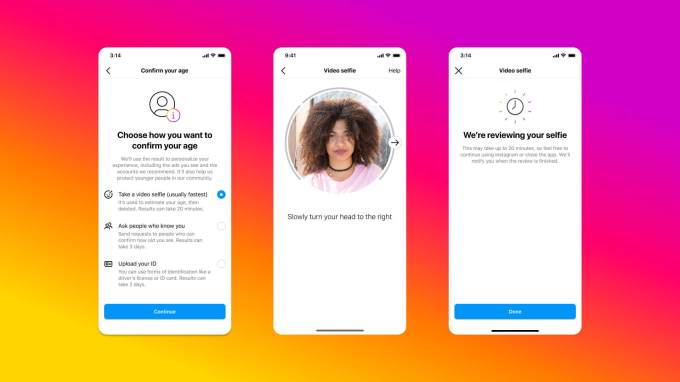
The program allows users to upload a video of themselves, which Instagram runs through an AI system to determine whether they are indeed aged 18 or older. For this option, Instagram has partnered with the UK-based identity startup Yoti. Once users complete taking a video selfie by following the on-screen instructions, Meta shares that with Yoti for verification through its specially trained AI. Both companies say they delete the data afterward.

Image Credits: Instagram

Users can also verify their age by providing an ID. Instagram has a list of documents it accepts for verification.

The social giant also said it is removing Social Vouching as an option to verify age. Social Vouching, one of the experimental ways Instagram verified the age as part of the new program, allowed a user to request their mutual followers, who are aged 18 or above, to vouch for the age. While it didn’t expand on the reason, it is likely that some users were gaming the system by asking their mutual followers aged 18 or above to lie for them.

The rollout comes at a time when safety advocates are lambasting Instagram for letting kids under 13 use the platform and not doing enough to stop teens from potentially seeing harmful content. On its part, last year Instagram made it mandatory for everyone to enter their birthdates, but it’s hard to rely only on that factor as users can easily provide false information. Notably, Twitter is rolling out a feature that asks users to enter their birthdates to see sensitive content.

Instagram says it uses age data to restrict certain experiences for teens: it makes accounts of users under 16 private by default, blocks DMs from unknown adults and stops advertisers to serve targeted ads based on teens’ interests and activities.

Lawmakers across the world are also looking at introducing rules that force platforms to have effective age checks in place. The UK’s Online Safety Bill and the California Age-Appropriate Design Code Act look to restrict content that users aged under 18 can access. Their scrutiny was partially prompted after a whistleblower testified last year to reveal that Facebook had prioritized profit over the well-being of users, especially teens.

Waste4Change is building a circular economy in Indonesia • TechCrunch

0
Waste4Change is building a circular economy in Indonesia • TechCrunch

Even the largest landfills in Indonesia are at (or nearing) capacity, and the government has set an ambitious target of 30% waste reduction by 2025. Waste4Change is one of the companies that wants to help by increasing rates of recycling and enabling better waste management. The startup, which currently manages more than 8,000 tons of waste very year, announced today that it has raised $5 million in Series A funding, co-led by AC Ventures and PT Barito Mitra Investama.

Other participants in the round include Basra Corporation, Paloma Capital, PT Delapan Satu Investa, Living Lab Ventures, SMDV and Urban Gateway Fund. Founded in 2014, Waste4Change has seen a CAGR of 55.1% since 2017, and is present in 21 Indonesian cities, where its services are currently used by about 100 B2B clients and more than 3,500 households.

Waste4Change was created by founder and CEO Mohamad Bijaksana Junerosano based on conversations between PT Greeneration Indonesia, an NGO, and waste management organization PT Bumi Lestari Bali (ecoBali) to form a company that reduces the amount of waste that ends up in landfills. Junerosano is an environmental engineer by training and spent 16 years working in the solid waste sector.

Junerosano says that a major opportunity is created by Indonesia’s low recycling rates (about 11% to 12%), which means there is a lot of valuable recyclable material that is being left behind.

“Waste reduction is a top priority, followed by material optimization and recycling which supports the concept of a truly circular economy,” he told TechCrunch.

Waste4Change will use its new funding on expansion and increasing its waste management capacity up to 100 tons per day over the next 18 months, with the target of reaching more than 2,000 tons per day over the next five years.

Waste4Change’s team

Junerosano said Waste4Change differentiates from traditional waste management solutions by providing an end-to-end solution, with a focus on sustainability and zero waste. Part of its strategy includes more digital integration for monitoring and recording the process of waste management and automating its material recovery facilities.

“We see digital integration as a valuable tool to build a sustainable waste management ecosystem,” he said. “The goal is always to create harmony between the environment, the economy and the people.” Waste4Change’s digital integration strategy this year and next include improving its waste journey report and monitoring, which its customers receive after their trash is processed.

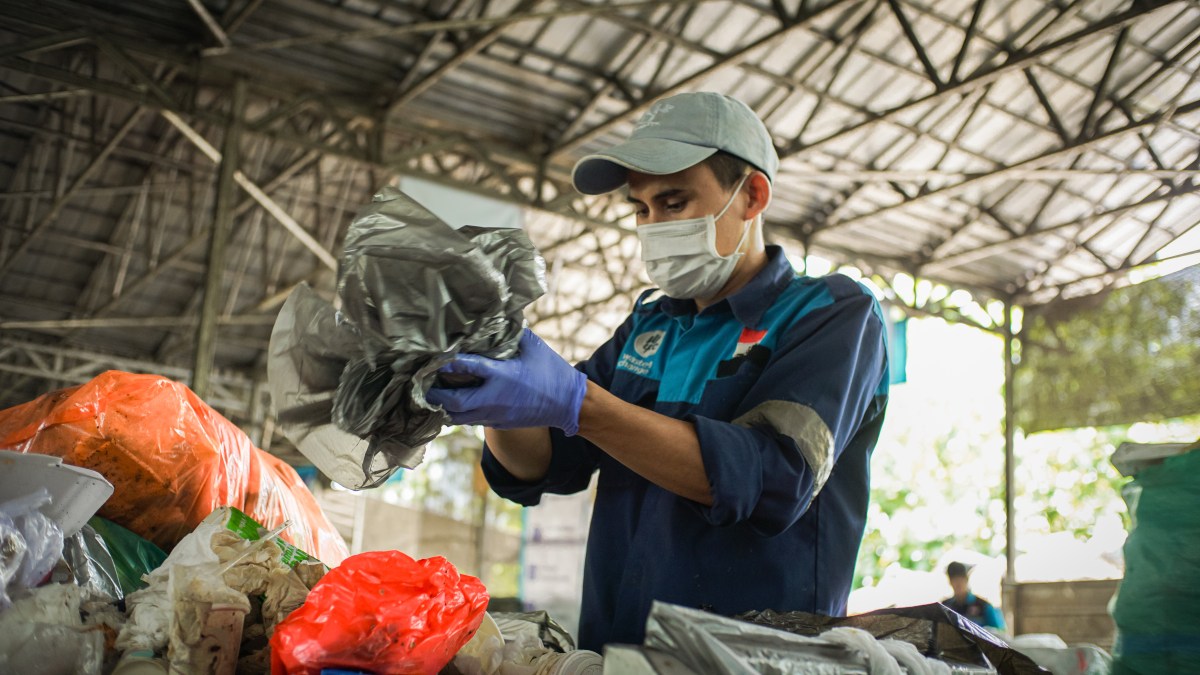
To use Waste4Change, customers can ask for a pick-up team to collect their pre-sorted trash or drop it off themselves. The company currently has 108 employees and 141 waste management operators, with plans to add 52 more people to its team and work with 300 informal waste collectors and SMEs. Informal waste collectors include scavengers, waste banks, waste stalls and waste aggregators.

For recycling business partners, including informal waste collectors, Waste4Change is building a platform to help them sell and buy solid waste with the company. The goal is increase the traceability and accuracy of the waste management process. It is also working on a program called Send Your Waste, where consumers can send waste to Waste4Change’s pick-up points. An app tells them what kinds of waste to send, where the nearest pick-up point is and what kind of reward they can receive.

Junerosano says informal waste collectors tend to be selective about the materials they collect, picking out PET bottles, glass and cardboard. But this means less desirable materials like PP plastic, multilayer packaging and styrofoam are often left behind, polluting the environment. To combat that, Waste4Change has started a service called Waste Credit, that gives incentives for picking up certain materials, and also makes it easy for waste collectors to build this businesses.

“Considering the crucial role of the informal sector in improving Indonesia’s recycling rate, we aim to build a waste recycling platform that will keep the system sustainable,” he said. “We are more than happy to bring it to life with a joint venture or joint operation with other industry stakeholders, including those in the informal sector and local Reduce, Reuse, Recycle (3R) temporary waste storage sites.”

In a statement, AC Ventures founding partner Pandu Sjahrir said, “Waste4Change is a pioneer providing an end-to-end waste management solution. Sustainability is the team’s main focus, with a demonstrated commitment to building a better future for Indonesia. The company is proving that it has reached product-market fit and has the potential to scale across the nation.”

What You Need to Know » Small Business Bonfire

0
What You Need to Know » Small Business Bonfire

Have you ever wondered what it would be like to work from home? Maybe you already work remotely part-time, but you’re thinking of making the switch to full-time. There are also many different kinds of jobs you can do while working from home and lots of benefits with each. In this post, we’ll go over everything you need to know about working from home.

Let’s explore the benefits of working from home!

  1. There’s No Commute
  2. You Can Choose When to Work
  3. You Can Choose Your Job Preference
  4. You Can Get More Done
  5. You Can Work in Your PJs
  6. You’ll Spend Less Money
  7. You Can Live Wherever you Want
  8. You’ll Reduce Your Carbon Footprint

There’s No Commute

Working from home has become a popular option for many people, as it can save time and money on transportation. This gives you back precious time each day that you would have otherwise spent sitting in traffic or crammed into a subway car. After all, a recent study shows that commuters will spend an average of 54 hours a year in traffic

Driving through heavy traffic can also affect your stress levels, which could be bad for your health overall. If you work from home, you can avoid all of this by simply walking to wherever your office is located inside your home.

Additionally, it can be hard to determine what the commute to work is going to be like. You could get lucky and get to work early, with minimal traffic to set you back.

However, it is possible that you could get stuck in bumper-to-bumper traffic, especially if you are commuting to a city.

You Can Choose When to Work

One of the main benefits of working from home is that you can choose when to work. If you’re a night owl, you can work in the evening. Or, if you want to take a break in the middle of the day to go for a walk, you can do that, too.

Working from home allows you to control your own schedule, which means that there are no supervisors or bosses calling you into their offices to talk about you being late to work or your work performance on a regular basis.

This can be especially helpful if you have children or pets to take care of throughout the day, as you can decide when your hours are.

However, that doesn’t mean that you should take your freelancing work any less seriously than a job that you have to clock in for. It is important to make sure to stay on top of your workload so you don’t fall behind.

You’ll Have Creative Freedom Over Your Work

There are many different job trends out there that you can do from the comfort of your own home.

Some of the jobs you can do working from home include:

  • Writer
  • Editor
  • Graphic designer
  • Social media manager

Let’s go over some of these jobs in-depth to give you an idea of what to expect while working from home.

Writer

Working from home as a writer is a dream come true for many people. It allows you to have control over your own schedule, and it’s a great way to get some extra income even as just a side hustle.

However, there are also some disadvantages to working from home as a writer. For one, it can be hard to stay motivated when you’re not in an office setting. Additionally, it can be difficult to find work as a writer if you don’t have any experience or if you don’t have any published work.

You can use tools such as an AI story generator to assist in working as a writer from home. This can help with writer’s block and give you ideas for stories or other content.

Despite the disadvantages, however, working from home as a writer can be a great experience for many people. It allows you to set your own hours, it allows you to work from home, and it allows you to make your own income.

Editor

Editors are responsible for reviewing and editing documents for publication. They work with authors to ensure that the content is accurate and meets the editorial standards of the publication. They may also be responsible for fact-checking and proofreading articles.

The job of an editor can be both challenging and rewarding. They must have a good understanding of grammar and punctuation, as well as the ability to identify errors in style and content. Editors must also be able to work independently and be able to meet deadlines.

The benefits of working as an editor include having a flexible schedule, and the ability to work from home. Editors also have the opportunity to learn about new subjects and improve their writing skills.

Graphic Designer

Graphic designers are responsible for creating visual concepts that communicate a message or idea.

This can be done through the use of images, typography, or other graphical elements.

Many graphic designers now work from home and use a laptop for graphic design. Here are some of the pros and cons of working from home as a graphic designer:

Pros:

  • You can take your work with you wherever you go
  • You have more flexibility when it comes to hours and working conditions
  • You can avoid distractions in a traditional office setting

Cons:

  • There may be times when you need to meet with clients or collaborators in person
  • You may have less access to resources than you would in a traditional office setting
  • It can be harder to stay motivated when you’re working from home

Social Media Manager

The job of a social media manager is constantly evolving and changing as new platforms and technologies emerge. However, the basics of the job remain the same: creating, managing, and executing a social media strategy for a company or organization.

This can include things like:

  • Developing and publishing content
  • Engaging with followers and fans
  • Monitoring feedback and analytics
  • Reporting on results

The benefits of working as a social media manager from home are many. For starters, you can set your own hours and work whatever days you want.

You can also take care of other tasks or obligations while you’re working, which can be helpful if you have small children or are caring for an elderly parent.

Additionally, you can save on transportation costs since you won’t need to commute to an office.

You Can Get More Done

Some people find that they are more productive when they work from home because there aren’t as many distractions, which means they are able to focus on their work better.

In an office, there are often many distractions, such as co-workers walking around or talking on the phone. You might also be tempted to take a break to chat with your co-workers or go to the kitchen for a snack, which can also lower worker productivity and performance.

When you work from home, you can eliminate these distractions by working in a quiet room or setting up a specific time that you work. This can help increase your productivity overall because you will have more time to dedicate yourself to your work.

Here are some tips to follow to be productive and get more done working from home:

  1. Make a schedule and stick to it
  2. Take routine breaks
  3. Set boundaries
  4. Find a quiet spot to work in
  5. Stay organized

However, if you ever find yourself struggling while working from home, you can follow these 7 tips to help improve your work motivation at home.

You Can Work in Your PJs

One of the best parts about working from home is that you don’t have to get dressed for work every day. You can wake up, have breakfast, and then start working in your pajamas.

There is no need to set an early alarm so you have enough time to take a shower and get ready for work, just with enough time to spare to arrive on time. Everything you could need for your job can be found inside your home.

Of course, there are some benefits to getting dressed for work, even if you’re working from home. Dressing for work can help you to get into the right mindset and be more productive overall.

Although, if you are looking for a job that allows you the ability to roll out of bed and start working, without having to worry about getting dressed, then you should consider finding a job working from home.

You’ll Spend Less Money

Working from home can save you money on things like transportation, food, and clothing. If you don’t have to commute to a job, you can save on gas and car maintenance costs.

  • Food
  • Clothing
  • Childcare
  • Transportation

You will also be able to wear comfortable clothes while you work and avoid having to buy lunch or snacks throughout the day. This can ultimately save you a lot of money over time.

You Can Live Wherever You Want

Another benefit of working from home is that you have the freedom to live wherever you want. If you want to move to the beach, the mountains, or even another country, you have the ability to do that.

You can move to a new city or town and still be able to do your job. This is a great option for people who want to travel, as they can move to new places and not have to worry about finding a job in that city.

One thing that is important to keep in mind is that you have a good internet connection wherever you decide to live.

You’ll eliminate your commute and all the associated emissions by working from home. This is a great way to reduce your carbon footprint.

We only have one planet, so it is important to do what we can to protect it. If everyone worked from home, we could greatly reduce emissions and help to save the planet.

the benefits of working from home 2

Some Drawbacks of Working From Home

There are many benefits to working from home, but there are also some disadvantages that you should consider.

These are some of the cons of working from home.

You Might Feel Isolated

If you’re used to working in an office, you might feel isolated when you start working from home. This is because you won’t have co-workers around to talk to or take breaks with.

To combat this feeling of isolation, try to set up regular video calls or meetups with your co-workers, so you can still feel connected to them. You can also join online communities or forums related to your industry.

You Might Struggle to Stay Focused

When there are no co-workers around to keep you accountable, it can be easy to start slacking off and not getting work done.

To stay focused when working from home, try to create a daily schedule and stick to it. Set specific times for when you will start and stop working, and take regular breaks throughout the day. This will ensure you are productive when you need to be, and can still relax when you need to.

You Might Get Distracted by Household Chores

Another downside of working from home is that you might get distracted by household chores. If you’re used to having a dedicated office space, it can be hard to resist the urge to do laundry or clean the kitchen when you’re working from home.

To avoid this, try to set up a specific area in your home that is just for work. This will help you to stay focused and avoid getting distracted by household tasks.

You Might Miss Office Perks

If you’re used to working in an office, you might miss some of the perks that come with it. For example, you might miss being able to socialize with co-workers during lunch or coffee breaks.

To combat this, try to find ways to socialize outside of work. You can join a local gym or club, or go out for drinks with friends after work.

While there are some drawbacks to working from home, the benefits can outweigh the negatives if you know how to manage your time and stay focused. If you’re considering making the switch to working from home, weigh the pros and cons carefully to see if it’s right for you.

Start Working From Home Today

If you’re thinking of making the switch to working from home, there are a lot of great benefits. From saving money to reducing your carbon footprint, there are many reasons to try it! So what are you waiting for? Start working from home today!

Do you work from home? What are some of the benefits or challenges that you’ve experienced? Let us know in the comments below!

Frequently Asked Questions

What are the benefits of working from home?

Some benefits of working from home include the ability to work in your pajamas, saving money on things like transportation and food, and reducing your carbon footprint.

Is it challenging to find a job that allows you to work from home?

There are many jobs that allow you to work from home. You can use job search engines like Indeed or FlexJobs to help you find a telecommuting job.

What are some of the challenges of working from home?

Some challenges of working from home include distractions from family or roommates, feeling isolated, and difficulty disconnecting from work.

How do I know if working from home is right for me?

The best way to find out is to give it a try. See if you can take a few days or even a week to work from home and see how it goes.
You may find that you love the freedom and flexibility of working from home, or you may find that you miss the social interaction of being in an office.
Either way, you’ll have a better idea of what you want after trying it out.

Can I work from home if I already have a job?

It depends on your job and your employer’s policy. Some jobs allow employees to work from home, while others do not. Check with your employer to see if telecommuting is an option.

Are there any tax benefits to working from home?

There may be some tax benefits to working from home, but it depends on your specific situation. For example, if you use part of your home for business purposes, you may be able to claim a home office deduction. To learn more, contact your tax advisor.

Can I work from home if I don’t have a computer or internet?

There are opportunities for telecommuting jobs that do not require a computer or internet access.
However, having these tools will increase the number of job possibilities available to you. It is strongly recommended that you have access to good internet and a reliable computer if this is going to be your main source of income.

Federal gig worker proposal tanks Uber, Lyft and DoorDash stocks • TechCrunch

0
Federal gig worker proposal tanks Uber, Lyft and DoorDash stocks • TechCrunch

The stock prices of Uber, Lyft and DoorDash slid on Tuesday after the Department of Labor announced proposed changes to how workers should be classified. The prospective guidance is intended to “combat employee misclassification,” the federal agency said in a statement.

Soon after, Uber’s share price dropped by more than 10% to $24.61, while Lyft’s tanked more than 12% to $11.22 and DoorDash’s fell more than 5% to $44.98 at the time of writing.

The rule could make it easier for contractors to gain full employment status if they are “economically dependent” on a company. However, the scope of the proposal itself would be limited to areas such as minimum wage enforcement.

Uber, Lyft and DoorDash depend extensively upon gig workers, who haul people and meals around on their behalf but do not receive many hard-won benefits of employment — such as employer contributions toward their Social Security and Medicare taxes. Despite pressure from labor organizers and some lawmakers, some tech firms have fought to continue classifying their workers as independent contractors, arguing the status benefits their businesses, other local businesses and workers themselves.

Ride-hail and meal-delivery companies say that changing how gig workers are classified would threaten their businesses, yet these firms — Uber, Lyft and DoorDash — have also posted hefty net losses under the status quo.

Attempts to alter gig worker classification in the U.S. include a recently rejected ballot measure in Massachusetts, which could have explicitly defined such workers as independent contractors.

In California, an effort to secure benefits for gig workers — AB-5 — passed in 2019. A year later, app-based gig workers in California were excluded from the law via Proposition 22, which itself was deemed unconstitutional in the state in 2021. However, app-based gig companies have appealed that ruling and continue to operate in California under the guidance of Prop 22. (Every day is a winding road.)

In a statement, Lyft said the new Labor Department proposal had “no immediate or direct impact on the Lyft business at this time.” The firm reiterated its argument that classifying gig workers as employees could deny those workers independence and flexibility. DoorDash published a similar statement on its blog today.

Uber also mentioned flexibility in an email to TechCrunch, and said the “proposed rule takes a measured approach, essentially returning us to the Obama era, during which our industry grew exponentially.”

In stark contrast, groups such as Gig Workers Rising assert that independent classification denies gig workers “basic worker protections and rights,” such as unionization, living wages, paid time off and other benefits.

“The Department of Labor remains committed to addressing the issue of misclassification,” said Labor Secretary Marty Walsh. “Misclassification deprives workers of their federal labor protections, including their right to be paid their full, legally earned wages.”

The Labor Department’s proposal is subject to a public comment period, which runs from from October 13 to November 28.

I Made a Bet with My Son & Taught Him a Lesson – Smart Passive Income

0
The Most Powerful Way to Show Up Online – Smart Passive Income

Get Unstuck

Subscribe to my weekly newsletter, Unstuck, to get tips, tools, and my best advice for creating a thriving online business.

The Story

I had a friendly bet with my soon-to-be-a-teenager son Keoni today. I’ll paint the scenario so that you can play along too…

It’s the day before another school year begins and my wife April asks me if Keoni had gotten his haircut yet.

He did not.

So, I called our favorite haircut place to ask what the wait times were.

After I hung up, I called Keoni down and said, “Hey bud, OVER or UNDER on wait times for a haircut today?”

That’s code for “do you want to play a game where you guess ABOVE or BELOW a certain number I give you?”

He said, “Sure! What’s at stake?”

“A cheesesteak.” I replied.

“Yes!” he said with a smirk. “What’s the number?”

“2 hours. Over or under?”

After a curiously long pause Keoni finally replied, “Under. It’s got to be under.”

What do you think? Over or under?

Well, let me just say that the cheesesteak I ate tasted extra good, mostly because it was free.

The total wait time for a haircut today: 3 hours and 5 minutes. OVER, by a longshot.

As we sat there eating our cheesesteaks, I took the opportunity to do what I normally do in these types of situations: teach my son a lesson in how people think and behave.

Most people wait until the last minute to do and decide most things, just like how we (and the rest of the neighborhood) waited until the last day before school began to finally get a haircut.

Without a deadline and without something at stake, there will likely be no action or decision made.

For my son, the context was related to goal-setting, homework, creating self-imposed deadlines, using a calendar, getting ahead and generally just being prepared for having to step it up in the 7th grade this year.

For you, the creator and entrepreneur, the context is this:

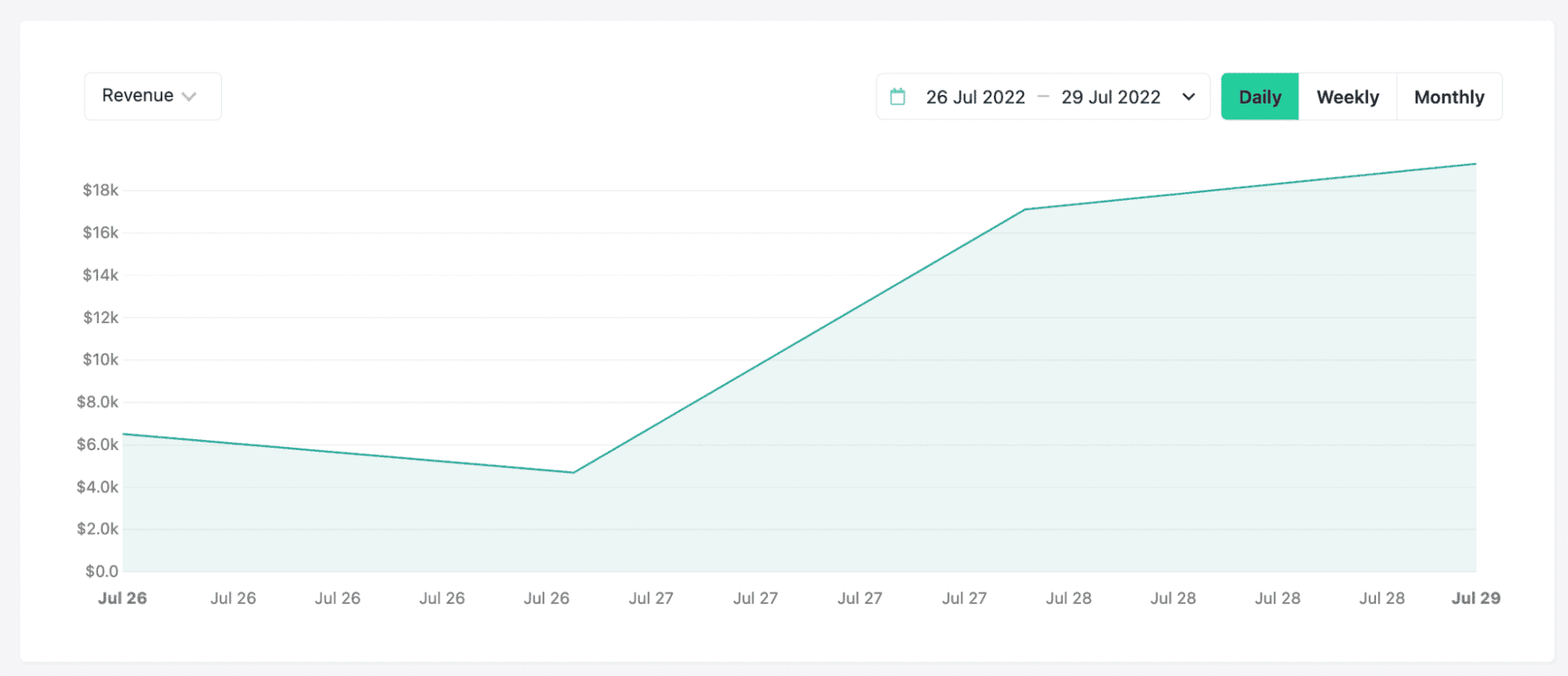
This is a graph showing the revenue from a recent 7-day course sale in our company. Can you see when most of the sales came in?

Here’s the breakdown, income report style:

  • Total sales: $102,400
  • Total sales within the final 24 hours: $59,000 (57.6%)

Here’s another example from a recent 3-day sale we just ran, too:

Image of a graph with sales spiking on the last day

The breakdown:

  • Total sales: $47,200
  • Total sales within the final 24 hours: $36,000 (76.3%)

This last minute pattern holds true for every single sale that we’ve done, and the more we highlight the deadline to decide the more sales we see right before the deadline.

Every. Single. Time.

Plain and simple: unless there’s a reason for a buyer to make a decision now…they won’t.

Here are three key takeaways from all of this:

  1. Legitimate, authentic marketing is about helping people make a decision, one way or another. More specifically, it’s about helping people make the right decision for them.

    It shouldn’t be about trickery or over-promising, but being honest and upfront about what’s being offered, the transformation that’s on the other end, and giving them a reason to make a decision now. Even if they pass on your offer, that’s a good thing – that means they made a decision.
  2. During a sales window, you must highlight (and repeat highlighting) when a decision needs to be made and what’s at stake. We may send up to 3 emails on the final day of our sales window to warm audiences, and each email converts progressively more.

    None of this will work unless you truly believe and know that your product or service actually helps people. Without that, selling will feel icky to you and to your audience. But, when you come from a place of service, the pressure you offer to make a decision shifts from “sales pressure”, to “service pressure” – the idea that you’re encouraging a decision because that’s the only way to begin and best serve your people.

Your Call to Action

If you’re stuck selling a product or service with little to no movement, insert a flash sale into the calendar within the next month. Provide a small window (i.e. 3-5 days) to take advantage of an offer that will go away, whether it be a bonus or even a discount. You could align this with a season or event (like a “Back-to-School Special”, if that makes sense for your brand), or just because.

If you don’t have a product or service yet, think about a reason to push a decision to join your email list. Perhaps there’s a special training you could offer, or even a limited-time lead magnet that relates to your audience that goes away or gets removed after a certain point. It can always come back later, but having the deadline will increase your conversions like crazy.


I hope you enjoyed this 5-minute read! To get more like it every week (again, totally free), sign up below!

Get Unstuck

Subscribe to my weekly newsletter, Unstuck, to get tips, tools, and my best advice for creating a thriving online business.

Nigerian proptech Spleet gets $2.8M led by MaC VC to scale its property management products • TechCrunch

0
Nigerian proptech Spleet gets .8M led by MaC VC to scale its property management products • TechCrunch

For the average individual living in Lagos — Nigeria’s most populous city, with over 20 million people — apartment hunting is an extreme sport. Not only is rent expensive — low- to middle-income housing can cost between $1,000 and $5,000 yearly — but renters must also pay a year in advance, sometimes even two before moving in.

Landlords in the city, like any in Nigeria, have stuck to accepting rent in this manner for decades because they find monthly payments unsustainable; to them, annual up-front fees reduce administrative costs and the chances of renters defaulting. But in effect, renters are placed in a precarious position of finding their first lump sum for the first year’s rent and subsequently saving some money from their salary for the following rent.

Dolapo Adebayo encountered this problem while searching for an apartment after returning to Nigeria from the U.K. In 2018, he and Akintola Adesanmi — who was no stranger to how rent worked in Nigeria and also desired to effect change — brainstormed Spleet, a platform that partners with apartment owners to list their properties and offers renters options to pay rent monthly, quarterly and biannually.

While Adesanmi worked for years in Nigeria’s banking and fintech space, his family’s real estate background pushed him to establish a startup in proptech. This relationship also supplied Spleet with the critical network of landlords required to list multiple units when it went live; the pitch to landlords was that Spleet would bring proper KYC into the rental process and allow them to verify tenants and automate rent collection.

“Our solution on the tenant side was a no-brainer. It was the landlords who needed convincing, but it helped that we already had a network of landlords,” said CEO Adesanmi in an interview with TechCrunch on the company’s takeoff. “So instead of going out and raising venture capital, we decided that we were going to bootstrap because we could convince some landlords to list their homes on this platform that we had built and derisk some of their problems.”

The founders bootstrapped Spleet for 18 months before conducting a family and friend round of $265,000. This process allowed the four-year-old startup to establish good unit economics and significant traction before scaling, Adesanmi noted. It also became clear there was a great demand for its subscription-based product — it has had over 68,000 unfulfilled requests since launching — even though apartments listed on its platform can be pricey for the average renter in Lagos. Many of Spleet’s customers are middle- to high-income earners (paying between $200 and $1,000 monthly). To them, paying a premium on monthly or quarterly rent beats saving up cumulatively less than that for yearly rent.

Spleet’s growth has courted investors’ attention. This March, the company announced a pre-seed investment of $625,000. Then in July, it became the first African startup to join New York’s MetaProp Accelerator. Now it is announcing the completion of its $2.6 million seed funding led by Los Angeles–based early-stage VC firm MaC Venture Capital. The round also welcomed Noemis Ventures, Plug and Play Ventures, Assembly Funds, Ajim Capital, Francis Fund, existing investors from its pre-seed, MetaProp VC, and HoaQ Fund, and proptech operators such Eduardo Campos and Paulo Buchucher of Yuca and Majed Chaaraoui of Insurami.

The investment will see Spleet scale its products: the flagship residential rent management and rent financing solution. The rent financing solution, dubbed Rent Now, Pay Later, gives renters access to no-collateral loans up to ₦3 million (~$6,000) with an interest of about 3.5% monthly to finance rent payments. Spleet has beta-tested the product since December — built on the back of payroll access — with a handful of users, who make a one-month down payment while the company finances the remaining 11 months. Its nonperforming loans ratio recorded during this period stands at 1.2%, Adesanmi noted.

“If you think about more developed countries that have rent data, they use it to either get a mortgage or a school loan or things like that because you can verify yourself with that rent data,” the CEO said about the BNPL product. “So we’re getting a lot of that type of data. We will probably build a repository of that data so our customers can leverage that data to access other goods and services.”

Spleet is also expanding its residential rent management offerings to include Collect, a service that automatically receives rent payments on behalf of landlords and Verify, a tool that enables landlords and real estate agents to vet and carry out adequate background checks on tenants before offering lease agreements.

The proptech has processed over $3.5 million in rent since its inception and onboarded over 35 individual and corporate landlords; the latter lists multiple housing units at once. Spleet has also housed over 1,000 tenants, and while that might seem small, it’s worth noting that their average lifetime value is 26 months.

For years, proptech, unlike fintech, hasn’t witnessed exploding growth in Africa despite real estate needing as much innovation as financial services in the region. But there’s recent activity suggesting that growth is imminent in the African proptech space. One, startups are building solutions identical to other emerging markets, such as QuintoAndar in Latin America, Huspy in the UAE and NoBroker in India. Second, accelerators like Techstars are creating dedicated programs for such startups on the continent, while MetaProp is accepting more African proptech startups into its program.

Eventually, these various activities will foster competition in the space. There are similar providers in the relatively early proptech category Spleet plays in — for instance, Rent Small Small, Kwaba and Muster — and it expects to increase its significant market share and outpace competition following the raise. “I think one of the things that kept us grounded was that we didn’t come solving this problem as finance professionals. Proptech is infinitely different from fintech, and the beginning is always slower,” Adesanmi said about Spleet’s competitive advantage. “If you look at Airbnb, Booking.com, and other global players, even QuintoAndar, they started slowly before blitzscaling. For us, we didn’t take the burning cash to grow approach. We took a let’s get the business model right before we start to grow approach, and bootstrapping made us execute well and understand the landscape better.”

As Spleet prepares to test out new markets early next year, MaC Venture Capital managing general partner Marlon Nichols said his firm is proud to partner with the proptech company as “it continues to bring forward a comprehensive solution that effectively serves both sides of the housing market and makes true deposits to combating homelessness in Africa.”

The dividing wall between social and traditional media is fast coming down – Love or hate social media, ignore it at your peril

0
The dividing wall between social and traditional media is fast coming down – Love or hate social media, ignore it at your peril

Whether you go into it kicking and screaming, the elephant in the room of any robust media profile, is, dare I say it, social media.

React to the news agenda, or alternatively push out your own practive content, using both traditional media and social media is fast becoming a given.

The Berlin Wall that divided the country from 1961 to 1989 eventually came crashing down. And so too will the wall that still divides traditional media and social media.

As King Soloman, who reigned Israel from 970 to 931 BCE, once said: “This Too Shall Pass”.

Traditional media outlets that publish by both analogue and digital is one thing. Like The Guardian, who back in 2011, announced their adoption of a ‘digital first’ strategy. That’s still traditional media as far as I’m concerned.

But instead I’m talking about equally harnessing social media in all it’s various guises – as well as pushing your profile into traditional media outlets like TV, radio, newspapers and magazines and their online equivalents.

No mean feat.

TikTok, once for pre-pubescent kids to sing into hair brushes – is now used by the World Economic Forum.

Wakelet.

YouTube.

Twitter.

SnapChat.

Instagram.

Linkedin.

The works….

In terms of reverse-engineering a mainstream media profile, there’s no one as formidable as KSI, which stands for ‘Knowledge Strength Integrity’.

KSI’s real name is Olajide Olayinka Williams “JJ” Olatunji.

Born in 1993 in Watford, it all started out in 2008 when KSI started providing gaming commentary videos of the FIFA video game series.

As of September 2022, he had over 40,000,000 subscribers and over 8 billion views across his three YouTube channels. 88.6% of KSI’s followers are young males.

Who would think, one individual whose harnessed social media – namely YouTube – would have more media reach today than the BBC, ITV, GB News and TalkTV?

In May 2020, The Guardian sat up and took notice with the headline ‘KSI: Money Gravitates Towards Me’ stating ‘KSI is as recognisable to teenagers as Tom Hanks is to the rest of us’.

Today he owns ten properties around England worth over £10 million.

The Sunday Times estimates he makes over £12,000,000 per year. In 2020. The Times rank KSI as Britain’s biggest influencer.

This is the same man that used referred to girls as ‘sluts ’in his content. He was widely criticised for his self-described ‘rape face’ in 2012 and 2013.

Microsoft even cut ties with him and he was banned from Eurogamer events after third party allegations of sexual harassment of female staff.

But today, a more grown up KSI is both a social media and traditional media crossover Superstar.

And he’s pretty much the CEO of all of businesses that he’s leveraged off his profile.

Becoming a Professional Boxer generated $8.5 million from pay per view and $3.5 million for ticket sales.

In 2015, he published his biography titled KSI: I Am A Bellend.

His solo album Dissimulation was released on 22nd May 2020 debuting at No. 2 on the charts. His second album went straight in at No. 1. He owns his own music company called ‘The Online Takeover’ and has been signed to BMG, Atlantic Records and MORE.

He’s also a comedy actor, featuring in the British comedy film, Laid in America (2016).

The Sidemen are like his family business. They own their own food company called ‘Sides’.

Prime Hydration is a drink company created with his boxing rival Logan Paul and they are official sponsors of Arsenal Football Club.

The Sidemen who he is a part of also own XIX Vodka and a restaurant chain known as Sides.

But most interestingly, he’s now properly crossed over into traditional media. – even though he’s totally born of YouTube.

He did The Great Stand Up To Cancer Bake Off. He appeared on an episode of BBC’s Blue Peter in July 2021. He was on Channel 4’s Celebrity Gogglebox from 2020-21.

Then there’s the one and only British YouTube fitness sensation, Joe Wicks, The Body Coach.

The Lockdown was good to Joe where he have us his daily diet of remote-fitness classes via YouTube. His Twitter is now 428,100 followers. YouTube is 2.81 Million subscribers. Instagram is 4.5 Million Followers. Facebook is 4.5 Million Followers.

Joe Wicks MBE became ‘Dr Joe’ at a Graduation Ceremony at St Mary’s University, Twickenham in July 2022, receiving an honorary doctorate in Sport and Exercise Science. He’s now as much a darling of traditional media as Jamie Oliver – becoming a true household name.

Another entrepreneur whose stepped from the social world and embraced the traditional media world is Steven Bartlett. Steven Bartlett’s Twitter is at 212,000 followers. Linkedin is 847,258 followers. YouTube is 482,000 subscribers. He founded Social Chain. Now he’s on BBC Dragons’ Den is an investor.

Social media is exposing and hanging out to dry some of the pre-internet icons – or at least showing they’re somewhat ‘challenged’ by the social media world.

Some winners and some losers. A quick audit.

Lord Sugar has used his mainstream TV profile to build a big fan base on Twitter and delivers them his brand of nonsense witticisms. On Instagram he’s less prolific.

Twitter
@Lord_Sugar
Chairman of Amshold Group, owner of @Amscreen and Amsprop.
Born March 24 Joined June 2010
3,110 Following
5.2M Followers

Instagram
# lord_sugar
Verified
803 posts
176K followers
869 following
Alan Sugar
Chairman of Amshold Group. Owner of @Amscreen and Amsprop. Host of The BBC Apprentice. amsvest.co.uk

Robert De Niro, one of the biggest stars in the world had one brief foray with social media. Below is his first and last tweet, which was on May 16, 2014.

Robert De Niro
@Rob_D_Niro
Official Twitter Account of Robert DeNiro / Actor, director, producer, voice actor & father.
Joined May 2014
0 Following
10.9K Followers

May 16, 2014
Hello Twitter! Unfortantly its official and I’ve given into the blue bird! #myfirstTweet #RobertDeNiro #official #sharethenews

Rupert Murdoch, the most powerful media tycoon in the world had a burst on Twitter, but then was never to be seen or heard from again since March 2016.

@rupertmurdoch
Joined December 2011
125 Following
670.5K Followers

3:31 PM · Mar 4, 2016·Twitter for iPad
No more tweets for ten days or ever! Feel like the luckiest AND happiest man in world.

The most daunting aspect of starting out on social media is the sheer scale of content production and distribution that is required.

Production of content. Then scheduling. The ask is enormous.

It’s the modern equivalent to making the film, Ben Hur.

President Barack Obama may look like he’s getting idea popping into his head and posting it on social media.

But its actually a team of around 50 people handling his personal social media posts.

Back in 2009, Barack Obama was one of the first people to truly embrace the power of social media properly. Back then he had 115,000 Twitter followers and used 14 social media channels. Today, he has 133 million Twitter followers.

Canva simplifies the process of designing beautiful posts and then resizing them for all the different size requirements.

Then there’s a flood of AI tools that now author a multitude of pithy posts en masse, all spell checked, nothing plagarised that could upset Google’s algorithms.

So rather than a team of 50 to keep up with Obama on social media, you can keep up much easier with AI augmentation. ‘Yes you can’.

The key when unleashing ‘augmentation’ of your social media activity, is to still give it your own defined style and feel.

Everyone, armed with AI tools is starting to look and sound very much the same even though their supposed ‘high quality content’ is prolific.

There’s a soup of samey ‘high quality’ well-designed social media content out there.

Remember to always adhere to the single minded proposition and your ‘sales objectives’ when planning.

But particularly for social media, there should be around 30 themes or hubs with all the content falling within it– whether it’s article links, videos, retweets falling in a repeating fashion into each of these hubs.

Wakelet is the world’s best tool for organising all the these content pillars and storing online all the tweets, PDFs, PJpegs, MP4s you find and want to push out across all your social channels later.

Well timed out and scheduled regularity builds an organised pattern and slowly but surely pushes the single-minded proposition which sits behind it all.


Richard Hillgrove

Richard Hillgrove is to the go-to man for all entrepreneur’s PR needs. At the birth of BBC business show, Dragons’ Den, he represented BBC Dragon Duncan Bannatyne OBE for 3 years. Then James Caan CBE for 7 years. He even looked after former Dragon and Yo! Sushi Founder Simon Woodroffe OBE. He’s looked after scores of the Channel 4 Secret Millionaires. Hillgrove has represented the Godfather of Advertising, Charles Saatchi through to Dame Vivienne Westwood, Amber Heard, Rose McGowan and Hollywood actor, Steven Seagal – all entrepreneurial in their own right, although not your ‘serial entrepreneur’ in the strictest sense of the word. For Global Entrepreneurship Week 2014, Hillgrove organised the landmark ‘Haka for Business’ in Piccadilly Circus winning the High Impact Award. Now he’s teaching you how to bootstrap and DIY your own PR to media and financial success. You can cut all the crap, drive off-road and make a major impact.
He can be reached on: [email protected]

Steve Case is trying to make money with founders outside Silicon Valley; his plan is starting to work • TechCrunch

0
Steve Case is trying to make money with founders outside Silicon Valley; his plan is starting to work • TechCrunch

Steve Case, the cofounder of America Online, the investment firm Revolution, and its offshoot seed-stage arm Rise of the Rest, has a new book out called Rise of the Rest: How Entrepreneurs in Surprising Places are Building the New American Dream. In it, Case argues that Covid was a “shake the globe” moment for entrepreneurship, and that power will never again reside as it once did in cities like San Francisco and New York and Boston.

We spoke earlier today with Case about the book; we also chatted with him about the mentality of coastal investors, whether he harbors any political aspirations, and the status of his relationship with Ohio Senate candidate J.D. Vance, who worked closely with Case at one point (they appeared together at our TechCrunch Disrupt event in 2018).

Case also talked up a number of his bets, which have, perhaps to the surprise of skeptics, taken off since he began investing across the country. He relatedly suggested that one major piece of advice that he tries to impart when speaking with founders is the art of storytelling itself. (A powerful narrative can go a long way, particularly when you’re out of the sightline of some of the most powerful investors in the country.)

More from our conversation follows. These excerpts have been edited for length and clarity. (You can hear the longer conversation here.)

TC: You’ve been on a mission dating back to 2014 to bring more attention to founders around the country,  traveling something like 11,000 miles across 33 cities. With Covid fading away, are you back on the road now or have you bookended that chapter?

SC: It [that national tour] came out of some effort a little over 10 years ago; I was asked by President Obama to chair an initiative called Startup America Partnership. And that got me focused on regional entrepreneurship and this imbalance that we’ve talked about before in terms of how 75% of venture capital dollars [were] going to just three states. And the more we visited cities, the more cities we wanted to visit. We did obviously have to stop when the pandemic hit and we have not yet restarted in terms of physical tours. But we are spending a lot of time traveling around the country. The Rise of the Rest team, which is now about a dozen people, has visited dozens of cities over the last six months.

Chris Olsen of Drive Capital in Columbus, Ohio told us a few weeks ago that though his firm had laid the groundwork for more VCs to come to the area, the opposite happened post Covid, that they’ve retreated back to the coasts. Are you seeing the same thing?

[I think] while some may hunker down in a more difficult environment and focus more on their existing investments, I do believe we hit a tipping point during the pandemic, and that will result in an acceleration of more capital flowing to more cities and more entrepreneurs in those cities.

Most people in most parts of the country, if they wanted to be part of the innovation economy, they felt they had to leave where they were to go to the coast. That started slowing over the last five years and picked up in terms of people relocating during the pandemic, [which] ended up being kind of a shake-the-snow-globe moment for society, and also for a lot of families. They kind of reassessed how they want to live and work and where they want to live and work, and that likely will result in a permanent, dynamic.

Where has Rise of the Rest invested the most dollars?

We have through our rides made 200 investments in 100 different cities, so it’s fairly broad. And we’re seeing momentum in many, many cities. Indianapolis is an example of a city that most people don’t really know what’s happening there [and one of the reasons is a] tentpole company that’s there, ExactTarget. It was acquired [in 2013] by Salesforce for $2.5 billion and, at the time, had 1,000 employees. Now Salesforce has 2000 employees in Annapolis, and [it’s] the second-largest Salesforce office outside of San Francisco, and the founder of that company and many of the early employees of that company have gone on to start new companies.

We also have seen interest in places like Richmond, Virginia; we backed a company called TemperPack that focuses on sustainable packaging. They actually started in New York City but decided to move to Richmond to build out their manufacturing capabilities, and they’ve gone on to raise $140 million in a round led by Goldman Sachs. We backed [online farmland investment company] AcreTrader whose founder, Carter Malloy,  was in San Francisco decided to move to Arkansas to get the close to where the farmers are. We invested in Chattanooga in a company called Freightwaves that’s focused on building a Bloomberg data platform for the trucking and logistics industry.

Have you had any exits?

One of our seed companies, [Kentucky-based] AppHarvest, went public about a year ago [via a SPAC]. About a year ago, another company based in the D.C. area, FiscalNote went public last [via SPAC]. There’s another company out of Kansas City called Backlotcars that was acquired with a pretty significant exit company.

I think we’ve seen [the portfolio] get to seven unicorns so far, so it really bodes well for what’s happening in these places.

How does one go into business with you?

For the Rise of the Rest fund, we’ve invested with over 300 different regional venture capitalists. They lead the rounds [and] they take the board seat, because of the velocity of investments we were making. We play more of a role of connecting these entrepreneurs and connecting these investors to build essentially a Rise of the Rest network.

Do you fund these venture firms as a limited partner?

We did some of that early on, but because we’ve co-invested now with over 300 of them, we were getting a lot of requests to be investors in those funds, and we decided to back off on that because we wanted to build the broadest possible network.

At the very same time that people are moving back to their home towns or other more affordable places, the political landscape is changing in dramatic ways that some are sure to find off-putting. Abortion bans are so divisive. 

Historically, cities were competing to get companies to move. Now they’re competing to get people to move. And everybody will have a different set of criteria that they prioritize. Maybe they move for family reasons, or cost of living reasons, or because there’s industry expertise in an area that you want to build on, or [it could tie to] lifestyle choices like biking or skiing. With some states, taxes make it more attractive.

I do think people will factor in some of these social issues, including the recent Dobbs ruling, and take a step back, and I think people making these decisions– whether it be local and state leaders or others in the community, even the media — should be thinking about and being aware [of this issue]. I think we want to avoid hyper partisanship in the country. We have enough issues that divide the country; we want to avoid a sort of entrepreneurial culture war.

As someone who has run an international business and probably been under pressure yourself to be political, do you think companies should take a stance on social issues?

I think every CEO has to decide, and some [of that] depends on which issues they want to weigh in on and which issues they think are most important to their key constituents, whether it be their employees or their customers or others. But [some of why people move to certain places will tie] to what the mayors and governors and politicians do. But some of it also will be what the entrepreneurs and the CEOs of the big companies decide to do.

I’m curious about your relationship with JD Vance. He managed the Rise of the Rest fund at the outset. What is your current relationship with him and what do you think of some of the positions that he has taken?

JD joined us probably four or five years ago, right after he came out with the Hillbilly Elegy book. Part of the reason for that is his wife Usha was going to be working in the Supreme Court as a clerk there for a year in Washington, DC, and we’re headquartered in Washington, DC. So he really helped launch the first Rise of the Rest fund. But after they were in DC for a year, they decided to move to Ohio, and he continued in a role for another maybe six months or so but ultimately decided he wanted to launch his own fund, which he did in Cincinnati.

I have not talked to him since he announced last year that he was running for Senate and I’ve not supported that campaign. Frankly, I’ve been surprised by some of the things he has said, which are, by his own admission, inconsistent with some of the positions he took several years ago.

Do you have any ambitions to become a politician? You have that beloved CEO thing going for you

I appreciate you saying that, but part of the reason I think I’ve been successful on policy, including even a decade ago, working on the JOBS Act — the Jumpstart Our Business Startups Act — and more recently, some of the work around regional hubs is because I’m not political. When we’re traveling around, we invite Democrats and Republicans to join us on the bus and everything we’re doing is trying to make innovation, make entrepreneurship, make startups, and make job creation a nonpartisan issue.