Home Blog Page 38

Mergers, acquisitions won’t go away from banking sector – Lemo

0
Mergers, acquisitions won’t go away from banking sector – Lemo

A former Deputy Governor of the Central Bank of Nigeria and now Chairman of Titan Trust Bank, Dr. Babatunde Lemo, speaks with OYETUNJI ABIOYE on the nation’s banking sector, foreign exchange crisis, among other issues

With the ongoing war between Russia/Ukraine, what are the factors limiting Nigeria from tapping effectively into the oil global market?

Let me just put this in two compartments. The Ukraine crisis is global. Of course, you know that Ukraine, and Russia account for about 30 per cent of our wheat imports and it is a staple food. Wheat is used in bread production and the situation is worse even in North Africa and the rest of the world. So, we’re having a serious food crisis because there’s a crisis in Ukraine that is global, and this is adding even to our food inflation, which today is in excess of 20 per cent. But we also have a peculiar problem in Nigeria because our currency is also crashing by the day, no thanks to oil theft. One of the major captains in the industry actually told us that Nigeria may be losing about 700,000 barrels per day and that’s quite humongous. If you compute that at the rate of $100/barrel, that’s a lot that we are losing. And so, if we have this coming into our foreign exchange earnings, we will not be having the crisis that we are having today. The foreign exchange crisis that Nigeria is having today is as a result of local problems. In addition to that is the subsidy which the government can no longer afford to make provisions for. We may end up with about N6tn to N7tn subsidy bill at the end of the year. Can we really afford that? The labour unions insist we continue to subsidise oil, but they forget that this money could have gone into education, health, security and so on and so forth. I feel we need to sit down and have a conversation and this should be on a bipartisan basis. Let’s have a conversation about the fact that we cannot sustain this subsidy, every other country all around us sell crude at least double the price at which we do. So, today, we’re being battered from all fronts, and we need to really address these challenges.

Do you think the COVID-19 pandemic and the ongoing war in Ukraine have had a significant negative impact on banks especially Nigerian lenders?

I want to give kudos to the Nigerian banking sector, as the banks are very resilient. You will find that COVID did not really deter services provision, and prior to COVID, there was the significant transformation of the banking sector, which is why today you don’t need to visit your bank branch to enjoy banking services. That’s why the banking sector was not terribly affected by COVID. Indeed, they actually assisted in ensuring that we get out of COVID through donations, as they were undertaken through the central bank to fight the virus. And so, post-COVID, I believe well that it can no longer be business as usual. COVID has actually opened our eyes to better ways of doing things as you can actually work from the comfort of your home. You don’t have to go to work every day of the week, provided of course, you can work from home. For me, I look at the opportunities that COVID has actually provided to mankind and not the setback that we have for the 12 to 18 months that we had COVID.

Nigeria’s inflation rate hit 19.64 per cent in July 2022, driven by food components. As a former CBN deputy governor, what advice will you give to the present CBN administration?

I will say what advice do I have for Nigerians? You see, people don’t understand this. High inflation is as a result of so many things, some exogenous to the central bank, and some within the purview of the CBN. But we have a country where we are almost at war, and of course, you know what is happening to capital flight as a result of this. You know what is happening to food inflation because people are not allowed to work in farm. The entire Middle Belt is having a very serious problem and that’s the food basket of the country. Once you don’t have farmers who can go to their farms without any hindrance, then you have a serious spike that we have seen today. And then, of course, you can no longer travel freely by road and don’t forget that goods are also transported from one part of the country to the other. There is a significant oil theft in the Niger Delta that is also affecting our currency and thereby bringing imported inflation. So, when you sit down and ask: Is it the central bank that should be battered, yes, they need to sit and do a lot more on their own, but I think it is the entire country. The government, in particular, needs to ensure that they provide security for lives and property. They need to work on oil theft. When we have done all of that, then we can then sit down and tell the monetary authority that there are other things that you also need to do, which of course may also include ensuring that the Ways and Means Advances are moderated.

What is your view about the increase in the nation’s GDP in the second quarter, according to the NBS?

Well, for the GDP growth, everybody is celebrating it, I’m not celebrating it because we need to decompose that GDP and see where those growths are coming from. If they’re coming from sectors that do not impact the lives of average Nigerians, I’m not going to celebrate it. If the growth for instance is coming from the Information Communication Technology, agriculture and manufacturing sectors-all these are commendable. But then, how do we then ensure that this translates into a reduction in employment rate and positively impact the human development indices? That’s when the man on the street will reap the benefit of a high GDP. GDP growth is good, but I will say it is a necessary but not sufficient condition for improvements in people’s lifestyles. We must ensure that we do something about the unemployment rate that is high. We must do something about the security of lives and property so that people can go to work. We must continue to encourage young people. I think most of the growth that we are celebrating is from the young people as their potential is greater. This is a country that should be growing at double digits. We’re celebrating 3.5 per cent growth when our population is growing at 3.1 or 3.2per cent. We are flat on a per capita basis, provided of course that is sustained. If it is not sustained then, on a per capita basis, we will need to jumpstart a kind of growth process that will take us from a per capita income of just over $2,000 to $5,000 or $6,000; and then we will be celebrating.

With the competition posed by fintech firms, do you think banks must raise their game to protect their revenue and business?

The banking sector is already leveraging fintech as you can see that many of these new microfinance institutions are fintech-led, and many of the new generation banks are fintech-led also. I head Titan Trust Bank, of course, we leverage fintech for all that we’ve been able to do in the past four years. So, the banking sector already knows that there is a major disruption in banking activity and that is fintech. It is either they embed that in the way they run their business or they will be overrun by the fintech companies, which are already making a foray into the financial services industry.

About the FX crisis, what are the best ways the CBN can tackle these challenges and make the local currency competitive at the global market?

I do not think EFCC’s threat to arrest foreign exchange hoarders is the solution and that the way out is to allow the free flow of foreign exchange. Let’s have a policy, both fiscal, monetary and trade policy, that will ensure that the economic players actually move dollars into Nigeria because they know they will make money. So the central bank should ensure that there is rate stability, they should ensure that the forex market is done in such a way that it is easy to bring liquidity from other spheres.

As the chairman of Titan Trust, do you foresee more mergers and acquisitions in the Nigerian banking sector?

Well, that’s clearly something that will not go away, just as you can see it even in the international financial services sector. Today, you see JP Morgan Chase is almost a combination of four institutions. And that will continue, and so, that will also continue in Nigeria. You see, what is very certain is that the global economies is very dynamic, it is no longer the big fish that swallows the small fish. It is a smart one that swallows the ones that are not smart. So, you will continue to see more and more of that. And that’s pretty much because of the nature of the global economy and the Nigerian economy will not be an exception.

As a former CBN deputy governor, do you think Nigerian banks are doing enough to tackle the issue of high non-performing loans?

NPL is a reflection of the state of the economy and it is elevated. My prognosis is if care is not taken, it’s going to be elevated further still; because when you have a stiff economic environment that is very hostile, business failure will be more common. And once that happens, of course, default rates will go up. The only way we can address that is for the overall financial environment, the overall economic environment have to be more-friendly.  This is apart from the fact that they (banks) need to ensure that their underwriting skill is sharpened and they need to ensure that they are embedding risk management in the way they do things.

https://punchng.com/mergers-acquisitions-wont-go-away-from-banking-sector-lemo/

Tourism Stocks Banking on Wanderlust Redux – ShareCafe

0
Tourism Stocks Banking on Wanderlust Redux – ShareCafe

Qantas says it lost $1.9 billion last financial year, as COVID losses and fuel costs rose but promised shareholders a reward of a $400 million buyback and also reassured its customers that its aggravating operational problems should end next month.

The carrier recorded a statutory loss after-tax of $860 million, a nearly 50% improvement on 2021’ loss of $1.7 billion.

Underlying earnings before interest, tax, depreciation and amortisation was $281 million, 31% lower than 2021.

Qantas will also revealed invest more than $400 million in customer loyalty offerings including new lounges and new routes such as Auckland to New York.

Qantas CEO Alan Joyce said the airline said losses related to the pandemic now add up to nearly $7 billion over the last three years.

However, Joyce said the latest result shows that the company is showing signs of a rapid recovering from the effects of COVID-19 lockdowns.

“The numbers we’re reporting today put the full impact of the Delta and Omicron lockdowns on the Group in stark financial terms.

“But they also show how quickly – and how strongly – the recovery is now happening.”

The airline’s aggressive cost-cutting program- which axed about 9,400 jobs and saved the company about $650 million in 2021 – has been blamed for terrible operational performance and the attendant bad publicity that’s caused thousands of delayed and cancelled flights in recent months, including long queues, unanswered phone calls, website problems and a surge in lost baggage reports and claims.

Compounding the problem has been the number of staff falling ill due to COVID-19 and the flu. Sick leave is estimated around 50% higher than normal as a result.

Qantas formally apologised for its chaotic recent performance on Sunday and extended an olive branch to its frequent flyers, offering them $50 flight discounts, additional lounge invitation and improved reward seat availability.

To address the staff shortage, the airline introduced temporary domestic capacity reductions (taking planes out of service) of more than 10% to boost the number of available staff for the smaller fleet of aircraft.

Qantas says it has also hired about 1,500 people, with 80% employed in operational roles such as cabin crew.

The Board said the on-market buyback of up to $400 million is being undertaken “as the benefits of the recovery materialise. This is the first return to shareholders since 2019 and follows $1.4 billion of equity raised at the start of the pandemic” in 2020.

The equity issue was made at $3.65 a share, Qantas shares traded around $4.86 yesterday (up more than 7%), meaning a very juicy profit of $1.21 a share if that’s the buyback price when it starts (or more than 30%) over three years.

Qantas said it has entered 2022-23 “with its balance sheet repair process effectively complete, strong levels of travel demand and a clear path to improving its COVID-related operational challenges.”

The airline says its current forecasts see its recovery plan to be completed in this financial year, delivering $1 billion in annual cost reduction. “Parallel focus on offsetting CPI from FY19 to FY23 through additional cost and revenue initiatives “(more, unspecified cost cuts).

Fuel costs for 2023 are forecast to be $A5.0 billion, “driven by a ~60 per cent increase in fuel prices compared to FY19.”

Revenues are expected to fully recover increased fuel prices across the Group as well as temporary unit cost increase associated with addressing operational challenges – so no deep discounts or bargains. That means seat prices will be at maximum for the coming year.

To help, Qantas is cutting its group domestic capacity by a further 10 percentage points in response to higher fuel costs and operational challenges. “Some capacity may be restored once operational resilience improves.” That will apply to Qantas domestic, Jetstar and QantasLink.

But Qantas said group international capacity will “increase as more A380s and 787-900s enter service and overseas borders continue to reopen.”

Strong yields in Qantas Freight expected to moderate but remain above pre–COVID levels.

Qantas also said its debt had been cut to below optimal levels by June 30.

“Strong revenue intakes, plus the sale of surplus land, helped the Group to lower its net debt to $3.94 billion, taking it below the optimal target range of $4.2–$5.2 billion. Total liquidity at 30 June 2022 was $4.6 billion including $3.3 billion cash,” the airline said on Thursday.

…………

Meanwhile, Flight Centre narrowed its full-year loss to $287 million and says it is confident underlying earnings are rebounding from the pandemic’s losses

It posted a statutory pre-tax loss of $377.8 million for the 202-22 financial year, a significant improvement on the $601.7 million loss it incurred the previous year.

Its statutory after-tax net loss for the 12 months to June 30 came in at $287.2 million.

Underlying earnings also narrowed sharply to a loss of $183.1 million, within the company’s guidance range for a loss between $180 million and $190 million but adrift from many analyst estimates.

But for all those signs of an improvement, the shares slid 4.5% to $16.55 as there was a feeling the figures in the report didn’t quite live up to the hype in recent updates.

Like Qantas, Flight Centre, fourth quarter saw a big improvement as borders re-opened, Covid restrictions were eased and people regained their confidence and started travelling again – firstly domestically and in the 4th quarter, internationally.

Flight Centre said its fourth quarter total transaction value (the amount spent through its channels) exceeded the TTV for all of 2021 and its global corporate and leisure businesses, other than Asia and ‘other’ segments, reported a positive underlying EBITDA.

Total revenue for the company topped $1 billion and the company said there was still considerable pent-up demand for travel that has yet to be met.

Australian outbound travel is improving but is only 35% of pre-Covid levels and in bound holidaymakers were only starting to return to travel.

A full market recovery was not expected until 2023 but the strong momentum of the 2022 fourth quarter was providing momentum in the new year.

Provisional Australian Bureau of Statistics data for July showed passenger numbers are improving. There were 1.083 million arrivals and 973,000 departures. Both were the highest since the pandemic began, reaching 54% and 55% of July 2019 levels.

That was after the weak 2021-22 year data showed (because of the limited international travel during the financial year), the number of short-term visitor arrivals increased nearly eightfold, to 1.192 million, with seven times as many short-term resident returns, up to 1.591million.

While increasing, these financial year totals are still less than 15% of those for 2018-19, the ABS said.

Flight Centre says the recovery in travel and tourism is being hampered by a slower return of airline capacity. The absence of Chinese carriers and a reduced presence from Virgin Australia were among key issues.

“(The) added complexity, cancellations and delays, challenges in securing seats again reinforces travel’s resilience and are helping fuel a renaissance if the expert travel advisor across both leisure and corporate,” the company said in Thursday’s release.

“While supply constraints and macro-economic changes are being monitored they are not currently, noticeably impacting demand.”

The company backed away from providing specific guidance for 2023 because the rebound in travel was “still in its infancy”, while China remains closed to travel and airline was capacity was yet to stabilize.

“Profit and TTV recovery are unlikely to be linear and again expected to be heavily second-half weighted,” Flight Centre said.

But CEO Graham Turner was his usual upbeat self in Thursday’s outlook, saying there was a much brighter outlook.

“Travel demand has recovered rapidly since most governments globally removed or relaxed border restrictions and we have started the new fiscal year with strong momentum,” Turner said.

“In the leisure sector we are generally gaining market share in our core markets, increasing productivity and capturing more sales and securing a strong pipeline of account wins to drive future growth.”

https://www.sharecafe.com.au/2022/08/25/tourism-stocks-banking-on-wanderlust-redux/

Monk Jay Shetty went from ‘experimenting with drinks and drugs’ in London to marrying  J.Lo

0
Monk Jay Shetty went from ‘experimenting with drinks and drugs’ in London to marrying  J.Lo

Inspirational speaker Jay Shetty, who ditched his finance career to spend three years living in an Indian monastery,  was the surprising officiant for Jennifer Lopez and Ben Affleck’s Hollywood wedding this weekend. 

Stunning photos obtained by DailyMail.com show the celebrity couple known as ‘Bennifer’ smooching as they held their second wedding ceremony with loved ones on Saturday at Affleck’s rural estate in Riceboro, a month after they secretly wed in a small Las Vegas service.

They have since had their ceremony in front of friends and family, with the blessing ending with a kiss, according to a source who spoke to E! The New York Post reported that Lopez wore a Ralph Lauren gown.

However their officiant wasn’t a fellow A-lister, or American priest – but a Brit from North London who quit his job in the City to become a monk before finding social media fame. 

Inspirational speaker Jay Shetty, who ditched his finance career to spend three years living in an Indian monastery, was the surprising officiant for Jennifer Lopez and Ben Affleck’s Hollywood wedding this weekend

The 34-year-old was born and raised in London, where he had a rebellious childhood having been suspended from school three times and threatened with expulsion

The 34-year-old was born and raised in London, where he had a rebellious childhood having been suspended from school three times and threatened with expulsion 

Jay was born and raised in London to non-practising Hindus, where he went to Queen Elizabeth’s School in Barnet.

According to one profile, he had a lightly rebellious childhood where he ‘experimented with drugs, fighting and drinking too much.’ 

He told The Guardian in 2020: ‘I was lost at that time; I really didn’t know what I valued. The troublemaking wasn’t fun – it was full of fear and guilt.’ 

When he was 10-years-old, his father started to experiment with different types of spirituality after growing disenchanted with his job in the city. 

Jay now believes it was this moment which planted the seeds of interest for his alternative lifestyle. 

He continued his rebellious stage as a teen, was suspended from school three times, and threatened with expulsion. 

After seeing a monk give a lecture at his business school, he abandoned his career to move to Mumbai (

He returned to the UK nd shared his wisdom in his bestselling book Think Like a Monk

After seeing a monk give a lecture at his business school, he abandoned his career to move to Mumbai (left), before returning and sharing his wisdom in his bestselling book Think Like a Monk (right) 

After launching social media channels promoting his wisdom, he moved to the US where he won awards for his podcast

After launching social media channels promoting his wisdom, he moved to the US where he won awards for his podcast 

Meanwhile he gave up drinking alcohol at the age of 18, explaining in one interview that he ‘didn’t enjoy the way I behaved when I was drunk’.

The monk who inspired Jay Shetty to abandon his City career for life in a monastery in India  

Gauranga Das, 51, was born and brought up in Bhilai, Chhattisgarh in 1971

Gauranga Das, 51, was born and brought up in Bhilai, Chhattisgarh in 1971

Gauranga Das, 51, was born and brought up in Bhilai, Chhattisgarh in 1971.

He was an Engineering graduate from the Indian Institute of Technology, Bombay. 

While in Bombay, he was drawn towards Lord Krishna and began visiting the temple regularly.

His life changed when he was in college, and one of his friends attempted suicide. 

In 1993, he joined the temple and began training as a monk. 

He started an eco-village in 2005 with 5 humans and 8 castles.

He hoped ‘to build living spaces, not buildings’, ‘to build home not house’, ‘to make people healthier not a doctor’. 

He has since launched a number of books, including The Art of Focus and The Art of Resilience. 

He said: ‘I think I used to drink only out of ego and competition with drinking games and all that kind of stuff.’

He has previously said he was ‘following the usual path’ with plans to graduate from university and pursue a corporate career in finance.

He first heard a monk speak at the age of 21 while he was attending Cass Business School in London.

He met Gauranga Das, a monk invited to speak at the school on selflessness and living a minimalist lifestyle.

In his book, Think Like a Monk, he wrote: ‘That night, as I listened to the monk talk about his experience, I fell in love.’ 

He spoke with Gauranga after his talk and followed him for the remainder of Gauranga’s lecture circuit around the United Kingdom.

For the next three years, he spent half his summer vacations working for a large financial firms and the other half living as a monk in India.

He graduated with a 1st class BSc (Hons) Degree in Behavioral Science from the business school.

And after three years of back-and-forth, Jay committed to living the life of a Monk full time at the age of 22.

For for another three years, he lived with monks, woke up at 4 am, meditated for 4-8 hours, studied timeless wisdom and served others in nearby communities.

He shaved his head, abandoned his belongings, slept on the floor as well as studying ancient Indian scriptures and meditating for hours each day.

After leaving the monastery, Jay returned to London, moved back in with his parents and stopped being a monk.

Instead, he worked in the City while launching a career as a motivational speaker and life coach. 

He has said it was one of the worst periods of his life, and called it the closest he had ever felt to being depressed. 

He began sharing lessons on mental health and life purpose on social media, and previously told how the methods he picked up have been ‘massively beneficial at mastering the mind’.

His career started to take off, and when Arianna Huffington spotted one of his motivational talks, she gave him a spirituality show on HuffPo.

In 2016, he married his wife Radhi Devlukia-Shetty and the two moved to the US, filming videos for social media on relationships, wellness and mental health.

In an interview last year, he said he never expected the job to become a full time career, telling Eastern Eye: ‘I thought I would make videos in the evenings and weekends, go to my day job and do this as a hobby on the side because I loved and believed in it.

After being inspired by a talk at university, Jay moved to a monastery in India where he spent his days meditating

After being inspired by a talk at university, Jay moved to a monastery in India where he spent his days meditating  

After leaving the monastery, Jay returned to London, moved back in with his parents and stopped being a monk (pictured, with his mother)

After leaving the monastery, Jay returned to London, moved back in with his parents and stopped being a monk (pictured, with his mother) 

‘The fact that it’s got to this level… I live in gratitude because I never expected it.’ 

In 2017, he hit international headlines when he was listed under Forbes 30 Under 30 list.

And by 2018, one of his videos was the most viewed on Facebook.  

He now has 4.5 milion subcribers on YouTube, 11.5 million on Instagram and a Facebook audence for videos of 28 million. 

His book How to Think Like a Monk, which was released in 2020, was also a bestseller. It offers advice on reducing stress and improving focus, based on Shetty’s experiences from the ashram. 

Last year, he told Good Morning Britain that his time living as a Vedic monk at an ashram in Mumbai taught him ‘thankfulness, inspiration, meditation and exercise’ are the cornerstones of a happy life.

‘You definitely don’t need to live like a monk to think like a monk,’ he said. ‘Four habits that I think are truly integral to monk life and the path that really help are; thankfulness, inspiration, meditation and exercise.’

In 2016, he married his wife Radhi Devlukia-Shetty and the two moved to the US, filming videos for social media on relationships, wellness and mental health (pictured)

In 2016, he married his wife Radhi Devlukia-Shetty and the two moved to the US, filming videos for social media on relationships, wellness and mental health (pictured) 

He said that gratitude is a ‘huge practise’ in everyday life, and advised finding ‘one person a day in your life’ to be thankful to, which will ‘transform how you feel’.

Explaining how to seek inspiration daily he went on: ‘Waking up and seeking inspiration in the morning, most of us pick up our phones, 80 per cent of us pick up our phones before we see our partner or our kids.

‘Actually if we can switch that for a quote we like, a song we love, a piece of art in the morning the first piece of insight you consume in the morning is so important for your mind.

‘Meditation may sound daunting, it may sound difficult and tricky, but really it starts with just scheduling some time for yourself in your diary, so you can spend a little bit of time and check in with yourself. We check in with family and friends, but rarely do we check in with how we feel.

‘Exercise we hear about it all the time, movement – whether it’s yoga or a virtual work out or going on a run – the idea of movement is so powerful for the mind.’

He began sharing lessons on mental health and life purpose on social media, and previously told how the methods he picked up have been 'massively beneficial at mastering the mind'

He began sharing lessons on mental health and life purpose on social media, and previously told how the methods he picked up have been ‘massively beneficial at mastering the mind’.

In the US, he found acclaim for his advice around meditation and wellness practises, and quickly grew a large following

In the US, he found acclaim for his advice around meditation and wellness practises, and quickly grew a large following 

Jay often goes back to visit the monastery, and said that while many of the monks are unaware of his current occupation, those who do know are ‘wonderfully encouraging’.

‘Most of them have no idea of what I actually do,’ said Jay. ‘They’re not connected to social media.

‘But the ones who do understand are so wonderfully encouraging and very happy and supportive of the fact that I’m able to share some of these ideas out there and messages.’

‘If you ask my parents they will definitely tell you I thought I was going to do it forever,’ he said. ‘That was the decision I had made and that came with a lot of challenges and negativity.

‘I heard a lot of people say ‘Jay how will you get a job again and reintegrate’, but I was so focused on the path and dedicated to it.

He has since gone on to interview celebrities, including Khloe Kardashian, for his podcast series

He has since gone on to interview celebrities, including Khloe Kardashian, for his podcast series 

Meanwhile he has also found a host of celebrity fans, including A-listers like Gwyneth Paltrow (pictured, speaking at In goop Health Summit last November)

Meanwhile he has also found a host of celebrity fans, including A-listers like Gwyneth Paltrow (pictured, speaking at In goop Health Summit last November) 

‘But I really found those three years were like going to school and almost since leaving trying to apply those principles in the world has been the test, the exam.

‘And the methods, the techniques I learned in those years have been massively beneficial at mastering the mind and training my own self to deal with what comes to us in the real world.’

He has since become a close friend of Jennifer, having hosted her on his ‘On Purpose’ podcast. 

Other stars such as Alicia Keys, Khloe Kardashian, and Kobe Bryant have appeared on his show, resulting in 64 million downloads.

Jay previously officiated Lily Collins and director Charlie McDowell’s wedding in Colorado September last year.

He has since become a close friend of Jennifer, having hosted her on his 'On Purpose' podcast (pictured, speaking to one another)

He has since become a close friend of Jennifer, having hosted her on his ‘On Purpose’ podcast (pictured, speaking to one another) 

In January, he joined Jennifer for the debut episode of ‘Coach Conversations’, a monthly YouTube series.

In the first episode titled ‘What’s Your Calling?,’ Jay and J.Lo’s conversation touched on themes such as finding your purpose, the difference between a ‘calling’ and a ‘career,’ and why striving for your best makes all the difference.

In February, Jennifer invited him to officiate four weddings that she organised as part of a PR stunt for her latest movie Marry Me.

At the time, he penned on social media: ‘When Jennifer Lopez asks you to officiate 4 weddings and speak on the power of love during her ‘Marry Me’ Special Performance you say yes.

‘What an incredible experience it was seeing 4 beautiful couples take their vows and having Jennifer Lopez and Maluma as their wedding singers! Their stories and journeys brought tears to everyone’s eyes and I’m so grateful I got to be a part of it.’

Jennifer and Ben's happy reunion comes 20 years after they first dated and got engaged, only to call-off their wedding in fall 2003, blaming excessive media attention

Jennifer and Ben’s happy reunion comes 20 years after they first dated and got engaged, only to call-off their wedding in fall 2003, blaming excessive media attention

Jennifer and Ben’s happy reunion comes 20 years after they first dated and got engaged, only to call-off their wedding in fall 2003, blaming excessive media attention.

Photos show the happy couple on the steps of the Big House, a plantation-style mansion that is the focal point of the $8.9 million estate.

Lopez, already decked out in her stunning white gown, greeted Affleck affectionately as he ascended the staircase. Following the early kisses and hugs, the couple headed into the home to prepare for the big ceremony.

Sources told DailyMail.com that Lopez requested guests wear white as, they speculated, she planned to wear a different color and wanted to strike a dramatic contrast.

Floral displays that festooned the wedding area were also white, with guests clad in the snowy shade seen spilling out of the couple’s plantation mansion as the evening wore on.

https://www.dailymail.co.uk/femail/article-11133681/Monk-Jay-Shetty-went-experimenting-drinks-drugs-London-marrying-J-Lo.html

What Are the 5 Pirate Metrics in Digital Marketing? – TechAcute

0
What Are the 5 Pirate Metrics in Digital Marketing? – TechAcute

Ever heard about the pirate metrics or AARRR and didn’t know what it means? Do you know the five of the most important metrics for your digital marketing efforts? If not, don’t worry. You’re not alone. Many business owners and marketers struggle to determine which KPIs they should be tracking. That’s where the “Pirate Metrics” come in. In this blog post, we will discuss what AARRR stands for and how it can help you track the success of your digital marketing campaigns.

After you’re done reading this article you will know what the AARRR pirate metrics for digital marketing stand for as an acronym and what KPIs you could use to report against.

What are the Pirate Metrics?

Dave McClure, the founder of 500 Startups, coined the term “Pirate Metrics” back in 2007. AARRR stands for acquisition, activation, retention, referral, and revenue. These five metrics help startups think through the most important aspects of their business. Let’s take a closer look at each one.

Acquisition

How are you acquiring new customers or users? This metric measures the effectiveness of your acquisition channels, such as paid advertising, organic search, social media, or email marketing.

Activation

Once a user has been acquired, how do you get them to take their first important step? This could be signing up for a free trial, making a purchase, or downloading a piece of content. Activating a user is critical to ensuring they stick around and become a valuable customer.

Retention

Once a user has been acquired and activated, how do you keep them coming back? This could be through emails, push notifications, or loyalty programs. Ideally, you could get them to subscribe to a newsletter or follow you on social media if you’re sharing exciting things there.

Referral

How are users referring others to your product or service? This could be through word-of-mouth marketing or referral codes. This can be either active or passive; you want to make it as easy as possible for users to refer others.

Revenue

How are you generating revenue? This could be through subscription fees, one-time purchases, or advertising. After all, most companies do business in order to drive revenue and strife. Metrics in this category focus on whether users are actually converting and how much money they’re spending.

Dave McClure at the Foo Camp 2008
Dave McClure at the Foo Camp 2008 (Image: Joi Ito)

Now that we’ve gone over what AARRR stands for, let’s discuss how you can use it to track the success of your digital marketing campaigns.

AARRR: What KPIs to Track for Each Pirate Metric

Acquisition:

  • Number of new users
  • Source of new users (e.g. paid advertising, organic search, social media, email marketing)
  • Cost per acquisition (CPA)

Activation:

  • Percentage of users who take the first important step
  • Time to first important step

Retention:

  • Percentage of users who come back
  • Average number of times users come back

Referral:

  • Number of new users referred by existing users
  • Referral conversion rate (percentage of referred users who become customers)

Revenue:

  • Revenue generated
  • Average revenue per user (ARPU)
  • Average order value (AOV)

What does the C stand for in the alternative version of AARRR?

Recently I heard that there is also an “AARRRC” version of the pirate metrics, so what does the C stand for and what sort of pirate would say that instead of AARRR? Tetsuya Takeda shared in an article that the C stands for churn. Churn is the percentage of users who stop using your product or service within a given time period. AARRRC helps startups think through the six most important metrics of their business: acquisition, activation, retention, referral, revenue, and churn, so consider it an extension to the original idea and framework.

Whether you use AARRR or AARRRC to track the success of your digital marketing campaigns, the important thing is to focus on the key metrics that will help you achieve your business goals. If you need help figuring out which metrics to track, contact an experienced digital marketing agency. Even if you don’t hire them for the long term, they can help you set this all up as a project.

Closing thoughts

AARRR can be a helpful framework for thinking through the key metrics of your business, but it’s not the only one. You can try it out and see how that works for you and your team, but there is never the one golden practice that works for everyone, so feel free to experiment or customize this to fit your needs.

As you can see, the Pirate Metrics can be applied to any business in any industry. Whether you’re a startup or an established company, AARRR can help you track your progress and ensure you’re on the right track. So what are you waiting for? Start tracking your AARRR framework today.


YouTube: Startup Metrics for Pirates: AARRR! – Dave McClure

Photo credit: The feature image has been done by Fernando Cortés. The photo showing Dave McClure was taken by Joi Ito.

Did this article help you? If not, let us know what we missed.


https://techacute.com/what-are-the-5-pirate-metrics-in-digital-marketing/

How To Write A Successful Business Plan For A Loan – Forbes Advisor

0
Mergers, acquisitions won’t go away from banking sector – Lemo

Editorial Note: We earn a commission from partner links on Forbes Advisor. Commissions do not affect our editors’ opinions or evaluations.

A business plan is a document that lays out a company’s strategy and, in some cases, how a business owner plans to use loan funds, investments and capital. It demonstrates that a business is already producing income and has a plan to continue doing so moving forward.

A successful business plan is well-written, realistic, concise and, most importantly, convinces financial institutions that approving your business for a loan is a smart choice.

Here’s what you need to know about each section of a business plan and how to write a plan that will earn a lender’s stamp of approval.

What Does a Successful Business Plan Include?

A successful business plan outlines your entire business and effectively explains how it makes money and why it’s likely to succeed. This is especially important if you’re trying to get a small business loan.

The content of a business plan should vary from company to company, but there are a few common sections that will help lenders better understand your business and help you qualify for financing.

Executive Summary

An executive summary concisely summarizes your business plan—usually on one page. The goals of this section are to inform the reader about the business as a whole, summarize what is contained in the rest of the document and capture their interest. That said, the best use of this section may depend on the age of your business.

  • Startups. Startup owners typically use the executive summary to discuss the business opportunity, their target market and their planned strategy for building the business. The section also may touch on relevant market competition. Startup companies in particular should use the executive summary to build a lender’s confidence in the business.
  • Established businesses. Companies that have been in business for several years usually orient their executive summaries around past achievements and growth plans. In this case, the section may begin with the company’s mission statement and provide information about business operations and financials before outlining future goals.

Industry Analysis

The industry analysis section of a business plan defines the business’ industry and mentions current trends—with a focus on risks and opportunities. The section also informs the reader about how the industry works and where the business fits in the industry as a whole.

This section should start by defining the industry, as well as what products and services it provides, and what consumer demand it fulfills. Next, identify the most important influences in the industry. In the case of a bank, this may include applicable government regulations; for a clothing boutique, it may be consumer trends and budget.

The industry analysis should also define the company’s intended niche in the industry.

Market Analysis

The market analysis zooms into the specific market niche mentioned in the previous section. Market analysis aims to detail the segment of the broader market the business is intended to fit within. For example, a fashion brand or boutique may target high-income consumers.

Use this section to explain how the segment differs from the wider industry. In the fashion boutique example, a market analysis may reveal that high-income consumers in the fashion industry pay substantially more for brands that are considered exclusive.

Also, describe the size of your business’ niche and how it fits into the wider industry. This should include mention of how many existing businesses operate in this niche and how they target consumers.

Competitor Analysis

A competitor analysis explains what competitors in your niche do and informs the reader of the current market environment. Start with an overall assessment of your competitors. Then, discuss the most relevant competitors for your niche. When conducting a competitor analysis, ask yourself the following questions:

  • Where do your ideal customers currently shop?
  • How do these competitors differentiate themselves?
  • How are competitor products and services priced?
  • Why do customers choose those products or service providers?

Using the example above, many clothing boutiques compete by providing higher quality products or a unique, luxury shopping experience. If your store has a single location, your competitor might be another clothing store with a similar price-point or signature style.

Target Market Segmentation

In the target market segmentation, you’ll identify your business’ target market and describe how you will meet its needs. This section aims to instill confidence in the lender by providing a clear and objective strategy for building revenue.

Begin the section by informing how your products or services meet your shoppers’ needs. Next, explain how consumers can access your products or services—including a brief outline of your marketing strategy and how it is tailored to your target clients. Contrast this to your competitors’ strategy as defined in the previous section. After reading this portion of the business plan, the lender should know exactly how your business intends to compete.

Services or Products Offered

Use this section of the plan to explain what your business offers its ideal customers and to contrast your product and service offering to that of your competitors. Start by defining your product and service offering, including pricing. Also, inform the reader what equipment or materials you need to provide your products and services. For instance, a fashion apparel brand needs access to textile manufacturers.

Marketing Plan and Sales Strategy

Now that the lender understands what you offer, explain how you plan to market it in greater detail. This section outlines how you’ll attract and convince consumers to buy from you. The goal is to provide a flexible and realistic marketing and sales plan that convinces the reader you know how to attract consumers.

The sales strategy section of your business plan also should include the company’s revenue goals and explain how your marketing and sales department will achieve them. Provide in-depth details on the marketing and sales challenges you’ll face and how to overcome them. While this information is always relevant, it’s particularly important to lenders reviewing your loan application as they will want to know how you plan to make money.

Operations Plan

The operations plan details your company’s day-to-day operations. This detail-oriented section should comprehensively explain how your business will operate, beginning with a list of your company’s daily activities.

As a high-end clothing boutique, your daily operations may include:

  • A manager reconciling sales receipts and inventory numbers
  • Stylists researching future trends and sourcing new inventory
  • A marketing team building an online and social media presence

Note: This section is more about your business’s daily processes rather than its organizational structure—which is the next section.

Management Team

Use the management section of your business plan to tell the lender who does what in the company and how they’re compensated. Help the lender better understand the people behind the company by including biographical and background information on the company’s owners and key executives.

The best way to present this information is often with an organizational flowchart. You can also include other information about the company in this section, like your mission statement and values.

Financial Plan

Your financial plan tells a prospective lender two things: how much you plan to spend each year and how much you’ll earn in revenue. This section is the most important for most businesses, as it can make or break a lender’s confidence and willingness to extend credit.

Always include the following documents in the financial section of your business plan:

  • Cash flow statements
  • Income statements
  • Capital expenditure budgets
  • Balance sheets

Most lenders ask established businesses for at least three years of financial data, and some may ask for five. Preferably, include as much financial data as possible. If you’re a startup, include estimated costs and projected revenue, and supplement your data with industry averages or financial data from competitors.

Exit Strategy

Your business plan should always include an exit strategy in case things go wrong or you simply decide to close up shop. This may include everything from taking on new partners to selling your business or even declaring bankruptcy. Having an exit strategy is another way to show lenders that you have thought about the risks involved with your business and are prepared for them.

Appendix

The appendix of a business plan normally contains financial information and other documents the reader may need to gain a comprehensive understanding of the business. Established businesses typically include financial statements and projections, at a minimum. In contrast, a startup could include the research they conducted to make the business plan.

Also consider including relevant resumes, marketing materials, letters of recommendation or references. For ease, your appendix should have a table of contents directing lenders to the most important documents.

What Lenders Look for In a Business Plan

There are five things that lenders typically look at when making business lending decisions: character, capacity, capital, conditions and collateral. By understanding these key considerations, you can draft a business plan that speaks to a lender’s interests and concerns.

Character

A business’ character includes subjective, intangible qualities like whether its owners are perceived as honest, competent or determined. Stated another way, lenders want to know that you are honest and have integrity. These qualities can be critical for evaluating candidates because most lenders don’t want to lend to someone they don’t feel they can trust.

To evaluate the character of you and your business, lenders look at your personal credit history as well as your business’ financial history. Use your business plan to bolster your character by including ample financial records, letters of recommendation and other relevant documents.

Capacity

Lenders want to know that you have the ability to repay the loan. They evaluate this by looking at your business’ financial history to see how much revenue you have generated in the past and how much profit you have made.

Lenders might also judge your capacity based on your business’ financial projections as well as your personal credit history and household income. Where relevant, lenders look at your management team to see if they have the experience needed to grow your business or keep it on a path toward success.

Capital

When reviewing your loan application, lenders read your business plan to see how much money you need to borrow and how you will repay the loan. They also look at your financial statements to see how much cash you have on hand and how much debt you are carrying.

Likewise, lenders often prefer business owners who have made larger personal financial investments in their enterprises. A personal financial investment reveals your commitment to the business and demonstrates you have the resources to pay off a large loan.

Conditions

Ultimately, a lender’s biggest concern is whether your business can realistically succeed. So, they judge your company’s chances of success using your business plan as well as current market conditions. A good business plan can improve your lender’s confidence by convincing the lender that market conditions and your business strategy increase your odds of success.

Collateral

In some cases, lenders want to know that you have something of value that they can use to secure the loan. This can be property, equipment, inventory or even receivables. If you don’t have any collateral, lenders may still approve a loan if you have a good credit history and a solid business plan.

Find the Best Small Business Loans of 2022

https://www.forbes.com/advisor/business-loans/how-to-write-a-successful-business-plan-for-a-loan/

Seniors banking on savings from prescription drug plan

0
Seniors banking on savings from prescription drug plan

Linda Weekes said three drugs dramatically improved her life after she began taking them in the spring for her lung disease. Last month, though, Weekes could no longer afford two of the medications and stopped using them. Her symptoms worsened.

“I started having difficulty breathing, with my chest being tight, with coughing — not being able to do too much without having to stop and sit down,” said Weekes, of Hempstead.

‘A savings of $500 a year — that’s great for me.’

-Linda Weekes, 76, of Hempstead

Credit: Jennifer S. Altman

Weekes, 76, said she hopes health-related provisions in the $740 billion Inflation Reduction Act, which on Friday passed the House and now awaits President Joe Biden’s signature, will ease some of her concerns about prescription drug costs. The bill sets an annual limit of $2,000 for out-of-pocket prescription drug expenses for Medicare beneficiaries and would save Weekes at least $520 a year — or more, if the cost of the medications goes up.

“A savings of $500 a year — that’s great for me,” she said. “It would be wonderful. Any little bit is a help for me to save money.”

WHAT TO KNOW

  • The Inflation Reduction Act now will limit prescription costs for Medicare recipients in several ways, including with a $2,000 cap in annual out-of-pocket expenditures.
  • The bill also will allow the federal government to negotiate the prices of some drugs, penalize drug companies that increase prices beyond the rate of inflation, and cap monthly insulin out-of-pocket costs at $35.
  • Some Long Island seniors say the bill will save them money. But some say it doesn’t go far enough, and that it should do more to help those on private insurance.

$2,000 The yearly cap on out-of-pocket expenses for Medicare Part D beneficiaries starting in 2025.

The $2,000 cap is one of several measures in the Inflation Reduction Act aimed at reducing how much Medicare recipients pay for prescription drugs, some of which have skyrocketed in price in recent years. Experts say some of those measures may reduce the cost of medications for people on private insurance as well.

“After years of discussions and negotiations, Congress is finally on the cusp of delivering real prescription drug price relief for millions of older Americans, which is huge,” Joseph Stelling, associate state director of advocacy for AARP New York, said before the bill’s final passage.

Yet parts of the bill will require several years to take full effect, offering seniors little relief in the short term. And while congressional Republicans were unanimous in opposing the bill, with many saying it went too far in regulating costs, some Long Islanders said the bill doesn’t go far enough.

The Senate passed the bill on Aug. 7. Biden is expected to sign the legislation within the next few days.

The $2,000 annual cap on out-of-pocket medication expenses, which takes effect in 2025, would be for the 49 million Medicare beneficiaries who have Part D prescription drug coverage. Total Medicare enrollment is nearly 64 million — mostly people 65 and older, along with some people with disabilities. In addition, the bill would, according to analyses by AARP and the Kaiser Family Foundation:

  • Cap the monthly cost for insulin for Medicare recipients at $35. About 8.4 million Americans depend on insulin, according to the American Diabetes Association.
  • Allow the federal government to negotiate the prices of 60 high-cost prescription drugs by 2029. New prices for the first 10 would go into effect for Part D in 2026.
  • Expand eligibility for Part D low-income subsidies in 2024.
  • Extend federal subsidies through the end of 2025 for millions who receive coverage under the Affordable Care Act.
  • Penalize drug companies when they raise Part D medication costs beyond the rate of inflation, beginning in October. AARP last year said the average retail price for 143 widely used drugs increased more than 300% in the past 15 years, compared with a 32% rise in inflation.
  • Make most vaccines free for Medicare recipients, beginning next year.

Seniors going into debt

Christine Rice, executive director of the Glen Cove Senior Center, said seniors frequently talk to her and center social workers about struggling to pay for prescription drugs.

‘It’s a constant worry for them.’

– Christine Rice, executive director of the Glen Cove Senior Center

Credit: Jennifer S. Altman

“It’s a constant worry for them,” she said.

Basic Medicare does not cover most prescription drugs. Seniors must pay for Part D prescription coverage.

Rona Tubon, 65, of Glen Cove, said after eating lunch at the senior center that she is going into debt paying for prescription medications each month. Tubon takes medications for diabetes, hypertension, hypothyroidism and high cholesterol.

The bill could save the retired nurse educator about $400 a year in out-of-pocket drug costs. “I would rather have that [the savings], so I don’t have to deprive myself of other activities, like seeing a doctor,” she said.

Tubon said she sometimes cancels doctor appointments because of the $30 copay, which would be unaffected by the bill. Cutting down prescription drug costs “would help me a lot to focus more on my health,” she said.

Cutting down prescription drug costs ‘would help me a lot to focus more on my health.’

-Rona Tubon, 65, of Glen Cove

Credit: Jennifer S. Altman

Like Tubon, Weekes, a retired medical assistant, sees multiple specialists. Her copay for each visit is $40. Weekes said her doctor prescribed three drugs in April for chronic obstructive pulmonary disease.

She initially only took two, because her Part D insurance company at first refused to cover a $1,000-a-month medication. The two helped, but since she finally got approval for the third, in May, “I’m breathing a whole lot better. I can do more. I have more energy.”

She couldn’t afford the initial copay costs for any of the three. Her pharmacy helped obtain lower prices, she said.

Even after the discounts, “It’s $210 a month out of pocket I pay for these meds, and I live on a fixed income,” about $1,257 a month in Social Security, Weekes said. “It’s really a strain.”

Last month, she paid $150 for the medication that helps her the most, but “I just couldn’t afford the ones for $60. I didn’t have it.”

More than 300% The increase in the average retail price of 143 commonly used drugs in the past 15 years.

Weekes’ sister paid for the other two this month.

“The coughing was so bad, she was concerned and gave me the money to get these two,” she said.

David Kilmnick, president of the Hauppauge-based LGBT Network, has heard similar stories. He said seniors his organization works with sometimes “have to make the decision between getting the medicine that they need or paying their rent and getting food. … No one should have to make that decision.”

Ann Marie Martinez, 68, a retired civil-service clerk and typist from Glen Cove, estimates she pays about $1,000 a year out of pocket on medications. Martinez said while sitting at the Glen Cove Senior Center that she believes the $2,000 ceiling is too high “when you’re a senior citizen and you’re living on a fixed income.”

José Pagán, chair of the Department of Public Health Policy and Management at the NYU School of Global Public Health in Manhattan, said the bill helps shield Medicare recipients from the effects of future drug price increases. Currently, price increases can lead to higher out-of-pocket expenses.

‘If the price decreases are substantial, then there will be pressure to increase the number of drugs that go through that process.’

-José Pagán, chair of Public Health Policy and Management, NYU School of Global Public Health

Credit: NYU School of Global Public Health

But, he said, “If your out-of-pocket is capped, then it stops at that point.”

Pagán said allowing the government to begin to negotiate drug costs likely will lower prices for those medications.

“If the price decreases are substantial, then there will be pressure to increase the number of drugs that go through that process,” he said.

Only people on Medicare would directly benefit. But, said Stelling, of AARP, it could help people on private insurance.

“Insurance companies are going to see that and want to get the same deal that Medicare is making,” he said. “So there is a spillover effect.”

‘Mixed feelings’ about lower costs

Mary Ann Romano, 80, a retired sociology professor from Huntington Station, said she has “mixed feelings” about the lower drug costs.

Romano said it may benefit her, because “some medications are going to be less money.” But she worries that if pharmaceutical companies’ profits decline, “research is going to suffer. They are not going to spend money on research.”

Some congressional Republicans have made similar arguments in opposing efforts to rein in drug prices. But a July estimate from the nonpartisan Congressional Budget Office estimated that the bill would lead to a drop of only 1.2% in the number of drugs introduced over the next 30 years — 15 fewer out of 1,300 new medications.

Democrats had wanted the parts of the bill penalizing drug companies for price increases beyond inflation, and imposing a $35 monthly cap on insulin costs, to apply to private insurance. A ruling from the nonpartisan Senate parliamentarian and opposition from Republicans killed those measures.

‘I work 10 hours a day, paying taxes … Why can’t I get a break?’

-James Adams, 65, of Glen Cove

Credit: Jennifer S. Altman

James Adams, 65, of Glen Cove, who works on the tarmac at Kennedy Airport, said he spends $10,000 a year on private insurance for him, his wife and son. People 65 and older with group health plan coverage through their jobs can sign up for Medicare without penalty after they retire. He believes the bill should apply to people like him.

“I work 10 hours a day, paying taxes,” he said. “I have to work. I have to pay insurance. Why can’t I get a break?”

Adams said he pays $100 a month for insulin alone, despite his hefty insurance premiums.

Nearly 1,500%  How much the price of one vial of the insulin drug Humalog rose between 1999 and 2019, from $21 to $332.

Helen Mendes, 70, a retired teacher from East Hampton on Medicare, is battling breast and colorectal cancer. She was initially quoted $7,000 in out-of-pocket expenses for one chemotherapy drug, a cost she was able to get down to $600 with the help of an employee of a cancer center. That’s still a challenge because “I already have a box full of bills I can’t pay,” she said.

Mendes said the bill is a good first step and hopes it leads to more price drops for potentially lifesaving medications.

“The American health care system,” she said, “is your money or your life.”

Correction: The amount listed for monthly out-of-pocket prescription drug expenses for Rona Tubon in a previous version of this story was incorrect. It is about $200 a month. 

https://www.newsday.com/news/health/prescriptions-inflation-reduction-act-l79eyr51

People Are Retiring Later — Is Health Insurance Part of the Issue?

0
People Are Retiring Later — Is Health Insurance Part of the Issue?

insta_photos / Getty Images/iStockphoto

The American Dream of working a good job and retiring in your early 60s may be delayed by a few years. A new Gallup poll shows that Americans are continuing to retire later in life and planning to work longer.

See: 9 Signs You’re Ready for Retirement
Find: 7 Surprisingly Easy Ways To Reach Your Retirement Goals

With data gathered from the organization’s latest Annual Economy and Personal Finance survey, which polled 1,018 people in the U.S., it was revealed that current retirees reported clocking out at age 61 (versus age 57 in the 1990s). And those retiring in the future expect to do so at age 66 (up from the average age of 60 in the ’90s).

Gallup has recorded retirement responses every year since 2002, and the trend is continuing upwards as Americans delay stopping work.

There are a few obvious reasons for this swing. One is that Americans born after 1960 have to wait until age 67 to receive full Social Security benefits; only partial benefits are offered at age 62. A recent GOBankingRates article found that the best retirement age is your full retirement age for this reason. But there’s also incentive to wait to start collecting Social Security, as recipients receive an 8% increase in payout amounts each year up to the age of 70.

There’s also the fact that humans are living longer than they did decades ago when more people retired earlier. This is part of the reason why the government upped the age to start collecting Social Security. With the average life expectancy for a 65 year old now around 83 years for men and 85 years for women, this means retirees often collect Social Security benefits for 20 years or more.

And, of course, living expenses are at a premium, especially with inflation at a 40-year high and affecting everything from groceries to medical costs. When you’re on a fixed income like Social Security, those benefits don’t always cover what’s needed.

But there could be another explanation — the lack of affordable healthcare, especially as people age and may need more medical attention and medications. According to an article in Kiplinger, not having adequate access is one of the top reasons people delay retirement.

One of the keys to retirement is the ability to enroll in Medicare. You can’t do that until age 65, even if you start collecting partial Social Security at age 62. That three-year gap has been problematic.

Fidelity Investments estimates that, at current rates, a 65-year-old couple will spend around $315,000 on healthcare-related expenses after retiring. That’s up 5% over 2021, CNBC reported.

There are options other than delaying retirement. For example, from ages 62 to 65, you can enroll in Affordable Care Act coverage. But the benefits offered by Medicare are enough to push some people to hold on to their jobs and employer healthcare plans until reaching age 65.

The University of Michigan conducted a National Poll on Healthy Aging in late 2018 and found that one in five adults ages 50 to 64 (19% of respondents) “either kept a job, considered delaying retirement, or delayed retirement to keep their employer-sponsored health insurance.”

Take Our Poll: Do You Think You Will Be Able To Retire at Age 65?
Discover: What Is the Average Social Security Benefit at Age 62?

If the Inflation Reduction Act passes in the House, Medicare recipients can expect to benefit even more from added provisions, such as a $2,000 annual cap on prescriptions.

More From GOBankingRates

This article originally appeared on GOBankingRates.com: People Are Retiring Later — Is Health Insurance Part of the Issue?

https://www.aol.com/finance/people-retiring-later-health-insurance-114338122.html

What Is Embedded Finance? – Forbes Advisor INDIA

0
What Is Embedded Finance? – Forbes Advisor INDIA

The word “embedded” literally means “to fix something firmly and deeply in something else”, and thus embedded finance ends up translating to fixing or attaching financial offerings to a non-financial offering. A simple example of this would be – pop-up for travel insurance while booking flight tickets. 

According to a study, every Indian spent 4.7 hours on their phone per day with a cumulative total of 7.6 billion hours on shopping apps in 2021. However, while people can explicitly identify themselves as consumers of the products they buy, they also implicitly become consumers of latent financial offerings like payments, insurance, financing, etc. These latent financial offerings come under the umbrella of embedded finance. 

More and more consumer facing companies have started offering such latent financial products for a multitude of reasons. As a consumer, it thus becomes important to understand the basics of back-end processes which bring you these offerings, what are the advantages and the prominent types of embedded finance, and lastly, what exactly should you keep in mind while opting in for these financial products. 

Process of Embedded Finance

Before diving into understanding the back-end process of embedded finance, it is important to know the stakeholders involved. There are primarily three major stakeholders-:

  1. Consumer: This is the person who is buying the non-financial product and thus, also becomes a potential customer for the embedded financial offering (as explained before). Although in some cases due to the latency involved, one may not be explicitly able to identify themselves as a customer. 
  2. Business: The company which is selling you the non-financial product or service.
  3. Financial Institution (banks, non-banking financial companies or NBFCs, fintechs, etc): The companies/institutions that are selling/backing the embedded financing products. These companies do not directly sell the financial offerings but indirectly do so – through the businesses. 

Types of Embedded Finance

Broadly embedded financial offerings can be divided into three types. Their examples are as follows-:

  1. Embedded Payments: Online payment options like credit card, debit card, united payments interface (UPI), etc at checkout on any shopping website/app.
  2. Embedded Insurance: Travel insurance while booking flight tickets or phone breakage insurance while buying a phone.
  3. Embedded Credit/Lending: Buy now pay later (BNPL) or equated monthly installments (EMI) option at checkout on any shopping website/app.

Advantages of Embedded Finance

Although it may seem like a simple plug and play concept, embedded financial products require extensive deliberation and collaboration on the part of the business and the financial institution to ideate, forecast and finally implement. So what advantage do these companies reap in offering these products to you, and what advantage do customers like you have in opting in for these products?

For Businesses

  1. Alternate revenue source: Businesses get a share of the revenue earned from customers from the financial products sold on their respective website/app. 
  2. Competitive advantage and customer loyalty: A website offering extra financial products like easy financing, insurance for the product the customer is buying, online payment options, etc. would be much more attractive to customers than a website not offering these options. 
  3. Higher order value: EMI and BNPL (Buy now pay later) options provide the extra cushioning for customers to make high value purchases and buy more products than what they normally would. 

For Financial Institutions

  1. Easier customer acquisition: Collaborating with businesses and embedding their offerings on relevant websites and apps gets banks/NBFCs easy access to a large and relevant customer base at a minimal cost. Through websites/apps, financial services can also be extended to seemingly riskier customers which may not be possible through the normal route. 
  2. Relevant data collection: With the right placement of financial services, financial institutions get access to not only their financial data but also their non-financial data like shopping preferences, frequency of usage of specific services like cab hailing, etc; which can further be utilized to curate specific financial products at a macro level and cross-sell other offerings at a micro level. 
  3. Easier consumer management: With the companies running the websites and apps dealing with customers, the user lifecycle management responsibility gets divided between the financial institutions and the businesses, which eases the burden on the financial institutions to cater to queries, customer service, etc. 

For Consumers

  1. Convenience: As a user you get convenient access to financial services like online payment options or EMI facility at the time of checking out or casual usage of a website/app.
  2. Apt offerings: The financial offerings that you get access to, are not only conveniently placed but also relevant to the particular website/app that you are using.
  3. Tailored offerings: Financial services available in the market directly are not very flexible and customer friendly in terms of both offerings and process. However, embedded finance offers tailored financial services at the click of a button to potential consumers. For example – getting a personal loan vs getting a buy-now-pay-later option at checkout. 
  4. Inclusion: Embedded finance allows the underserved users to get access to formalized financial services which they might not in the normal course of activities due to complicated processes and stringent filtering criteria of financial institutions. It also acts as a foot-in-the-door for underserved users for future access to formalized financial services. 
  5. Better experience: As a consumer, getting added offerings in a convenient manner always leads to a better overall shopping experience.

Should Consumers Be Wary of Embedded Finance?

While embedded finance is supposed to make financial services more accessible, convenient and relevant, as a user it is important to keep some basic things in mind while opting for them. 

  1. Terms and conditions: Like any other financial product, it is extremely important to carefully go through the terms and conditions and personally understand what exactly you are signing up for. 
  2. Convenience vs Informed decisions: Although embedded financial services offer a high degree of convenience, they might not always offer the best offering in the market. Hence, it is always a prudent practice to compare all the offerings in the market before opting for any of them. For example – the premium charged for a travel insurance policy may be cheaper if bought directly as compared to a flight ticket booking website. 
  3. Unintentional purchases: As a result of the consumer psyche, convenient and widespread access to financial services sometimes leads to unintentional purchases which could lead to regrets in the future. For example – buying an expensive product just because of an easy-financing option being available at checkout. 

Bottom Line 

Embedded finance is one of the fastest growing sub-sectors in the fintech industry. The potential for its growth is widespread in a country like India with a massive young population on the internet. With time, we can expect more and more innovation and unique offerings in this domain for different types of users and businesses. However, as a user it is important to have the basic knowledge of financial actions one may partake in online and the implicit consequences of the same – whether positive or negative. 

https://www.forbes.com/advisor/in/personal-finance/what-is-embedded-finance/

Change or die – financial accounting faces two options | The Social Enterprise Magazine

0
Change or die – financial accounting faces two options | The Social Enterprise Magazine

Until the 18th century the middle class was a very small proportion of the total population. Then industrialisation, colonialism and enslaving other people massively increased demand for new specialised skills operating between the producer and the consumer – mostly a middleman, often administrative. The end of feudalism and the rise of the bourgeoisie. The rise of people whose wealth was not tied to land, but to trade and to money. Money that needed to do something. And so to the increase in investing and to secondary markets for those investments, stock exchanges.

Accounting was the tool that the rising middle class needed to invest in businesses where they didn’t know the owners. After all, as the number of people with money to invest goes up, the need for common standards for holding businesses and managers to account for what they did with that money goes up. This was also true for the government and the wider public sector, which also grew rapidly especially during two world wars. As the public sector grew, so did the need to ensure that these new sources of income were being taxed and that profits being made from public contracts were reasonable.


This drove the shift for accounting from book-keeping, to protecting creditors following a liquidation, to protecting investors (private and public). Stock exchanges and public procurement drove the need for audit (a third-party opinion on a financial statement’s compliance with international standards).  

Inevitably profits come with consequences for equality and climate change that are not accounted for

This accounting system has been very effective: it has kept capital markets running and provided the starting point for company taxes. But it only accounts for one of the consequences of running a business, the financial returns. Inevitably profits come with consequences for equality and climate change that are not accounted for, consequences that continue to be far worse than most of us realise. Capital markets, operating in the ‘public interest’, have been super effective at concentrating wealth in the hands of a few. All this inequality has contributed to mental health issues at scale. Even billionaires always want a little bit more money before they can be happy.

But a world long dominated by the middle class has now changed and the type of financial accounting that ran alongside that domination is starting to wither. Accounting is being undermined by the very inequality to which it has contributed.


Widening inequality – despite the middle class

As inequality increases, so more and more of that wealth is invested by a smaller proportion of people. Capitalism does what it says on the tin, it replaces labour with capital and uses labour to do it. Initially this was the working class, a community of people who organised and supported each other. A class that drove social and economic revolutions. A class now broken by globalisation and the race to the bottom, watching the erosion of their hard-won rights and the erosion of the commons, being replaced by zero-hours contracts and reduced social support.

Now it is the turn of the middle class to be eroded by capital. Those barriers to entry of professional qualifications and selective recruitment that supported lawyers, doctors, estate agents, surveyors, architects, journalists, computing specialists and, how ironic, accountants, are all being eroded by capital, only this time it’s capital as information technology.

Many of these jobs have shifted with globalisation, from Europe and the US to India and China. These jobs will continue to move geographically and, with increasing digitalisation and changes in working practices, continue to decline. And as they decline, so the need for financial accounting – developed for these middle classes – will decline as well. Of course, there is still a lot of it about, but my series of articles has been arguing that until accounting sorts some things out it will not be useful to investors, nor to anyone else. But the fact that it’s not useful won’t matter, because as wealth is more concentrated, investors and their advisors can go back to the old ways, to non-standard, non-public approaches to getting useful information, and accounting becomes mere book-keeping again.

Until accounting sorts some things out, it will not be useful to investors, nor to anyone else

Financial accounts will tell us how much profit can be added to the wealth of a few, except for any tax that governments are able to hang on to. Not that the very wealthy need be that bothered. Like modern slavery we now have modern feudalism. An altogether shinier version where your modern feudal lords and ladies have no responsibilities for their serfs, and no connection to a physical nation. The world is their oyster.

In The Price of Inequality, Joseph Stiglitz runs through the implications of widening inequality for an economic system based on competition. The checks and balances to limit rent-seeking, to avoid monopolistic practices, to ensure transparency are undermined directly in markets and indirectly as the wealthy increase their influence over politics. This is what economists call ‘regulatory capture’, to the point that governments simply pay the already rich. Free market democratic economies, in which accounting practice played a part, sought to counter this: to create transparency that reduced the risk of monopolies and of public bodies overpaying for services. Not so much now.


Feudalism is back

Are we really returning to a feudal society? Surely the middle class is on the up? Branco Milosevic’s famous elephant curve shows that while the global top 1% experienced around a 60% increase in income between 1988 and 2008, the income of the global middle class increased by 70-80%, predominantly due to increases in India and China.

But this is income. The real issue is changes in wealth. As the graph below shows for the United States, this is more cobra than elephant.

Chart, bar chart

Description automatically generated

The class that suffers is, as ever, the working class, the class of people that sell their physical labour. While the proportion of people earning less than US$1.90 a day has gone down, the absolute number is pretty much the same in 2010 as it was for the equivalent of $1.90 in 1850. Numbers dipped slightly below 1bn but are now increasing again, partly as a result of the Covid-19 pandemic and global conflicts. 

Chart, histogram

Description automatically generated

What this graph doesn’t show is that the number of people earning between $1.90 and $10 a day has soared in line with population growth, a growth which is strongly correlated with those low incomes. Hard to call whether global wellbeing has increased between the 19th and 21st centuries, given the number of people living on the edge is so high. Especially with the increases in conflict in recent decades.

Who represents people in these groups in all the discussions about what accounting standards should or shouldn’t be? Surely they should have a voice? I have argued that they are all potential investors, or at least potential suppliers, and as such primary users as defined by IFRS (the International Financial Reporting Standards Foundation). The IFRS’s Conceptual Framework for Financial Reporting (CFFR) could be using the word ‘potential’ for either a) people who may have the money to invest one day, or b) people who have the money to invest today. If it’s the latter it would exclude those not in a position to invest directly but whose lives and human rights are affected by decisions made in capital markets. They should also have a voice in determining whether accounting standards should require entities to account for wider consequences of their operations as part of the calculation of profit. Otherwise, some people will benefit from profits at the expense of cost to the lives of others.

Who represents people in these groups in all the discussions about what accounting standards should or shouldn’t be?

Opportunities to increase your wealth do not depend on secondary markets, where accounting is so important. And they do not depend on shared standards for reporting on the performance of investments either. Private investors can make their own assessments. And have many reasons to avoid the harsh glare of transparency that comes with public markets.

Increasingly, inequality has returned us to a type of feudalism, a type that is even worse than the medieval type. At least the lord and lady of the manor had responsibilities for their serfs. Now the wealthy have no responsibilities to the people who suffer the consequences of their wealth and their investments. Accounting standards and complex company structures, with the legal pretence that the entity is a person and therefore responsible, allow rich individuals to hide from any accountability. So much for transparency. Philanthropy and impact investing are very poor replacements for overhauling financial accountability.


Worrying changes in financial markets

Stock markets, where the public can invest through intermediaries in businesses where they will never know the managers, are one of our great social innovations. But increasing inequality is reflected in the shift of importance from public to private markets. This is an increasing concern since it has implications not only for concentration of wealth but also for innovation, as the investment opportunities for the remaining investors decline. The large liquid pool of capital that has driven growth in GDP is declining. Dark pools are increasing: in 2021, the president of the SEC, Gary Gensler, referred to over 50% of the US stock market being traded through dark pools – privately managed, practically unmonitored marketplaces – with significant risks to public interest.

There is also a decline in traditional IPOs, the way in which investment opportunities are brought to the market, supported by underwriters and with due diligence. Companies are increasingly using mergers with special purpose acquisition companies (SPACs) avoiding due diligence, that in part comes from accounting standards, further weakening investor protection.  

Then there was the growth in shadow banking – financial intermediaries carrying out banking activities but outside banking’s regulatory oversight. The international Financial Stability Board assessment in 2017 reported that this had declined significantly, but warned that new forms of shadow banking were likely to develop in the future. Though at least that money does go through a market. The UN estimates that laundered money now represents 2% to 5% of global GDP.


Widening inequality: financial accounting becomes less useful

All of these trends mean that the proportion of investment owned by a middle class is going down, and so inevitably there is a declining need for the international accounting standards that supported their investments.

Even in public markets, most investment is handled by investment managers. They still need to be able to assess the potential for future cashflows but can take a portfolio approach to risks and returns in a global economy with declining, more variable returns and risky returns. Accounts are just one source of information. Even for the public sector, whose interest is in maintaining tax income to finance public services, financial accounting is becoming less important as the proportion of income from corporation tax goes down. Recent pressure on government to address inequity in corporate tax payments has come more from public pressure than from its own financing requirements. In the UK, for the tax year 2019/20 only 16% of the tax gap, the difference between what was expected and what was received in tax, was down to shortfall of corporation tax. 

The more that wealth inequality increases, and there seems no end to it, the less important accounting will become. Accounting standards just aren’t as useful as they were.


Why accounting standards are shooting themselves in the foot (the technical bit)

Financial accounts are not statements of objective fact. Yes, I know that may come as a surprise. Money is money.

The CFFR recognises that most accounts are estimates, whatever non-accountants may think. Paragraph 1.11 of the CFFR says: To a large extent, financial reports are based on estimates, judgements and models rather than exact depictions.

This is a good thing.

All the items in a business’ financial statements relate back to expected cashflows because that is the purpose of those statements. And these are unknown because they are future cashflows and so there is always going to be uncertainty. Even in the cash balance, if the cash is in a different currency to the share price, there will be exchange rate uncertainty. Even if it is in the same currency, try getting your hands on it if the government decides to stop access. And the extent to which amounts repayable by debtors become cash depends on their ability to pay. Because of this, accounting practice recognises the need for a provision to be made against debtors. Accountants cannot see into the future.

Pause. Shock. The provision is a guess, albeit an educated guess. It is intangible.

Who decides the level at which certainty shifts so that the intangible becomes tangible, the point at which obligations and assets would be included? This is socially constructed (ie, made up) but to listen to some people talking about intangibles – or ‘externalities’, another word that also means that important things are not being measured and reported – and you would think that tangibles are knowable, quantifiable and objective. You’d have to decide whether people who say we can’t account for externalities because they are too subjective don’t want to,  and have become part of that regulatory capture; or should know better, and don’t realise how much subjectivity already exists.

There is much that is excellent in the CFFR despite the flawed starting point. It has three types of uncertainty (which require subjectivity): existence, outcome and measurement. It uses the language of economic phenomena, which might feel a little vague but brings this back to the example of people that owe us money. There is some uncertainty as to whether the debts exist, whether the money can be recovered, whether they agree with the amount we have recorded. The level of uncertainty is not prescribed. It is an inescapable judgement. The accounting system has been built to deal with this in ways which are both pragmatic and effective. The third-party audit is critical as it addresses the risk of material misstatement, and the audit partner is responsible for assessing audit risk and ensuring the work done brings this risk down to an acceptable level. In the end the buck stops there.

Since accounting standards do not define this mysterious level of acceptable uncertainty, this begs some questions. Who is responsible for defining this? Who has power to do this? Are they the same?

This focus on a particular level of certainty in reporting financial transactions has also been associated with a decline in the proportion of market value that is explained by the reported financial statements. The gap is intangible assets. Critically intangible liabilities (the ones discussed above) do not show up on either financial statements or market values because they do not affect expected future cash flows. The gap of intangible assets is only half the story. But what is important here is the use of the word intangible. Not measurable.
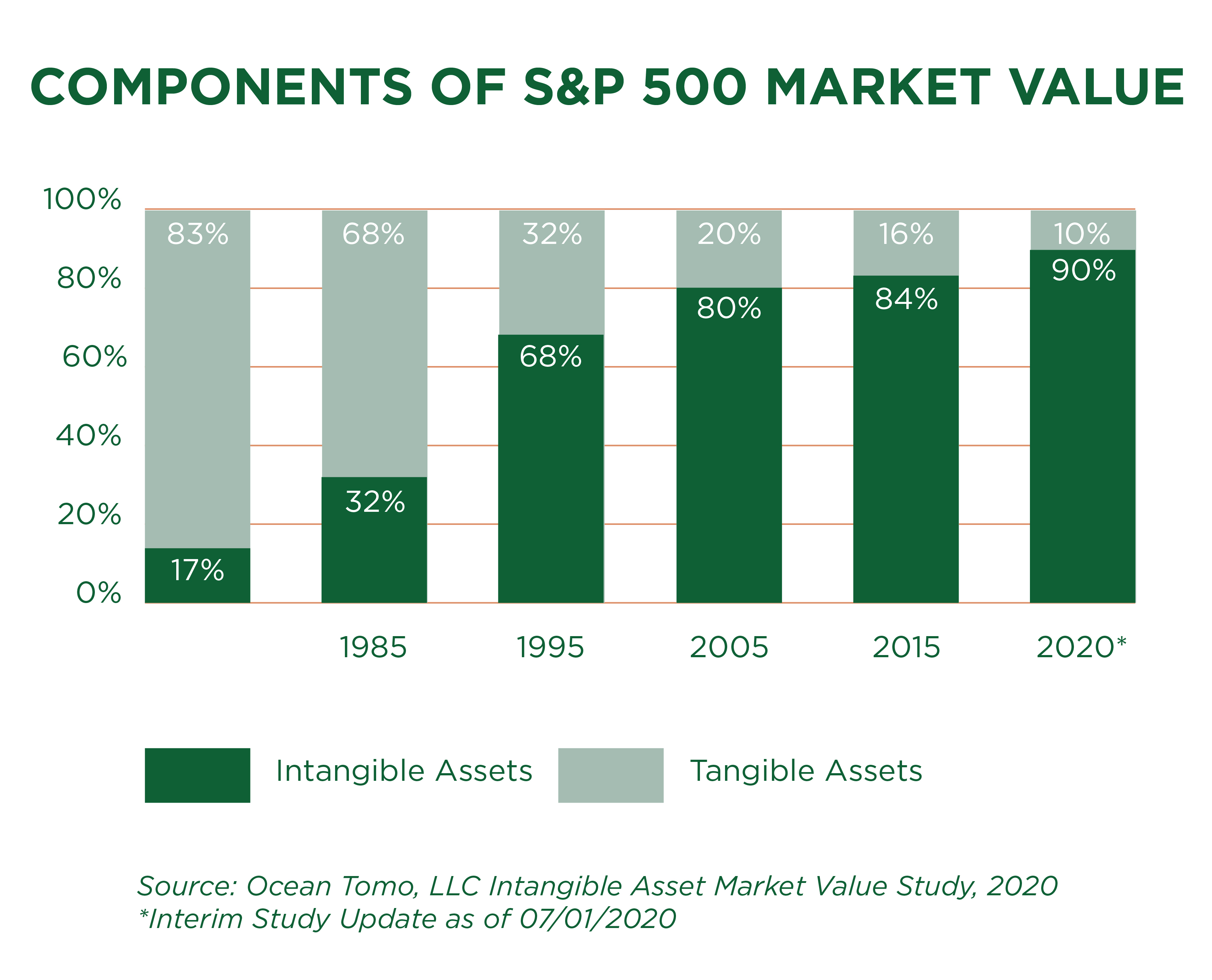
Change or die – financial accounting faces two options | The Social Enterprise Magazine

Intangible assets (and liabilities) are just those where the uncertainty is too high for the amounts to be included in the accounts. They can be estimated (just like that provision and just like the CFFR recognise that estimates are fundamental to accounting). 

The problem is the fixation with a particular level of certainty, to the extent some people talk as if it were objective. “We cannot include these intangibles or externalities because they are subjective and because we need stability in markets,” they say. Stability in markets. That hasn’t gone so well. Perhaps this would mean something if there were targets for this. Stability in maintaining the share of investment in public markets perhaps. Stability in not accruing systemic risk to levels that significantly affect our global society. What level of shifts in share prices is ok?

What if we accepted a level of uncertainty that allowed a higher share of intangible assets and liabilities to be recognised in financial statements?

What exactly would be the effect on any measure of stability if we accepted a level of uncertainty that allowed a higher share of intangible assets and liabilities to be recognised in financial statements? This would change the levels of reported profit. If these statements included these ‘externalities’ and reduced the risk of reporting profits with some undisclosed costs on others, it would help redress inequality. Investments would move to companies which had lower levels of these now disclosed costs. 


Change, or die?

We can carry on as we are. The edifice of accounting standards will continue to develop standards and now has a whole new area of sustainability standards to look forward to. Generating information that is less and less useful to fewer and fewer people.  

Or we can change accounting so that it contributes to sustainability. This is not about adding something on under the International Sustainability Standards Board. This is about changing accounting standards. Its structure and logic are excellent. We just need to change the scope to cover all the material consequences of a business (yes, that’s double materiality determined in context and not just the consequence of expected future cashflows) and change that level of uncertainty – and job done.

We cannot expect the current managers of capital markets, increasingly conflicted between public interest and the interests of the very wealthy, to sort this out. No surprise that there is an initial focus on climate, as the wealthy realise that climate change just might affect their lives too. It is going to have to be representatives of all people, acting in the interests of all people, to sort this out. Not just the few, living in la la land of an economic system where maximising private wealth and leaving consequences up to personal ethics and public taxes is the best, even only, approach to allocating global resources. 

This has got to be the representatives of people who experience the consequences, and that means our governments. In fact, they also have accounting standards, set by the International Public Sector Accounting Standards Board, and unlike private accounting standards, the purpose of these is the maintenance and enhancement of wellbeing of residents, tax-payers and service users. So, very much the people who experience the consequences.

Adding some non-financial information isn’t going to cut the mustard

Private accounting standards are also going to have to be shaken up a bit more if they are going to contribute to the solution. Adding some non-financial information isn’t going to cut the mustard. We can use the same thinking to create useful information but we’re going to have to use the foundations of public accounting, with a purpose of maintaining and increasing wellbeing, to create a private sector accounting system that allows us to hold organisations to account for their contribution to sustainability, to the wellbeing of people and planet, where financial returns are part of the picture – but only a part.

Policymakers are going to have to take back responsibility for accounting so that it is designed in the public interest, and not just some of the public’s interest, for a public interested in financial returns and social and environmental consequences of those returns. For a public that wants to know the value of the resources a business has at its disposal without hiding intangibles in the too-hard-to-measure cupboard. This would then mean rewriting the IFRS’s Conceptual Framework to reflect those interests. If this was the basis for accounting, accounts would provide that information in one place and calculate profits accordingly – perhaps with more measurement uncertainty than now, but with a lot less existence and outcome uncertainty.  

As we all recognise at least some of our global challenges, it has become popular to talk about the need for systemic change. ‘Systemic change’ is what we used to call revolutionary change, revolutionary because that’s the sort of change that shifts power and those with power don’t tend to jump at that opportunity and so resist the change. But using the phrase ‘systemic change’ risks pretending that we can change enough without any shifts in power, in a gentle incremental flow. It means we can forget that shifting power will necessarily be a struggle. And that incremental means giving those that want to resist change time to get their act together. Think back to the struggles for women’s emancipation, the struggles for workers’ rights, the struggles to stop slavery, all of which are still ongoing. Struggles that are not a fair fight with a referee, but struggles where every trick in book will be used, from direct suppression to a subtle, and not so subtle, take-over of language, to redirecting some of those seeking change towards activities which leave us busy… but ineffective.

A necessary, if not sufficient, requirement for a sustainable, well, it’s time to say regenerative, society is a revolution in our approach to calculating value and that means changing the way in which profit is calculated. Before it’s too late.  


National Bureau of Economic Research data visualisation created by the Institute of Policy Studies / Inequality.org

Thanks for reading Pioneers Post. As an entrepreneur or investor yourself, you’ll know that producing quality work doesn’t come free. We rely on our subscribers to sustain our journalism – so if you think it’s worth having an independent, specialist media platform that covers social enterprise stories, please consider subscribing. You’ll also be buying social: Pioneers Post is a social enterprise itself, reinvesting all our profits into helping you do good business, better.

https://www.pioneerspost.com/news-views/20220808/change-or-die-financial-accounting-faces-two-options

Co-applicant in a home loan: How to go ahead about it?

Co-applicant in a home loan: How to go ahead about it?

A home loan is possibly the most significant debt you can incur. It is a high-value loan that can last up to two decades and requires the borrower to pay a significant portion of their monthly income in the form of an EMI. Furthermore, before approving this type of loan, lenders must take into account a number of factors. Considering the high-value amount, taking out a LIC home loan on your own may not be a wise decision. However, there is a simple solution that can help applicants get approved for a home loan without adding all the stress of managing it alone which is including a co-applicant in the home loan application. 

Considering a tv mounting los angeles co-applicant for your home loan? It’s a strategic move that can benefit both parties involved. Start by assessing your potential co-applicant’s financial stability and creditworthiness.

Loan co-applications are nothing new. People have been doing this for many years and will continue to do so in order to obtain loans quickly. Personal loans can now be obtained with the help of a co-applicant. Even, people have been applying jointly with their partner, son, or daughter for a home loan. Having a co-applicant does make it easier to get a LIC home loan, but what does onboarding a co-applicant mean? Here’s everything else you should know about a co-applicant if you’re looking to apply for a personal loan or a home loan.

What do we mean by a co-applicant?

A co-applicant is a person who is named in a LIC home loan application alongside the main applicant, also known as the borrower. 

While there is no legal requirement to have a co-applicant when applying for a home loan, having one can improve your chances of getting your home application approved especially if it is a higher loan amount you have applied for. A co-signer can help a primary applicant get better loan terms and LIC home loan interest rate. In some cases, a co-applicant may be considered secondary to the primary applicant. One must know that a co-applicant is not the same as a co-signer or guarantor in terms of loan rights. They are rarely associated with the collateral. As a result, a co-signer serves as the borrower’s backup payment source.

When you apply for a home loan with a co-applicant, the lender considers both applicants’ incomes. Furthermore, when you apply with a co-applicant, your loan amount is increased because the incomes of both applicants are combined. However, when applying for a home loan with a co-applicant, borrowers must be aware of certain terms and conditions. 

Who is eligible to be a co-applicant?

The requirements for being a co-applicant differ depending on the bank. As previously stated, a co-applicant is an individual who shares equal responsibility for repaying a home loan. Most lenders require that the co-applicant be an immediate family member or blood relative. However, When a home loan is taken out with a co-applicant, lenders typically allow the following combinations. 

Husband and wife: This is the most common and acceptable condition. Both parties can jointly own the property, and their incomes are considered during eligibility thus, increasing the chances of loan approval.

Father and Son/s: It is possible only in case the son is the only male child in the family. In this combination, the lender considers the incomes of both parties and the names of both appear in the property document as legal owners. In a LIC home loan, either party can be named as the primary owner. If a family has more than one son and wishes to apply for this combination, the father cannot be listed as the primary owner. This is attributed to inheritance issues in the event of the father’s death. 

Father/Mother and unmarried daughter: If the co-applicants are a father/mother and an unmarried daughter, the property must be in the daughter’s name. In addition, the income of the father/mother is not considered in this combination. 

Brothers: Two brothers can be listed as co-applicants on a home loan if they share the same residential address at the time of application and intend to continue living together in the new home they are purchasing on loan. In this case, lenders may require the brothers to be co-owners rather than just co-applicants. 

Now that we know who can be a co-applicant in a home loan, let’s look at some of the combinations which aren’t acceptable:

  • Two sisters
  • Sister and brother
  • Father and daughter who is married
  • Mother and daughter who is married
  • Couples who are living together
  • Friends
  • Cousins

What is the role of the co-applicant?

If the applicant fails to repay the LIC home loan, dies, or otherwise refuses to enter into the agreement, the co-applicant assumes full responsibility for the loan.

Analysts believe that a co-applicant technically becomes a co-borrower, and as such, he or she is responsible for loan repayment and other obligations. If the borrower fails to repay the loan, the co-applicant is held equally responsible.

Even if the primary borrower has insurance, the co-applicant will be liable for repayment if the primary borrower dies.

Benefits of Having a Co-applicant

Some advantages of having a co-applicant, particularly when applying for a home loan, are as follows:

  • When both co-applicants have a good credit score and a steady income, the loan is more likely to be approved by the bank
  • Low LIC home loan interest rate are offered by home loan providers to co-applicants who are financially stable and have a good credit score.
  • The co-applicants, who are also co-owners of the home, are eligible for a number of tax benefits.
  • Co-applying for a LIC home loan improves the creditworthiness of both applicants.

So we are saying, 

Your income may also be insufficient to qualify for a loan or you might have a lot of dependants in your family that are making your loan application rejected. Onboarding a co-applicant can allow you to qualify for a higher amount. Having a co-applicant in a home loan can relieve the burden of the entire repayment responsibility and be a great source of relief. You will also benefit from a higher loan approval rate, increased loan amount eligibility and reduced LIC home loan interest rate, and tax benefits for both parties. 

However, one should understand that the terms co-applicant and co-owner should not be used interchangeably because a co-applicant does not have to share ownership of the property. However, he or she is responsible for any loan-related issues.

Understanding the World of Money

0

The Importance of Finance

Finance is an integral part of our lives. It is the study of money and how it is managed, invested, and allocated. Whether you are an individual, a business, or a government, finance plays a crucial role in determining your financial health and success. Understanding finance is essential to making sound financial decisions that can impact your future financial wellbeing.

One of the most critical aspects of finance is budgeting. This involves managing your income and expenses to ensure that you can cover your basic needs and still have enough money left over to save or invest. Budgeting can help you avoid financial difficulties, such as debt and bankruptcy, by providing a clear picture of your financial situation and enabling you to plan for the future.

The Different Aspects of Finance

There are several key areas of finance that are worth exploring in more detail. These include:

  1. Personal finance: This is the management of an individual’s finances, including budgeting, saving, and investing. It also includes topics such as credit management and debt reduction.
  2. Corporate finance: This refers to the financial management of companies and other organizations. This includes budgeting, capital investment, and financial analysis.
  3. Public finance: This is the study of how governments raise and spend money. It includes topics such as taxation, government spending, and public debt.
  4. Investment management: This involves the professional management of investments, such as stocks, bonds, and other financial instruments, to maximize returns and minimize risk.

Strategies for Managing Your Finances

Now that we’ve explored the various aspects of finance, let’s look at some strategies for managing your finances effectively.

  1. Create a budget: The first step to managing your finances is to create a budget. This involves identifying your income and expenses and allocating funds accordingly. A budget can help you avoid overspending, prioritize your expenses, and save for the future.
  2. Reduce debt: If you have outstanding debt, focus on paying it down as quickly as possible. High levels of debt can impact your credit score and make it more difficult to secure loans or credit in the future.
  3. Invest in your future: Consider investing in your future by saving for retirement or other long-term goals. This can include investing in stocks, bonds, or other financial instruments that offer long-term returns.
  4. Seek professional advice: If you are struggling to manage your finances, consider seeking professional advice from a financial advisor or planner. They can help you create a customized financial plan that fits your needs and goals.

Conclusion:

In conclusion, finance is an essential aspect of our lives that is worth understanding. It impacts our ability to manage our finances effectively and make sound financial decisions. By creating a budget, reducing debt, investing in your future, and seeking professional advice, you can take control of your finances and ensure a secure financial future. Remember that financial success is not an overnight process, but with the right knowledge and strategies, you can achieve your financial goals over time.

Starting and Growing a Successful Business

0

Starting a business can be both exciting and challenging, but with the right tools and strategies, it’s possible to turn your entrepreneurial dreams into a reality. Whether you’re starting from scratch or have an idea for a new venture, this comprehensive guide will help you navigate the key steps of starting and growing a successful business.

Developing a Business Plan

A well-crafted business plan is essential for securing funding, attracting investors, and keeping your business on track. Your business plan should include the following components:

  1. Executive Summary: A brief overview of your business and its goals.
  2. Market Analysis: Research on your target market, competition, and industry trends.
  3. Product or Service Description: A description of the products or services you will offer, including how they meet a need in the market.
  4. Marketing and Sales Strategy: A plan for promoting and selling your products or services.
  5. Financial Projections: Projections for revenue, expenses, and profits over several years.

Finding Funding for Your Business

Starting a business often requires significant upfront capital, so it’s important to understand your financing options. Some common methods of financing include:

  1. Personal savings: Using your own savings to fund your business.
  2. Business loans: Taking out a loan from a bank or other lending institution.
  3. Crowdfunding: Raising funds from a large number of people through an online platform.
  4. Angel investors: Finding high net worth individuals to invest in your business.
  5. Venture capital: Obtaining funding from venture capitalists in exchange for equity in your company.

Building and Managing Your Team

As your business grows, you’ll need to build a team of employees to help you achieve your goals. When building your team, consider the following:

  1. Hiring: Finding and hiring the right employees for your business.
  2. Training: Providing your employees with the training and resources they need to perform their jobs effectively.
  3. Management: Developing effective management strategies to motivate and lead your team.
  4. Culture: Establishing a positive company culture that encourages collaboration and innovation.

Scaling Your Business

Once you’ve established a successful business, it’s important to think about how you can scale and grow. Consider the following strategies:

  1. Diversifying: Expanding your product or service offerings to reach new markets.
  2. Global expansion: Taking your business global by entering new international markets.
  3. Mergers and acquisitions: Acquiring or merging with other businesses to increase your reach and market share.
  4. Technology: Implementing new technologies to improve efficiency and enhance your products or services.

Conclusion:

Starting and growing a successful business is a journey that requires careful planning, hard work, and persistence. By following the steps outlined in this comprehensive guide, you can turn your entrepreneurial dreams into a reality and achieve success in your business ventures. Good luck!