Home Blog Page 12

Royal Mail owner blames widening losses on April pay deal and strikes

0
Royal Mail owner blames widening losses on April pay deal and strikes

Unlock the Editor’s Digest for free

Royal Mail’s losses have deepened in the months since it reached a settlement with disgruntled postal workers, as the UK delivery service struggles to overcome the aftershocks of the dispute over pay and working practices.

International Distribution Services, the owner of the formerly publicly owned business, said on Thursday that Royal Mail’s operating loss increased 46 per cent year on year during the six months to September, to £319mn.

The result dragged IDS, which also owns the profitable international parcel business GLS, to a loss before tax of £194mn, an increase of 53 per cent compared with the same period last year.

As it prepares for the peak Christmas period, Royal Mail’s deepening losses are the latest sign of the ongoing problems troubling the 507-year-old postal service, whose staff recently walked out for 18 days in protest at its attempts to change working practices in the face of competition from more nimble rivals such as Amazon.

Despite agreeing a pay deal with workers in April, Royal Mail has been accused of continuing to deliver a substandard delivery service and is now the subject of a £600mn lawsuit brought by another mail group. 

IDS attributed the deeper loss in part to the agreement in April, which saw Royal Mail sign off a 10 per cent salary increase over three years and a lump-sum payment of £500 per person, in exchange for the union accepting changes to delivery start times and Sunday working. IDS said it had made a £61mn provision to cover the one-off payments.

In a sign of the labour dispute’s enduring impact on Royal Mail’s market position, IDS said it continued to suffer a “drag from customer losses” experienced during the industrial action that peaked in the lead up to last Christmas, when retailers rushed to take their business to rival delivery groups.

The UK Post Office, formerly part of the same group as Royal Mail, announced this month that it would also now allow customers at its delivery offices to opt for rival parcel carriers DPD and Evri, bringing its 360-year exclusive partnership with Royal Mail to a close. 

But IDS chief executive Martin Seidenberg insisted “customers are coming back to Royal Mail”. The former head of GLS took over the group in July, after predecessor Simon Thompson stepped down in the wake of the strikes and a cyber attack that temporarily brought Royal Mail’s international delivery service to a halt.

Royal Mail is “pulling out all the stops to deliver Christmas for our customers” this year, Seidenberg added. The company has hired 16,000 seasonal workers, opened five temporary sorting centres and launched financial incentives for employees if they hit “quality targets”.

But Royal Mail, the only UK delivery group required to deliver mail at the same cost to all Britons, has continued to face accusations of lacklustre performance across the country. Regulator Ofcom this week fined Royal Mail £5.6mn for failing to meet its delivery targets last year, warning that the business was still struggling with “ongoing high absence and vacancies”, as well as “delays in bringing service levels back up”.

Separately, Royal Mail said it believed that a £600mn legal claim announced by mail processor Whistl this month was “without merit”, adding the business would “defend it robustly”. Ofcom fined Royal Mail £50mn in 2018 after finding that it engaged in price discrimination that prevented Whistl from launching a rival delivery service.


Siemens beats earnings forecasts, says sales growth to slow in 2024

0
Siemens beats earnings forecasts, says sales growth to slow in 2024

Exterior view of the Siemens Forum, part of the Siemens Headquarters, in Munich, Germany.

Getty Images

Siemens on Thursday posted a 10% rise in revenue growth for its fiscal fourth quarter to a record high of 21.4 billion euros ($23.2 billion), beating forecasts, but expects a slowdown in 2024.

The German industrial conglomerate projects sales growth of 4-8% over the next 12 months, down from the 11% increase recorded for the 2023 fiscal year that ended in September, due primarily to a muted outlook for its industrial automation division.

“Digital Industries expects for fiscal 2024 comparable revenue development of 0% to 3%. This is based on the assumption that following destocking by customers, global demand in the automation businesses, especially in China, will pick up again in the second half of the fiscal year,” the group said in its earnings report.

However, the industrial powerhouse enjoyed record quarterly and full-year results, as it closed out the fiscal year.

Industrial profit grew 7% to a record 3.4 billion euros in the fourth quarter, above a company-compiled forecast of 3.34 billion euros, to notch a record high of 11.4 billion euros for the year.

Net income was 1.9 billion euros for the quarter, taking the full-year figure to a historic high of 8.5 billion euros, while free cash flow also notched a record 10 billion euros for the full year.

Siemens proposed to increase its dividend from 4.25 euros per share a year earlier to 4.70 euros per share.

The company’s shares were up 5.6% during early trade in Frankfurt on Thursday.

“Fiscal 2023 was a year of multiple records: In our Industrial Business, profit and profit margin reached their highest levels ever, and we nearly doubled our net income to a historic high,” Siemens President and CEO Roland Busch said in a statement.

“Our strategy is paying off, and we continue to accelerate the digital and sustainability transformations of our customers.”

Busch also told CNBC on Thursday that the company was benefiting as customers look to align themselves with the global push toward sustainability, while remaining competitive in a world of increasing digitalization.

“The subsidies, the Inflation Reduction Act, other acts which are kicking into the market — they are really playing into our hands, because this is money which has to go into the future, future technologies, innovation, and this is where Siemens is very strong,” Busch added.

No Silver Bullet: The FTC’s Staff Report on Kids’ Digital Marketing Workshop | BakerHostetler

0
No Silver Bullet: The FTC’s Staff Report on Kids’ Digital Marketing Workshop | BakerHostetler

When the FTC announced it was doing a workshop focused on children’s digital marketing that would be followed by a Staff Report, I was as giddy as a kid on Halloween. But now I feel like I got more tricked than treated, largely because the Report lays out a fair number of musings without being clear about any shift in the enforcement landscape. For those who want the executive summary, here are the Report’s “recommendations”:

(1) Don’t blur ads.
(2) Disclose ads orally and in writing.
(3) Disclose ads with icons.
(4) Educate kids about ads.
(5) Platforms should require ad disclosures and allow parents to block access to anything with a disclosure.

When the workshop was announced, the press release was a bit salacious, with the title of the event seeming to suggest the FTC came in with an agenda rather than an open mind on investigating how children understand digital ads: “Protecting Kids from Stealth Advertising in Digital Media.” The workshop itself was a frustrating day of advocates saying advertising to kids is bad and industry saying parents are the best ones to make decisions for their kids. (Although there were some very helpful presentations and submissions from Google about creating programs to identify ads to kids and educational programs, as well as research.) We all need to be realistic and start from the premise that while advertising pays for the internet, we need to make sure viewers of any age know when they are seeing ads. Going down the rabbit hole of whether children have the cognitive ability to process advertising is not productive; this is not an issue the FTC should or will solve.

The Report opens with a one-pager from BCP Director Sam Levine telling us that the FTC is doing what it can to take the burden off parents and shift it to operators, creators and platform owners who must do more than have clear disclosures to protect children from blurred advertising harm. He tells us, with italics for emphasis, that “there is no silver bullet.” I think this might be Sam’s code for “this Report is not going to tell you much.”

The problem, and this was a problem at the workshop as well, is a lack of definition and a lack of context. “Blurred advertising” at times seems to mean any sort of advertising that kids see, advertising indistinguishable from content and with no disclosure at all, or something in between. Definitions matter, and marketers need to know what the FTC views as a Section 5 problem. Particularly when the staff’s No. 1 recommendation was the very circular “do not blur advertising.” And then to the extent guidance was given, it was never really clear if it was in the context of pre-roll or mid-content video commercials, advergaming, kid influencers, or anything else. The FTC could really advance this discussion with some examples similar to those from the dot com disclosure guides, which were rooted in specific platforms.

The Report seemed to start from the premise that the way traditional video ads appeared on old-school TV was A-OK. The staff recommended that similar bumpers be created before and after an online video ad break – but then went on to say that far more was required, including disclosure of any ads in writing and orally. And not just “This is an ad,” but also include “important” information about an ad, like “This is an ad for NeoToys because they want you to buy NeoToys.” Even this, the staff said, was probably not sufficient to protect very young kids, and they went on to recommend (require?) one ad icon to be used across the web by everyone (staff might want to check in with their colleagues in the Competition Bureau to see how they feel about that), education, and the ability for parents to block anything with or including ads.

So, what is an advertiser that wants to communicate to those under 18 (because this was not limited to under 13) to do? I have long thought this should be a problem that platforms solve. Make things uniform and easy. But I am not the boss of these things. That said, here is what I suggest:

  • Any video ads directed to kids online ideally should have a verbal disclosure at the top and embed an ad “bug” or watermark throughout. I leave it to you to decide if you have to include “because we want you to buy our stuff” for extra credit.
  • Use “ad” or maybe “paid.” Words like “sponsored” for kids are frowned upon.
  • Stick with ad formats that more closely resemble ad formats in the real world.
  • If an entire piece of content is advertising, the FTC staff’s recommendations uniformly are important. Don’t think “How much disclosure do I really need?” but rather “How much more disclosure can I add?”
  • Use child influencers with caution, and in particular any campaign involving large numbers of child influencers. The disclosures needed will be onerous and the auditing/monitoring time-consuming.

Approach any “out of the box” ideas with even greater caution. If the staff has concerns with pre-rolls, it is unlikely to appreciate an in-game avatar product spokesperson.

[View source.]

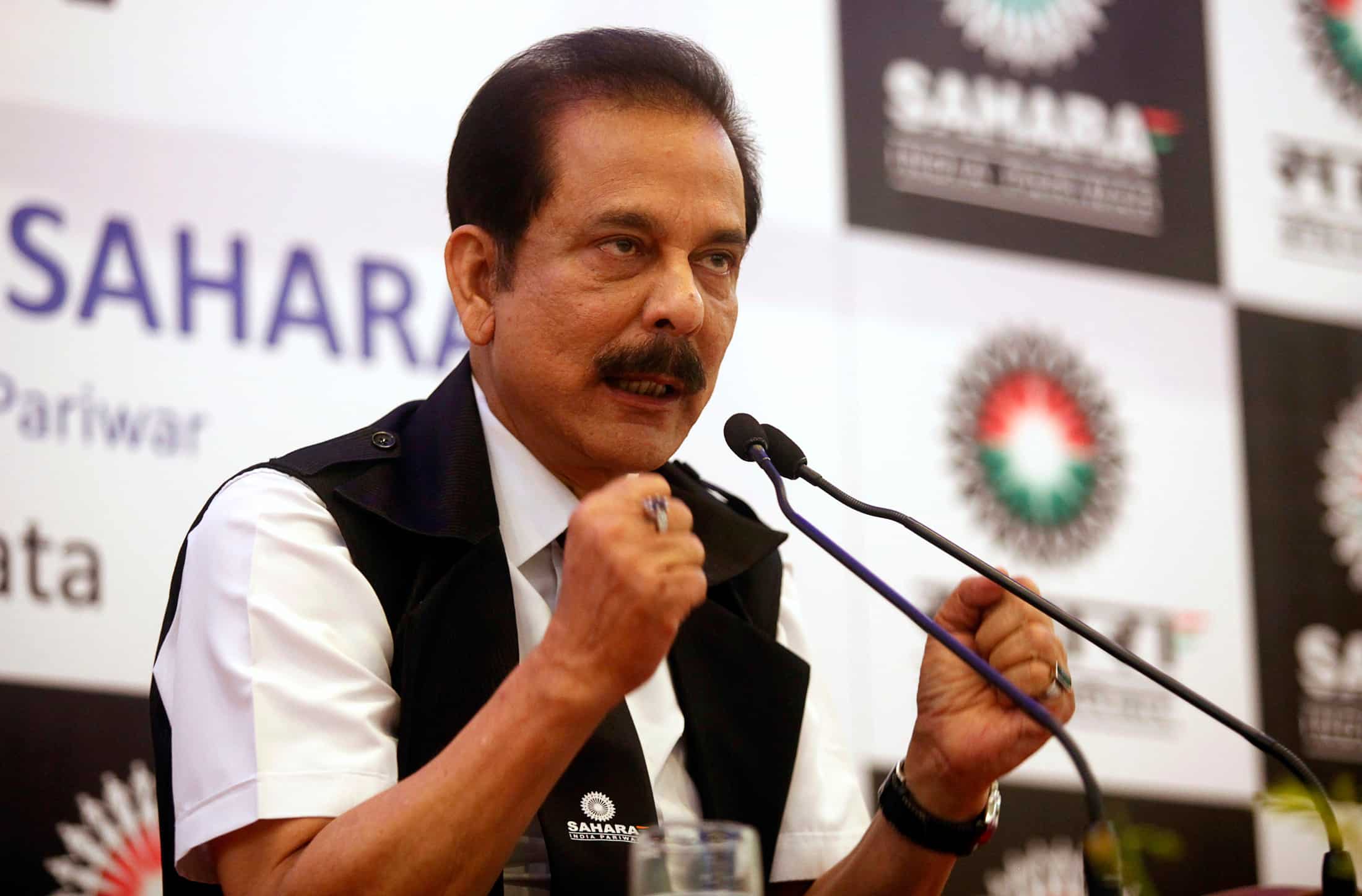
Subrata Roy: Who made it large, drop by drop in good and bad times

0
Subrata Roy: Who made it large, drop by drop in good and bad times

His was a story that can sound like an urban legend, but Subrata Roy literally made it large, drop by drop.

What he started with a borrowed capital of just Rs 2,000 in 1978, kept growing for over three decades and became a corpus of tens of thousands of crores with contributions as low as Rs 10-20 each from investors, but then it started crumbling down, brick by brick.

Roy, who died in Mumbai on Tuesday after a prolonged illness at the age of 75, continued to make it large, even while battling it out in courts and before regulators.

When asked for proof of payments collected from his crores of investors and the repayments made to them with returns, he famously sent 128 trucks containing more than 31,000 cartons of documents to capital market regulator Sebi’s headquarters in Mumbai.

Flummoxed by the humongous task of sorting and verifying tonnes of investor papers, the regulator Securities and Exchange Board of India (Sebi) had to put them in a huge hired warehouse having ‘automated robotic system’ document handling and safe vaults with 32 lakh cubic feet of storage capacity.

In another mammoth task later, Sebi had to engage a server hosting vendor to provide electronic data storage and web access services for a database of 20 crore scanned pages in the high-profile Sahara case.

On the other hand, the Sebi saga began with just two sets of complaints — one from a small group of ‘investors’ and another from an individual named ‘Roshan Lal’ — but it eventually turned out to be the biggest nemesis for Roy’s sprawling business empire.

Before it all started falling apart, the Sahara portfolio comprised financial services, real estate, aviation, marquee hotels in London and New York, an IPL cricket team and a Formula One racing team as also sponsorships for the country’s cricket and hockey teams.

And then, there was one of the most ambitious projects — a hillside township in Maharashtra, Aamby Valley, which was supposed to have villas for virtually all who’s who of the country from fields of cricket to films to politics where he had many ‘friends’.

It was often alleged that the tens of thousands of crores of rupees that Sahara had collected actually belonged to many politicians, cricketers and Bollywood stars, but there has never been any proof of this.

Aamby Valley was one of the several projects undertaken by the group’s real estate arm Sahara Prime City Limited and it was a proposed IPO (initial public offer) of this company in 2009 that led the regulator Sebi to launch a probe.

When Sebi was looking into the draft prospectus filed for the IPO, it received a complaint on December 25, 2009, from ‘Professional Group for Investor Protection, which alleged that a Sahara group firm, Sahara India Real Estate Corporation Limited (SIRECL) was issuing convertible bonds to the public throughout the country for many months and the same was not disclosed in the draft prospectus.

A similar complaint from Roshan Lal was also received by Sebi through the National Housing Bank vide a letter dated January 4, 2010.

The number ‘4’ thereafter went on to become a key date in the Sebi-Sahara saga.

Arvind Datar, a counsel for Sebi in the long-running legal battle, once said, “It all started with Roshan Lal, whom we have never seen him, from Indore who on a colder winter morning decided to write a letter in Hindi to Sebi”.

Little did Lal know that the one-and-a-half page letter could set in motion a litigation that seemed to be almost endless and little did he know that exactly four years and three months to the day after the letter that Roy would be sent to Tihar jail.

When Sebi issued a notice to Sahara, they went to the Lucknow bench of the Allahabad High Court and got a stay. The case was posted on January 4.

Roy was also sent to jail on a 4th (March 4, 2014), Datar appeared for Sebi for the first time on 4th, and the main affidavit of Sahara was given on 4th, according to Datar, who also said once that it so happened that Sahara engaged almost all senior lawyers at the Supreme Court and Sebi had no one else except him from Chennai.

The case also came to the Supreme Court on January 4.

Also, while the cases were continuing in various courts and tribunals, Sahara group continued to grow and collect funds as it denied any wrongdoing and always maintained that all investors got their money back with promised returns.

When the matter had reached the Allahabad High Court, the amount collected by the two Sahara firms facing the probe stood at about Rs 2,000 crore, By the time the matter reached the Securities Appellate Tribunal, Sahara Real Estate had collected Rs 17,000 crore and Sahara Housing had collected about Rs 6,500 crore.

The number of investors who invested in the bonds of two firms exceeded 3.1 crore and at one point it was more than the number of all investors in all stock exchanges combined.

According to Data, the money was collected in a short time of 10-12 months.

Eventually, Sahara group deposited more than Rs 24,000 crore with Sebi which its two firms had collected from over three crore investors through an instrument called ‘ Optionally Fully Convertible Bond’, though it maintained that more than 98 per cent refunds were already made by the two firms.

According to the latest update, Sebi has managed to refund only about Rs 138 crore as investors are hardly coming out to claim their money, while the corpus in the Sahara account maintained by the regulator exceeds Rs 25,000 crore along with interest generated.

Roy was referred to as ‘Saharasri’ by his employees and friends and used designations like ‘Managing Worker’ and ‘Chief Guardian’ of Sahara India Pariwar in place of usual ones like Managing Director or Chief Executive Officer.

According to its website, it has over 9 crore investors and customers, a land bank of 30,970 acres and the “most fair value” of its assets is worth Rs 2,59,900 crore.


Decent Volume, Margin Recovery In Q2 To Accelerate In H2: Systematix

0
Decent Volume, Margin Recovery In Q2 To Accelerate In H2: Systematix

Carysil Ltd.’s healthy recovery in Q2 (revenue Rs 1.64 billion, up 18% YoY and 15% QoQ; 20.1% Ebitda margin) was driven by exports (up 22% YoY and 33% QoQ).

Normalisation of channel inventory in the U.S. and continued market share gains in quartz sinks from global leaders due to advantage of lower manufacturing costs helped. After three acquisitions in UK, Carysil acquired United Granite in USA (revenue potential Rs 1.3 billion, current CU 60%) which will help it to provide fully integrated, seamless tops with the accessories, faucets, and sinks.

Supply of stainless-steel sinks to IKEA will commence from Q4. A large volume order is expected in Q4 from a newly added customer. Overall, management expects strong revenue and margins in H2 from exports.

Domestic business is also expected to rebound on addition of dealers and new products, participation in exhibitions and B2B team’s focus on projects.

Thus, guidance of Rs 10 billion revenue (including inorganic) and 20% Ebitda margin for FY25E is intact.

We have revised up FY24E/25E earnings by 7%/5% and estimate 25%/34%/42% compound annual growth rate in revenue/Ebitda/profit aftet tax over FY23-25E. Despite regular capex, return on capital employed (~23%) should be healthy in FY25E.

Thus, we maintain ‘Buy’ rating on Carysil, with a revised target price of Rs 987 (25 times FY25E price/earning).

We see large potential in the scrip despite ~70% rally since our initiation in February 2023.

Euro Area to Avoid Recession as Inflation Retreats, EU Predicts

0
Euro Area to Avoid Recession as Inflation Retreats, EU Predicts

The euro area and its biggest economies will avoid a recession as growth returns at the end of the year, helped by slowing inflation and a robust jobs market, according to new European Union forecasts.

Article content

(Bloomberg) — The euro area and its biggest economies will avoid a recession as growth returns at the end of the year, helped by slowing inflation and a robust jobs market, according to new European Union forecasts. 

Output in the 20-nation bloc will increase by 0.2% in the fourth quarter after shrinking 0.1% in the three months through September, the European Commission said in a report on Wednesday. Even Germany, which has fared worse than peers amid a prolonged manufacturing slump, is predicted to avoid a recession. 

Advertisement 2

Article content

Article content

For the full year, the EU’s executive arm now sees 0.6% growth, down from a September forecast of 0.8%. That’s seen picking up to 1.2% in 2024 and 1.6% in 2025 — a slightly more optimistic view than that of the European Central Bank.  

“Strong price pressures and the monetary tightening needed to contain them, as well as weak global demand, have taken their toll on households and businesses,” EU Economy Commissioner Paolo Gentiloni said in a statement. “Looking ahead to 2024, we expect a modest uptick in growth as inflation eases further and the labor market remains resilient.”

Price growth will average 5.6% this year and ease to 3.2% in 2024 and 2.2% in 2025. That’s similar to the ECB’s prediction and an upward revision for next year compared to the EU’s September forecast, prompted by higher energy and food commodity costs. 

“Still, price pressures related to non-energy consumption categories are expected to unwind, broadly in line with the previous forecast and in a context of slightly tighter financing conditions, moderating wage growth and normalizing profit shares,” the commission said. 

Article content

Advertisement 3

Article content

Inflation eased to 2.9% last month, down from a peak of more than 10%, but ECB policymakers have warned against complacency as price growth may pick up again in coming months. They kept interest rates on hold in October, saying the current level will help return inflation to the 2% goal — if held for long enough. 

High living costs and the ECB’s unprecedented tightening campaign that started in mid-2022 “took a heavier toll than previously expected,” the commission said.

Officials also warned of stalling efforts to bring down public debt in some of the bloc’s biggest economies. Italy’s is seen increasing back above 140% of output in the next two years, with an uptick in 2025 also seen in France after a slight dip in the preceding year. 

Initially helped by inflation, debt reduction is set to become tougher as price growth slows, borrowing costs rise and growth remains subdued, the commission said. 

The euro area’s sovereign debt has become an increasing source of unease after governments borrowed heavily during the pandemic and the energy crisis while borrowing costs jumped to combat inflation. 

Advertisement 4

Article content

The labor market has been a bright spot so far, with unemployment barely increasing even as the economy struggled. While some member states have meanwhile seen an uptick, jobless rates “are expected to remain broadly stable,” the commission said. 

The continued war in Ukraine and conflict in the Middle East mean uncertainty around the economic outlook has increased, it added. How China fares and the transmission of monetary tightening within the euro area also pose risks. 

The report covered Ukraine itself for the first time after the country gained EU candidate status. The commission predicts 3.7% growth next year and 6.1% in 2025 — after a 29% slump in 2022.

—With assistance from Jorge Valero.

Article content

Comments

Postmedia is committed to maintaining a lively but civil forum for discussion and encourage all readers to share their views on our articles. Comments may take up to an hour for moderation before appearing on the site. We ask you to keep your comments relevant and respectful. We have enabled email notifications—you will now receive an email if you receive a reply to your comment, there is an update to a comment thread you follow or if a user you follow comments. Visit our Community Guidelines for more information and details on how to adjust your email settings.

Arrow 3 intercepts second Israel-bound Houthi missile

0
Arrow 3 intercepts second Israel-bound Houthi missile

Several weeks after Germany procured Israel’s Arrow missile system for NIS 14 billion, it was operated for the first time to intercept a ballistic missile fired at Israel by the Houthi rebels in Yemen. Earlier this week the Arrow was used again to successfully shoot down another Houthi missile over the Red Sea before it had reached Israel.

IAI engineer in the Arrow program Orian tells “Globes,” about the successful interception outside of the earth’s atmosphere and explains that the Arrow system combines with a multi-layer comprehensive defense envelope and says that the deal with Germany has been a source of “unique pride.”

On what basis do you build a defense system – scenarios or the weapons that you know the enemy possesses?

“This changes according to the type of project and target,” Orian explains, and adds that it can start from IAI’s R&D department or even the idea of an individual employee. “If it is an idea that works then we can think about it and we go with it. Alongside this there is identifying the need. Operational demands for which we respond to the challenge.”

The Arrow 2 and Arrow 3 represent the long-range layer of Israel’s aerial missile defense system, beyond Iron Dome (a range of up to 40 kilometers), David’s Sling (range of up to 300 kilometers). The Arrow systems cover range of up to 2,000 kilometers and even further.

The Houthis possess the Toufan missile, which is the latest version of the Iranian Shahab missile. The Toufan can carry a payload of up to one ton of explosives but in order to reach Israel the Houthis were required to significantly reduce the weight of explosives.

Negligible cost compared with the potential damage

What is the difference between the Arrow 2 and Arrow 3?

“The Arrow 2 intercepts inside the atmosphere and the Arrow 3 outside of the atmosphere,” explains Orian. “Both are designed for ballistic missiles, for distant threats with the difference being the height above ground. The aim is to intercept the missiles as far away as possible from Israel. Interception outside of the atmosphere distances the threat further from Israel.”

The Arrow 2 entered service in 2000 and the Arrow 3 in 2017. The Arrow 2 system warhead carries an activation mechanism with a terminally-guided explosive, and its purpose is to destroy the target missile using the same charge. In the Arrow 3 however, the kinetic energy alone is large enough to destroy the target. The interceptor itself has a very high ability to maneuver and change direction, and it has advanced electro-optical sensors.

One of the issues in air defense, especially in the situation in which Israel faces threats from several fronts, is the cost of the systems. An Iron Dome interception costs about $30,000 dollars and a David’s Sling interception costs about $700,000. Arrow 2 and Arrow 3 interception missiles cost about $1.5 million and $2 million respectively.


Despite the enormous expense, IAI engineer Orian says that an interception is much less costly than a missile hitting Israel. “What is of interest is that it saves the threat of a missile that is not intercepted hitting a hotel in Eilat. So it is not only the expense of how much it would cost buy the financial and emotional damage and the damage to morale and how many people would be hurt physically and emotionally.”

“The defense envelope is not limited to the missile”

IAI and Israel’s defense companies are continually dealing with improvements. The Arrow 2 and the Arrow 3 are due to be replaced in the future by the Arrow 4 and the Arrow 5, respectively.

Arrow 4 development began about two and a half years ago and is being carried out, as happened with all Arrow systems, in collaboration with the US. Arrow 4 will be an interceptor missile with upgraded capabilities and designed to respond to a variety of future threats. Arrow 5 is being developed from IAI development budgets, and no final decisions on funding have yet been made by Israel’s Ministry of Defense and the US.

Orian says, “A defense envelope is not based only on a missile, but there are also all around, radars that we also manufacture, there is a command and control center, there is the interceptor itself and a launcher.”

What are arrows 4 and 5?

She adds, “We are constantly upgrading our systems for new threats in the arena, and this is a type of upgrade. Everything is in cooperation with the Ministry of Defense, the HOMA Directorate, the US Missile Defense Agency and the Israel Missile Defense Organization.”

Published by Globes, Israel business news – en.globes.co.il – on November 15, 2023.

© Copyright of Globes Publisher Itonut (1983) Ltd., 2023.


Warren Buffett dumped his $850m stake in Mary Barra’s General Motors

0
Warren Buffett dumped his 0m stake in Mary Barra’s General Motors

Berkshire Hathaway said on Tuesday it has shed its holdings in General Motors and Procter & Gamble, and trimmed its stake in Amazon.com, as the conglomerate controlled by billionaire Warren Buffett boosted its cash pile to a record $157.2 billion.

In a regulatory filing detailing its U.S.-listed stock holdings as of Sept. 30, Berkshire reported no holdings in GM and P&G, after reporting stakes of $848 million and $48 million in June, and said it reduced its stake in Amazon by 5%.

Berkshire also appeared to have shed what had been a $621 million stake in Celanese, a specialty materials company.

One new position was an $8 million stake in Atlanta Braves Holdings, which indirectly controls the Major League Baseball team and The Battery Atlanta, a mixed-use development next to the Braves’ Truist Park.

The Braves had been split off from Liberty Media, another Berkshire investment, in July.

Tuesday’s filing detailed investments that comprised most of Omaha, Nebraska-based Berkshire’s equity portfolio, which totaled $318.6 billion as of Sept. 30.

Berkshire sold $7 billion of stocks, including some of its big investment in Chevron, and bought just $1.7 billion in the third quarter, a down period for its stock holdings led by Apple, whose share price fell 12%.

For all of 2023, Berkshire has sold $23.6 billion more stocks than it has bought.

The net sales contributed to Berkshire’s record cash stake, which is about the same size as its $156.8 billion stake in iPhone maker Apple.

Berkshire’s filing does not say which investments are Buffett’s, which are from his portfolio managers Todd Combs and Ted Weschler, and why the investments were made.

Larger investments are normally Buffett’s, and investors often try to piggyback on Berkshire’s trading, reflecting Buffett’s reputation as one of the world’s greatest investors.

To that end, Berkshire decided not to disclose one or more of its holdings, and said it has asked the U.S. Securities and Exchange Commission for confidential treatment.

Berkshire has occasionally requested such treatment for major investments, including multi-billion-dollar stakes in IBM and Exxon Mobil more than a decade ago. Neither appears to be a current Berkshire investment.

In other third-quarter sales, Berkshire finished exiting video game maker Activision Blizzard, which was bought by Microsoft last month, and reduced its holdings in life insurer Globe Life.

Berkshire also shed about two-thirds of its stake in Markel Group, a notable change given that some investors have in recent years viewed the insurance and investment company as a “mini-Berkshire.”

Buffett, 93, has run Berkshire since 1965.

His conglomerate also owns dozens of businesses including the Geico car insurer, BNSF railroad, energy and industrial companies, and consumer brands such as Benjamin Moore, Dairy Queen, Duracell, Fruit of the Loom and See’s Candies.

(Reporting by Jonathan Stempel in New York; Editing by Christian Schmollinger and Lincoln Feast.)

Subscribe to the CFO Daily newsletter to keep up with the trends, issues, and executives shaping corporate finance. Sign up for free.

Characteristics Every Startup’s ERP System Needs

0
Characteristics Every Startup’s ERP System Needs

Characteristics Every Startup’s ERP System Needs

It is a fact, startup businesses have special needs when it comes to choosing an Enterprise Resource Planning (ERP) system. Your business is still growing, so you want an ERP that’s on the basic end of the spectrum with the option to extend its functionality over time. You always want a good technical core that can run on multiple system platforms. This way, you know your entire company will be able to use the ERP, making implementation simple.

Before implementing a new ERP, you need to know what your reason is for implementing. Is productivity your focus? Are you looking to increase visibility across different departments? Perhaps you’re needing a tool that fosters faster collaboration across teams?

As a startup, you might have a small amount of staff carrying a lot of job responsibility. An ERP should be able to address occupational roles as well as accommodate for future reporting.

What Characteristics Should A Good ERP Have?

Central Common Database

One of the most important aspects of a good ERP system is a centralised database management system. All data is entered one time, and then all departments are able to use the data. You want to avoid a distributed database, as it leads to problems with duplicity and inconsistencies.

Flexible and Scalable Design

Your startup is dynamic, so you need a flexible ERP that can keep up with your company’s changing needs. You should be able to attach and detach modules whenever needed without any of the other modules being affected. The ERP should be able to connect with other entities within your organisation.

Modular Design

ERP software with a modular design should be able to incorporate various business modules, such as accounting, finance, and distribution. The modules remain separate, but their integration allows for a flow of data between each one.

Do you have a good support system for implementing your ERP? Are you interested in learning more about various ERP software? We can help you find the right one for your startup. Contact us today to learn more.

  • erp buyers guide

    Build up your knowledge of ERP functionality, emerging technology and industry insights with the ERP Buyers’ Guide. Save time and effort by getting things right the first time with trusted ERP advice.

    Read Now

  • SAP Business One is an affordable Enterprise Resource Planning (ERP) software designed for small to midsize businesses. As a business management solution, SAP B1 streamlines business processes, provides real-time information, and help boost overall business performance. The solution covers finance, sales, customer relationship, purchasing, procurement, inventory and manufacturing in one centralised system, enabling accurate and precise information retrieval that assist in reporting, forecasting and analysis.

    sap business one modules

    SAP B1 Modules:

    • Accounting
    • Sales
    • Warehouse & Production
    • Purchasing & Procurement
    • Inventory & Distribution
    • Reporting & Admin

    Read More on SAP Business One

  • sap business one
  • free trial sap business one

Genesis FZE: The trustworthy digital marketing beacon in the Middle East

0
Genesis FZE: The trustworthy digital marketing beacon in the Middle East
In today’s digital era, where every brand is vying for a slice of the online market, the challenge isn’t just to stand out, but to build and maintain trust. Trust is an intangible asset that takes years to build and seconds to break. Within the pulsating heart of the Middle East, specifically in Dubai, there is one name that resonates with unwavering reliability and excellence in the realm of online marketing – Genesis FZE.

Foundations of trust and excellence
Being recognized as one of the top 500 fastest-growing companies in the UAE is no small feat. Yet, Genesis FZE isn’t just content with this accolade. Under the strategic guidance of its President and leading consultant, Said Shiripour, the agency has continually demonstrated its prowess in driving results. With over 2400 satisfied clients across the Middle East, Genesis FZE’s reputation as a trusted partner in the digital space is firmly established.

Unprecedented results speak louder than words
Statistics often provide a clear snapshot of an organization’s capabilities. In the case of Genesis FZE, the figures are nothing short of remarkable. Having generated more than 6 million leads for its clientele, the agency has effectively facilitated the generation of over 800 million dirhams in combined revenue. Such tangible results underscore the agency’s commitment to delivering excellence and fostering growth for its partners.

A comprehensive suite of services
Beyond the numbers, Genesis FZE’s true strength lies in its holistic approach to online marketing. From content marketing and website creation to cutting-edge AI technology and custom software development, their portfolio offers a comprehensive suite tailored to the unique needs of each client. This 360-degree approach ensures that every digital touchpoint, from initial brand visibility to conversion, is handled with expert care and precision.

Building trust through transparency and expertise
Transparency is at the core of any trusting business relationship. Genesis FZE prides itself on its open communication channels, ensuring clients are always in the loop about strategies, progress, and results. Their collaborative approach, combined with Said Shiripour’s renowned expertise, fosters an environment where clients feel valued, heard, and confident in the agency’s capabilities.
Furthermore, being awarded for their rapid growth isn’t just a testament to their business acumen but also to the trust they have cultivated with their clients. When businesses grow at such an impressive rate, it’s a clear indicator that they are consistently meeting, if not exceeding, their clients’ expectations.

A testament to reliability: Awards and recognitions
Being acknowledged as one of the top 500 fastest-growing companies in the UAE is not merely a title; it’s a testament to Genesis FZE’s reliability, excellence, and unwavering commitment to its clients. Awards and recognitions are more than just plaques on a wall; they are the distilled essence of hard work, innovation, and the trust that clients place in an organization.

A bigger vision
In a world saturated with digital marketing agencies making lofty promises, Genesis FZE stands out as a beacon of trustworthiness. Under the astute leadership of Said Shiripour, the agency has carved out a niche for itself as a dependable partner for brands looking to make a mark in the digital landscape.
When you choose Genesis FZE, you’re not just opting for a service provider; you’re aligning with a partner dedicated to your vision, growth, and success. It’s more than just business; it’s a commitment to a shared journey of growth, driven by expertise, transparency, and an unwavering focus on results. Trust, as they say, is hard-earned, and Genesis FZE has earned it in spades.

Related Story

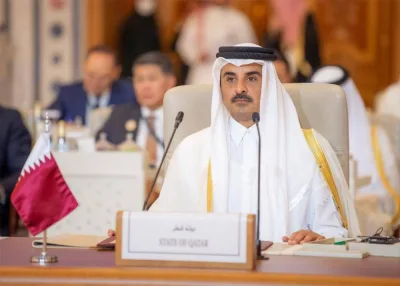
His Highness the Amir delivering a speech at the Joint Arab Islamic Extraordinary Summit in Riyadh Saturday

Red Deer becomes home of third public health dental clinic in province

0
Red Deer becomes home of third public health dental clinic in province

Dr. Heidi Rabie, Division Chief of Public Health Dental Clinics for AHS, says around one per cent of ER visits in Canada are for dental issues.

The clinic is for Alberta residents without dental insurance of any kind, individuals with income under low-income cutoff limits, and/or with a direct referral from the hospital emergency department for a specific dental emergency.

Having opened this June, the clinic has already supported over 100 patients with more than 300 appointments ranging from extractions to fillings, among other urgent procedures. This week, the clinic will be expanding their hours from two to three days a week, with a rough capacity of 10 patients per day.

Rabie stated that oral health can not only affect a person’s physical health but also their psycho-social health including self-confidence, embarrassment, comfort and employment. She shared various success stories of patients the clinic has already helped in Red Deer, including a 50-year man with multiple sclerosis, a man in his twenties who completed a rehabilitation program at the Dream Centre now looking for work, and a 40-year-old woman whose teeth had decayed from a former drug addiction.

“This is a wonderful example of how partnerships can truly make a difference, ensuring that every Albertan gets the essential healthcare they deserve,” said Adriana LaGrange, Minister of Health and MLA for Red Deer-North. “This clinic will enhance the quality and accessibility of healthcare in Red Deer and its neighbouring communities, while also helping to relieve the capacity pressures on our emergency departments.”

LaGrange shared a personal story of having to forgo her own dental health for her seven children when she and her husband worked on their family farm, with one son needing dental surgery to prevent further heart problems.

“The Public Health Dental Clinic in Red Deer is helping to bring oral healthcare to Albertans who have difficulty accessing health and medical support,” said AHS President and CEO Mauro Chies. “We are grateful to the generous support of GreenShield for helping to bring this vital service to those vulnerable to poor oral health outcomes in central Alberta.”

The clinic is supported by a $1.5-million grant over five years from GreenShield, a not-for-profit health and benefits company, and represents an opportunity to mitigate oral health inequities in Alberta.

“The disparities in access to oral healthcare that persist, particularly among vulnerable populations, are concerning. As a not-for-profit health and benefits company, GreenShield is committed to improving health outcomes for Canadians as part of our social mission of ‘better health for all,” said Zahid Salman, President and CEO of GreenShield. “We aim to make vital healthcare services more accessible for underserved and marginalized communities and have committed over $20 million to help ensure all Canadians have access to oral healthcare services.”

Salman shared the history of the organization, created by a pharmacist who watched a mother having to choose medication for her daughter over her own as she could not afford both. He said over 30 per cent of Canadians don’t have coverage for oral health.

Dr. Michael Mulholland, AHS Associate Zone Medical Director for Red Deer and Area, says patients will be offloaded from hospital emergency rooms to the right care.

“[The clinic] is co-located with other services that support low-income individuals in Red Deer, such as AHS Street Connect and the Red Deer PCN Street Clinic, which rounds out the suite of services offered at that location.”

Clients will be referred to the clinic through services like Street Connect, the Primary Care Network Street Clinic, Red Deer Regional Hospital Centre and other services, such as the opioid dependency program. The clinic will provide basic care to patients, responding to common dental concerns such as cavities, toothaches and the need for extractions.

Currently all services are fully covered for patients, however, following the five-year funding, patients may need to pay up to 20 per cent of costs, similar to the clinics in Calgary, said Rabie.

In 2015, the public health dental clinics in Calgary received a separate grant from GreenSheild for supplemental support to enhance dental services for patients referred from emergency departments.

Raymond’s Gautam Singhania’s separation from wife brings his feud with father Vijaypat back in focus

0
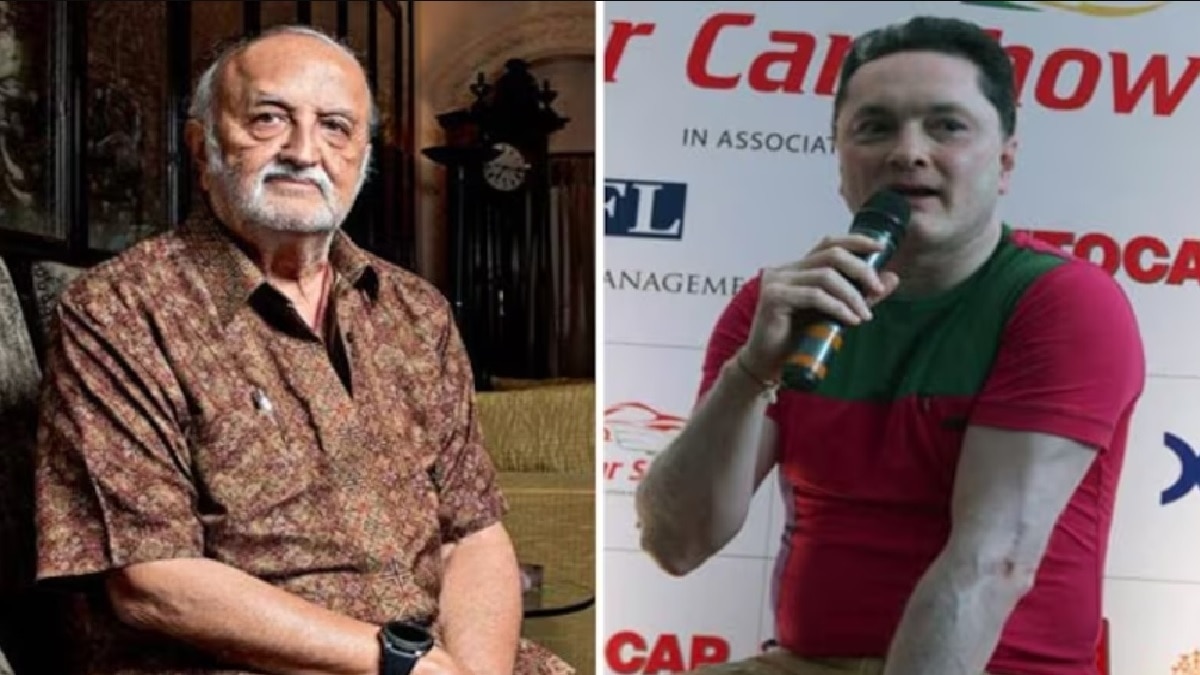
Raymond’s Gautam Singhania’s separation from wife brings his feud with father Vijaypat back in focus

Raymond Ltd Chairman Gautam Singhania’s announcement on Monday about separating from his wife Nawaz Modi brought the industrialist’s feud with his father Vijaypat Singhania back in focus.

The similarities are uncanny with the way both the family feuds played out. Hours after Singhania announced his separation from wife Nawaz after 24-year marriage and “32 years as a couple”,. a video surfaced online showing Singhania’s wife allegedly being locked out of his Diwali party in Thane on Sunday (November 12).

In the video, purportedly shot outside the party venue in Thane, Nawaz Singhania is seen with another woman standing at the gate, claiming she was stopped by the security guards despite receiving an invitation for the event.

This kind of acrimony was visible when Vijaypat was denied a flat in Singhania family’s 36-storey JK House in South Mumbai.

In 2017, Vijaypat had alleged that Raymond Ltd hasn’t given him possession of a duplex in the multi-storey JK House building in south Mumbai. As per a 2007 family agreement, Vijaypat and his son Gautam, and the widow and two sons of Vijaypat’s brother Ajaypat Singhania, were to get a duplex each in JK House, a family property.

The former industrialist had alleged in his petition that Gautam was occupying more area in the JK House than he was entitled to. He also said that Raymond failed to respond to his offers of payment to get possession of the duplex.

Vijaypat stepped down as chairman of the prominent company in 2015 after handing over the reins to Gautam.

The rift worsened after Vijaypat, an avid aviator, alleged that many invaluable documents and a gold medal given by the President of India were missing from his cabin at Mahindra Tower in Worli.

The list of allegedly stolen articles includes Padma Bhushan Certificate and Gold Medal issued by the President of India, Gold Media of World Records Aviation, World Record Certificate for flying the hot air gas balloon to the highest altitude, the Battle Axe presented by the Chief of Indian Air Force, photographs and paintings.

Gautam denied the allegations and said in a statement the accusations were “baseless and malicious”. He went on to add, “I feel extremely pained that at his age, he is involved in denunciations just to gain media mileage and cheap publicity.”

Meanwhile, Nawaz Modi Singhania has shared a video on social media of her participating in a Diwali puja with her in-laws at their apartment.

“Ever blessed to have my in-laws’ unstinted support, love, kindness and help, at these and all times. Here on Diwali doing Pujas followed by dinner with them at their apartment, on this highly auspicious, powerful God-sent time of year,” she wrote on Instagram.