Home Blog Page 83

What are the worst meals for my anxiousness?

0
What are the worst meals for my anxiousness?

There’s not anything worse than when that further cup of espresso kicks in, making your middle pound, and intensifying your anxiousness signs. The bodily signs of hysteria vary from a racing middle price, to hassle drowsing, irritability, fatigue, and jitteriness. Whilst some foods and drinks alternatives can lend a hand decrease anxiousness, others might make the bodily signs worse. 

“There are a large number of individuals to anxiousness, and vitamin is only a piece of it,” says Katie Knafla, a registered dietician with Lifestyles Time, a sequence of well being golf equipment. “However we do have extra regulate over vitamin than many different spaces, so enforcing small adjustments and behavior can move a ways.”

It’s no longer about reducing positive meals and beverage teams totally from your lifestyles—or quantifying them as “unhealthy,” which will additional create anxiousness, says Dr. Eileen Anderson, director of training, bioethics and clinical humanities at Case Western Reserve College of Medication. As an alternative, she suggests tracking which meals have qualities that exacerbate or building up your anxiousness and may well be minimized, particularly throughout instances whilst you’re feeling in particular fearful. 

Listed here are the meals and drinks professionals say are the worst for anxiousness: 

1. Caffeine 

In fact, caffeine can give that useful early morning jolt—waking our senses into truth and affecting neurotransmitters within the mind related to adrenaline and effort

Then again, for the ones with anxiousness, caffeine’s power spice up might go away you feeling extra worried or on-edge later, for the reason that physiological signs of caffeine (like a quicker middle price or shakiness) might also emulate the ones of hysteria. 

Caffeine is located in espresso, tea, chocolate, more than a few power beverages, or even in some ache relievers, so it’s vital to observe the caffeine content material in the entirety you eat to stay monitor of the way a lot you’re in point of fact getting. The overall steerage is not more than 400 milligrams consistent with day for wholesome adults. That’s the an identical of about 4 or 5 cups of espresso. However some individuals are extra delicate to caffeine than others and must restrict or keep away from caffeine altogether relying on their signs.

It’s additionally a good suggestion to keep away from caffeine inside of six hours of bedtime as a result of it may disturb your sleep, which most effective worsens anxiousness. 

Believe swapping out that caffeinated drink for a calming natural tea. 

2. Synthetic sweeteners 

Synthetic sweeteners, like the ones present in sodas, power beverages, and in sugar substitutes regularly added to espresso, can spike your blood sugar, resulting in a surprising crash, says Anderson. 

“They [lead to] a large dip that additional exacerbates their anxiousness,” Anderson says. 

There’s additionally rising analysis that displays two explicit sweeteners—saccharin and aspartame—can impact neurotransmitters within the mind that lend a hand to control temper. 

Take a look at ingesting a flavored bubbly seltzer that doesn’t include synthetic sweeteners. 

3. Extremely processed meats

Research have proven that there’s a hyperlink between diets top in processed meals, like deli meats and sizzling canines, and anxiousness and melancholy. One more reason to keep away from them? Extremely processed meats might include hydrogenated oils and top fructose corn syrup, which will impact cognitive serve as.

4. Alcohol 

Alcohol is a depressant that may modify the serotonin ranges within the mind which lend a hand control temper. Whilst many flip to alcohol for brief time period aid from anxiousness, it may additionally exacerbate anxiousness when it wears off. 

Alcohol too can reason greater anxiousness—or ‘hangxiety’—the day after ingesting as it will increase ranges of cortisol, the strain hormone, and sends different temper regulators out of whack. 

Moreover, whilst alcohol can probably allow you to go to sleep, it might also result in waking in the course of the evening, which will irritate anxiousness signs.

5. Fried meals 

Fried meals produce compounds that reason irritation within the frame, which is related to quite a few continual prerequisites like anxiousness, says Dr. Dana Hunnes, a senior medical dietitian at UCLA clinical middle and assistant professor at UCLA Fielding college of public well being. 

Proscribing fried meals and as a substitute keeping up a vitamin wealthy in complete meals with proteins and complicated carbohydrates will lend a hand control temper and gas the mind.
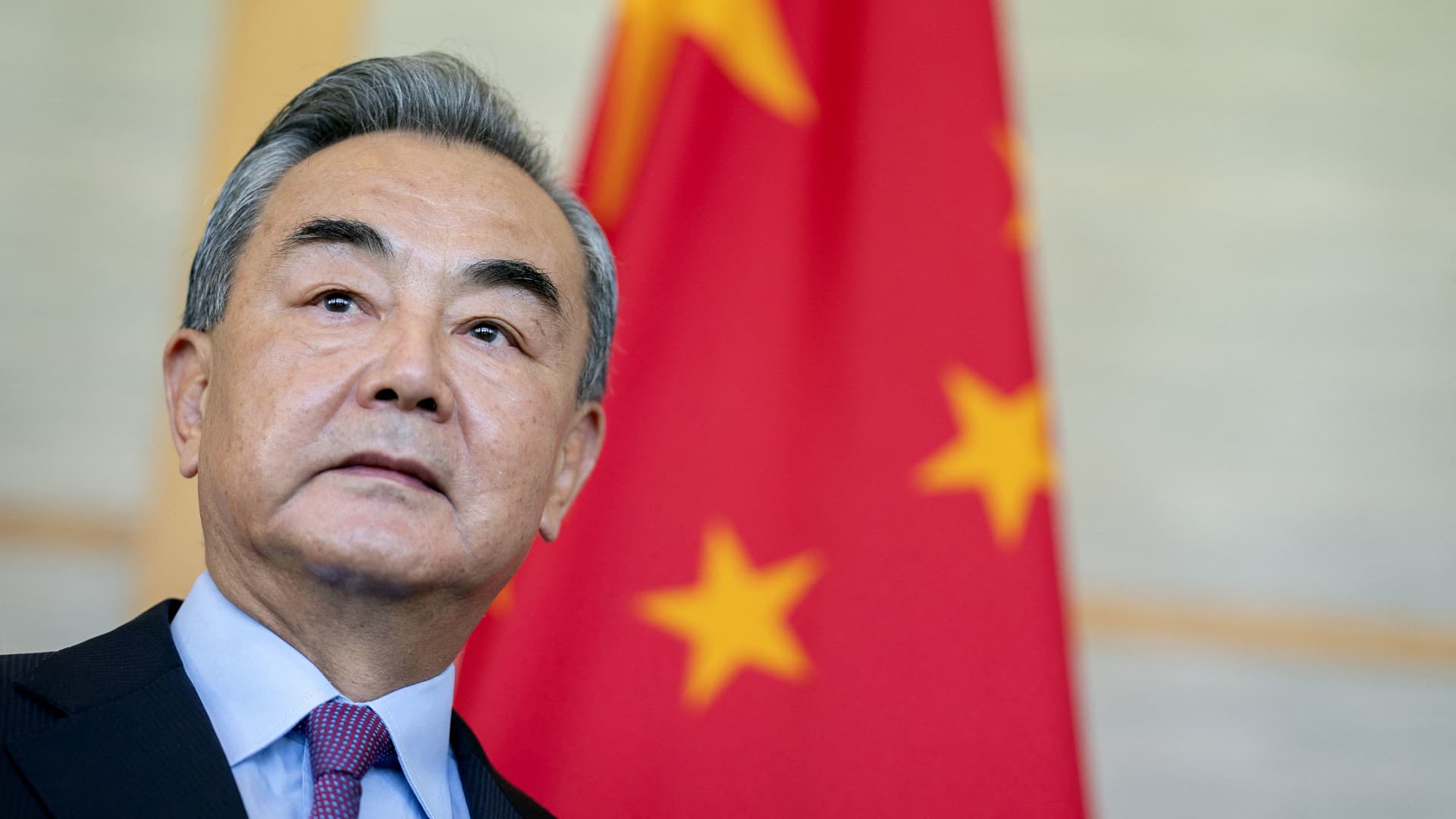
U.S. sending ‘unhealthy alerts’ on Taiwan, China tells Blinken

0
U.S. sending ‘unhealthy alerts’ on Taiwan, China tells Blinken

Taiwan was once the point of interest of the 90-minute, “direct and fair” talks between Secretary of State Antony Blinken and Chinese language Overseas Minister Wang Yi at the margins of the U.N. Basic Meeting in New York.

Stefani Reynolds | Afp | Getty Photographs

China has accused america of sending “very fallacious, unhealthy alerts” on Taiwan after the U.S. secretary of state advised his Chinese language counterpart on Friday that the upkeep of peace and steadiness over Taiwan was once vitally essential.

Taiwan was once the point of interest of the 90-minute, “direct and fair” talks between Secretary of State Antony Blinken and Chinese language Overseas Minister Wang Yi at the margins of the U.N. Basic Meeting in New York, a U.S reputable advised journalists.

“For our section, the secretary made crystal transparent that, in keeping with our long-standing one-China coverage, which once more has no longer modified, the upkeep of peace and steadiness around the Strait is de facto, vitally essential,” the senior U.S. management reputable stated.

China’s overseas ministry, in a observation at the assembly, stated america was once sending “very fallacious, unhealthy alerts” on Taiwan, and the extra rampant Taiwan’s independence process, the fewer most likely there could be a relaxed agreement.

“The Taiwan factor is an inside Chinese language topic, and america has no proper to intervene in what approach will likely be used to get to the bottom of it,” the ministry cited Wang as pronouncing.

Tensions over Taiwan have soared after a seek advice from there in August by way of U.S. Space of Representatives Speaker Nancy Pelosi – which was once adopted by way of large-scale Chinese language army drills – in addition to a pledge by way of U.S. President Joe Biden to protect the democratically ruled island.

Biden’s observation was once his maximum particular up to now about committing U.S. troops to the protect the island. It was once additionally the most recent example of his showing to head past a long-standing U.S. coverage of “strategic ambiguity,” which doesn’t make it transparent whether or not america would reply militarily to an assault on Taiwan.

The White Space has insisted its Taiwan coverage has no longer modified, however China stated Biden’s remarks despatched the fallacious sign to these in the hunt for an unbiased Taiwan.

In a telephone name with Biden in July, Chinese language chief Xi Jinping warned about Taiwan, pronouncing “those that play with fireplace will perish by way of it.”

China sees Taiwan as certainly one of its provinces and has lengthy vowed to convey the island below its keep an eye on and has no longer dominated out the usage of drive to take action.

Taiwan’s executive strongly gadgets to China’s sovereignty claims and says handiest the island’s 23 million other folks can come to a decision its long run.

Taiwan’s overseas ministry, responding to the assembly between Blinken and Wang, stated China’s “contemporary provocative movements” had made the Taiwan Strait a focal point of debate, and China was once seeking to “confuse the world target market with arguments and criticisms that contradict truth.”

The State Division had stated previous that Blinken’s assembly with Wang was once a part of a U.S. effort to “care for open traces of conversation and arrange pageant responsibly,” and the senior reputable stated Blinken had reiterated U.S. openness to “cooperating with China on issues of world fear.”

Blinken additionally “highlighted the consequences” if China had been to supply subject matter beef up to Russia’s invasion of Ukraine or interact in wholesale sanctions evasion, the reputable added.

U.S. officers have previously stated they’d observed no proof of China offering such beef up.

Blinken “underscored that america and China and the world neighborhood have a duty to paintings to counter the results of that invasion and likewise to discourage Russia from taking additional provocative movements,” the reputable stated.

‘Devastate our bilateral ties’

Blinken’s assembly with Wang was once preceded by way of one between the overseas ministers of the Quad grouping of Australia, India, Japan and america, which issued a observation, regarding the Indo-Pacific, pronouncing that “we strongly oppose any unilateral movements that search to switch the established order or build up tensions within the area.”

Since Pelosi’s seek advice from “China has taken a lot of provocative steps that experience by way of design acted to switch the established order”, the U.S. reputable stated.

U.S. Vice President Kamala Harris will talk about Taiwan safety all over bilateral conferences with the leaders of U.S. allies Japan and South Korea when she visits them subsequent week, some other U.S. reputable stated.

Daniel Russel, the highest U.S. diplomat for Asia below President Barack Obama, stated the truth Blinken and Wang had met was once essential after the turbulence introduced by way of Pelosi’s seek advice from, and with a bit of luck some development would were made in opposition to arranging a gathering between Xi and Biden at the sidelines of a G-20 assembly in November, which might be their first in-person as leaders.

“Wang and Blinken’s choice to fulfill in New York does no longer ensure the November summit will pass easily or that it’ll even happen. However had they been not able to fulfill, it might have intended the potentialities for a summit in November had been deficient,” stated Russel, now with the Asia Society.

White House economic adviser Heather Boushey: We have seen signs inflation is abating

In a speech to the Asia Society in New York on Thursday, Wang stated the Taiwan query was once rising into the largest chance in China-U.S. family members.

“Will have to or not it’s mishandled, it’s perhaps to devastate our bilateral ties,” Wang stated, in keeping with a transcript from the Chinese language embassy.

Likewise, the decades-old U.S. regulation outlining Washington’s unofficial family members with Taiwan – which Beijing considers null – makes transparent that Washington’s choice to ascertain diplomatic family members with China in 1979 “rests upon the expectancy that the way forward for Taiwan will likely be made up our minds by way of non violent manner.”

The Apple Watch Ultra’s Best Feature Is the Orange Button. Every Apple Watch Should Have One

0
The Apple Watch Ultra’s Best Feature Is the Orange Button. Every Apple Watch Should Have One

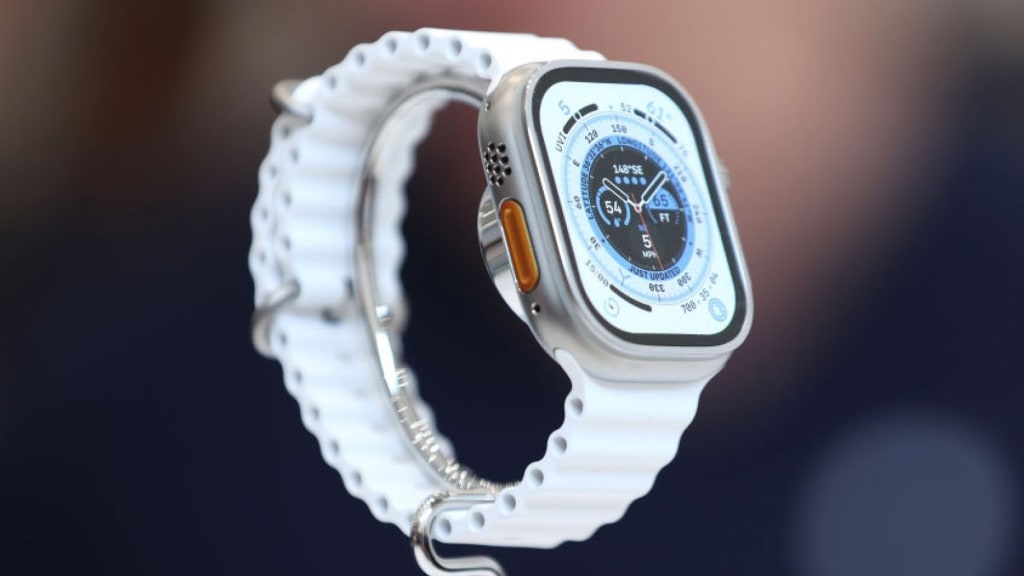
With the Apple Watch Ultra, it seems pretty clear that Apple is targeting a very specific audience. The keynote announcement, marketing materials, and even the packaging all make clear this is a serious product designed for people who are into serious adventure. Divers, mountaineers, triathletes, ultra-marathoners. 

After testing it out, the first thing that’s  clear to me is that I’m very much not a part of that audience. I’m a professional writer. The most adventuresome thing I do is time my daughter’s cross country meets and keep track of how much time is left in our kids’ soccer games. For that, this watch is obviously overkill. The Series 7 I’ve been wearing for a year does just fine.

 inline image

On the other hand, even if you’re not one of those extreme adventure type people, I can still think of three reasons you might want an Apple Watch Ultra. The first is that, if you really like the idea of having a larger screen, you’re going to love it. It’s much easier to read than even the largest Series 8. It’s the closest thing to having a usable computer strapped to your wrist.

Or, perhaps you want better battery life. I can imagine a lot of people who travel–or who would just rather not have to charge their Apple Watch every day–loving the battery life on the Ultra. It may not be measured in weeks, like some of its competitors claim, but it’s more than enough for someone who forgets to charge before going to bed.

Finally, maybe you just want the orange button. That is, after all, the entire reason I wanted to review the Apple Watch Ultra. Yes, I reviewed a watch because of a single button.

 inline image

Apple calls is the ‘Action Button,’ and I think it’s brilliant. It allows you to assign an action that can be accessed with just a press of the button, which is very useful for reasons we’ll get to in a minute.

In fact, I think every Apple Watch should have one. It does seem like the type of feature Apple might “bring down” to the standard Series 9 next year, but it also seems equally likely the company could keep it exclusive to the Ultra. The latter possibility would be a shame.

You see, for a while, the worst thing about using an Apple Watch is that it’s not particularly easy to navigate. That’s not really the Watch’s fault, it’s just that the interface isn’t ideal for doing things like reading and responding to text messages or email, or using apps. Partially that’s because very few apps are anything more than a way to notify you about something on your iPhone, but it’s also because there’s only so much you can do on a screen that small.

 inline image

The touch screen is fine, but the Digital Crown and side button just aren’t enough if you’re trying to do something that requires more than a few taps or gestures. The Action Button solves that because you can assign it to do a specific task without having to navigate through, well, anything. 

Want to start a workout, instead of opening the app, selecting the one you want, and then waiting for the three-second countdown, you just press the Action Button. Or, want to start a stopwatch? You don’t even have to have it as a complication on your Watch face (who wants to look at a blank stopwatch all the time anyway?). You can just set the Action Button to start counting. 

It’s hard to adequately describe how much better it makes using your Apple Watch. Even if you aren’t doing adventure things like setting GPS waypoints or trying to backtrack your route out of the wilderness, it’s a great feature to have.

There are limits, by the way. Currently, you can only use it to set up one of a few actions supported by first-party apps like start a workout, for example. Apple has said that third-party workout and diving apps will be able to offer users a choice to use the Action Button with their apps, but that’s still a pretty limited selection of options. 

I think the Action Button has a lot more potential. Honestly, I’d love to be able to tap it to get your heart rate or to measure your blood oxygen. It would be great to press it and send a text message to a selected contact.

Think about how useful it could be for people who use an Apple Watch as a productivity tool. Imagine being able to start a timer with Timery when you start a project. Or, imagine being able to open the camera app on your iPhone and take a photo, just by clicking the Action Button.

Apple does allow you to select a shortcut, but I’m pretty sure the number of people who would find value in having more flexibility in terms of Action Button options is a lot larger than people who understand or use Shortcuts. 

The Action Button, even with those limitations, is exactly the sort of thing you’d expect from Apple. It’s the sort of delightful feature that makes the experience of using a thing better than a single button should. We can only hope every Apple Watch gets one. 

The opinions expressed here by Inc.com columnists are their own, not those of Inc.com.

‘100 Times Uglier Than We Thought’: Inside the Celtics Scandal

0
‘100 Times Uglier Than We Thought’: Inside the Celtics Scandal

When Boston Celtics suspended head coach Ime Udoka for the entire 2022-2023, the initial reason given was that Udoka acted in “violation of team policies.”

That cryptic announcement caused many observers to cry foul, including former NBA player and ESPN analyst Matt Barnes, who said via social media that the Celtics made a “terrible decision.”

#ImeUdoka has been suspended for the entire season after it was revealed he had an “improper intimate and consensual relationship with a female member of the team staff.” Now #MattBarnes is sharing his thoughts on the whole matter. read more at https://t.co/NgmfaFQdbz pic.twitter.com/DaUG1J5IQ1

— Theeshaderoomed (@Theeshaderoomed) September 23, 2022

But today, team owner Wyc Grousbeck elaborated on the Udoka incident. According to The New York Times, Grousback told an unidentified person that Udoka had an “inappropriate relationship with a female team employee.”

He added that the team hired an independent “law firm to conduct an impartial investigation” after learning about the allegations over the summer.

Grousbeck added that the suspension is “well-warranted and appropriate and backed by substantial research and facts.” And it comes with a “significant financial penalty.”

A Huge Turn of Events

The stunning revelation caused many, such as Barnes, to do a pick and roll.

He took to Instagram tonight to air his thoughts and drop a few bombshells of his own.

“Last night, without knowing all the facts, I spoke on Ime Udoka’s defense, and after finding out the facts after I spoke, I erased what I posted because this situation in Boston is deep, it’s messy, it’s 100 times uglier than any of us thought,” Barnes said.

He added that some insider info had also informed his decision: “I got a call from someone who ran all the details and shit is deep. Praying for everybody involved, hope everyone gets through this.”

Adding to the chaos, many have scrambled to identify the female reporter in question, causing Amanda Pflugard, a Celtics Team Reporter, to speak up.

“Seeing uninvolved people’s names thrown around in the media, including mine, with such carelessness is disgusting,” she tweeted.

Grousbeck also came to his employees’ defense.

“It is really unfortunate that female staff members have been drug into the public eye unwillingly, and we regret this, and it’s unfortunate. I won’t be referring to anyone else that might involved for privacy reasons,” he said.

Who is Ime Udoka?

Udoka, 45, became head coach of the Celtics last year. After the team started the season under .500, Udoka oversaw a turnaround that led them to the NBA Finals for the first time in 12 years. He is the fifth coach in the past 25 years to reach the NBA Finals in his rookie season.

As for the incident, Udoka has publicly apologized, saying in a statement, “I am sorry for putting the team in this difficult situation, and I accept the team’s decision. Out of respect for everyone involved, I will have no further comment.”

Complicating matters, Udoka is engaged to actress Nia Long. The couple had a son together in 2011.

Asked to comment, Long told People, “The outpouring of love and support from family, friends, and the community during this difficult time means so much to me.”

EU battles to keep united front in face of far-right successes

0
EU battles to keep united front in face of far-right successes

This article is an onsite version of our Europe Express newsletter. Sign up here to get the newsletter sent straight to your inbox every weekday and Saturday morning

Welcome back. I’m Sam Fleming, Brussels bureau chief of the FT, standing in for Tony Barber as we face a potentially historic weekend in European politics.

Just days after Vladimir Putin escalated his nuclear rhetoric and mobilised Russia’s reserves, the face of Italian politics is about to change profoundly, with polls pointing to the far-right Brothers of Italy coming on top in tomorrow’s election.

How deep is the concern here in Brussels at the radical right’s resurgence in one of Europe’s biggest economies, coming alongside the strong performance of the Sweden Democrats in last week’s elections?

Before we get to that, here are the results of last week’s poll, which asked whether ultranationalists are a threat to Putin’s hold on power. Some 48 per cent of you thought ultranationalists could weaken the Russian president, while 30 per cent believed they are not at all a threat and 22 per cent were on the fence.


We won’t know the results of Italy’s election until well after polls close at 11pm tomorrow night, but surveys before the official polling blackout pointed to a strong performance for Giorgia Meloni’s Brothers of Italy. Her party could win more votes than probable coalition partners Matteo Salvini’s League and Silvio Berlusconi’s Forza Italia combined.

As my colleague Amy Kazmin wrote yesterday, this formation would mark Italy’s first experiment with far-right rule since fascist dictator Benito Mussolini. It also would mark a second electoral success for the hard-right after the anti-immigration Sweden Democrats finished second in the Swedish elections this month, with 20.5 per cent of the vote.

It comes on top of the unexpectedly strong recent performance by Marine Le Pen and her National Rally, which, after losing out in France’s presidential election stormed into the National Assembly with 89 MPs in June.

It adds up to a deeply worrying trend for the EU, given the traditional hostility of hard-right parties towards European integration and the open enthusiasm many of them have displayed for Putin.

Of course, while big EU capitals will deeply miss the reassuring face of Mario Draghi in the Chigi Palace, these potential electoral successes need to be put in context.

As Cas Mudde, a Dutch political scientist at the University of Georgia, told me, there is a risk that we fixate on the wins and ignore the losses for the far right. Le Pen lost decisively to Emmanuel Macron in April, after all. And even if the Sweden Democrats gained ground this week, it will be Ulf Kristersson of the centre-right Moderates who is first in line to form a government.

Officials in Brussels expect the next Swedish government (which will take over the EU rotating presidency in January) to firmly embrace continuity in EU affairs — and on Russia in particular — despite the influence the Sweden Democrats will seek to impose on domestic policy.

With Meloni as prime minister, the EU would have three hard-right governments along with Poland and Hungary. But that does not guarantee they would present an effective axis on the critical topic of foreign policy and Ukraine given the gaping divide between Warsaw and Budapest on the topic.

Salvini has openly embraced Putin, as has Berlusconi, who this week defended Putin’s invasion of Ukraine, saying he was “pushed” into the conflict. But Meloni insists she will continue Draghi’s policies of military support for Ukraine and sanctions on Russia. The jury is clearly very much out on this, but Rosa Balfour of Carnegie Europe argues that past behaviour suggests that Italy will “stay the course” on Russia policy.

For her part, Meloni has no experience of leading a government and would be battling two fractious and unpredictable coalition partners. Italy will no matter what remain highly reliant on a steady flow of EU cash from both the regular budget and €200bn stream from the post-Covid NextGenerationEU recovery fund, restricting incentives to pick fights with Brussels on economic policy.

“This all leads me to believe that Meloni will not be a major force in EU politics in the first years,” predicts Mudde.

Nevertheless, the loss of Italy as a constructive player in EU policy still represents an acute blow to Brussels — especially given the important role Draghi played on sanctions policy and as an interlocutor with the Biden administration. It would also be a setback for the broader western alliance at a time when the EU needs to show a united front in the face of the Russian threat.

This is a moment when the EU’s political centre of gravity is weakening. Member states regularly complain of indecision and a lack of clear direction coming from Berlin, for example, as Chancellor Olaf Scholz struggles to direct his traffic light coalition.

Macron, meanwhile, is on an unsteady footing following the legislative elections in the summer. In Spain one of the questions facing the conservative People’s Party is whether it can form a government next year without relying on seats from the far-right Vox party.

This comes, of course, at a time when EU governments are deeply on edge as energy prices soar and recession looms, fearful that the economic pain will further embolden populists or nationalists as it already has in Italy.

Even if Italy doesn’t rock the boat on foreign policy, diplomats and industrialists expect it to begin caucusing with the conservative nationalist governments in Poland and Hungary on key topics such as the rule of law and social policy, as well as migration.

In Brussels diplomats are already gaming out which EU files could be disrupted if Italy starts aligning with Hungary’s Viktor Orbán, given the latter’s willingness to wield his veto. Tensions are already rising ahead of Sunday after Ursula von der Leyen, the commission president, warned during an event in Princeton this week that Brussels has “tools” to respond if things go in a “difficult direction”.

It all adds to a deeper anxiety about the EU’s ability to defend and promote the fundamental rights it was founded on — in a wider context in which democratic values feel fragile in numerous countries around the world, not least the US.

This is a phenomenon that Russia has gone out of its way to encourage, prompting, as one EU diplomat puts it, a perpetual state of nervousness all around Europe.

Paolo Gentiloni, the EU’s economics commissioner and a former Italian prime minister, underscored the stakes earlier this week, in a speech during which he clearly had his native country in mind:

The European way means keeping our unity and respecting our fundamental values of democracy. Our unity, as the response to the pandemic and the Russian war has shown, is the precondition for us Europeans to be stronger together, leaving no room for the dangerous illusions of protectionism and nationalism.

More on this topic

Notable, quotable

“[Putin] only wanted to replace [Ukrainian president Volodymyr] Zelenskyy with a government made up of decent people” — Former Italian president Silvio Berlusconi defends the Russian president’s invasion of Ukraine in a television interview

Sam’s picks of the week

  • Countries including Poland and the Baltic states are demanding hard-hitting measures against Russia, including ejecting more banks from the Swift messaging network and banning diamond imports, Henry Foy, Andy Bounds and I report from Brussels

  • Putin’s decision to bolster Russia’s army by calling up reservists has brought the war close to home for many Russians. A nightmare phone call to one family in Buryatia on Wednesday evening sparked panic and desperate urge to flee the country, as Max Seddon and Polina Ivanova detail in their dispatch from Moscow

  • A draft UN report proposes flood-hit Pakistan negotiate with creditors to suspend or restructure debt payments — a sign of concern that climate change is threatening the solvency of vulnerable countries. Our South Asia correspondent Benjamin Parkin has the scoop.

Join FT correspondents and guests on September 27 (1-2pm UK) for a special virtual briefing on the Italian election results and what’s in store for Italy and Europe. Subscribers can register for free and submit questions for the panellists here.

Britain after Brexit — Keep up to date with the latest developments as the UK economy adjusts to life outside the EU. Sign up here

Working it — Discover the big ideas shaping today’s workplaces with a weekly newsletter from work & careers editor Isabel Berwick. Sign up here

Are you enjoying Europe Express? Sign up here to have it delivered straight to your inbox every workday at 7am CET and on Saturdays at noon CET. Do tell us what you think, we love to hear from you: [email protected]. Keep up with the latest European stories @FT Europe

More billionaires would help the economy says Larry Summers

0
More billionaires would help the economy says Larry Summers

Larry Summers has a soft spot for billionaires.

Well, that might be a bit strong. But in a recent wide-ranging conversation with Fortune about inflation, the economy, and yes, billionaires, Summers said we need more rather than fewer of them.

Indeed he thinks it’s crucial to keep the freewheeling entrepreneurial culture that spawns so many mega-billionaires because they’re also mega-job-creators. But he also believes they’re under-taxed. “If we had more people like Jeff Bezos and Bill Gates and Steve Jobs who built spectacular enterprises and made inordinate fortunes…that would be good for America,” he said. He also favors “a whole set of tax changes that would make them pay more and complicate any efforts to form intergenerational dynasties for the benefit of their great-grandchildren. The ease with which the wealthy can pass on their wealth to their heirs is an afront to the American ideal of equal opportunity.”

Taxing the super wealthy more isn’t the only change Summers would like to see at the IRS—he’d like to greatly expand its reach, and has the research to show why that move would more than pay for itself.

Summers relates that in 2019, he and Harvard law professor Natasha Sarin began researching the payoff if the U.S. raised funding for the IRS to greatly expand tax enforcement and auditing. “We did in anticipation that there might be a Democratic president who would be looking to strengthen the tax system without changing tax rules,” recalls Summers.

In their paper published in July of 2020, Summers and Sarin cited estimates that $7.5 trillion or 15% of all federal tax revenue would go uncollected over the next decade. The reason: The IRS was grossly underfunded. In the past decade, the agency suffered a 15% fall in inflation-adjusted appropriations, and a one-fifth fall in its workforce. Only half as many agents worked on high-income returns as in 2011 or 2012. Its operates an outdated software system developed in the 1960s that ranks as the oldest in the federal government.

The two authors found that the IRS could generate multiple dollars in additional revenue for each dollar spent on enforcement. They estimated that $82 billion new funding over ten years would restore outlays to their 2011 share of GDP—and produce something like ten times that amount in extra revenue. Much of those collections would come from “deterrence,” the perception that as taxpayers see more audits and  increased enforcement, they deploy fewer risky strategies to skirt levies.

The research even found its way into the recently-passed Inflation Reduction Act (Sarin joined the Treasury Department as Assistant Secretary for Economic PolicyCK). In the bill, the CBO found that $80 billion in extra appropriations to the IRSCK should generate net gains over the through 2032 of $124 million BILLION?, offsetting one-fourth of the bill’s expenditures. And the CBO’s analysis excluded any possible benefits from deterrence, which loomed large in the Summers-Sarin paper. Hence, Summers’s and Sarin’s offbeat idea stands as a pillar of what it was designed for, creating a deficit-reducing budget victory for President Biden.

For the inside story on how Summers is playing a key behind-the-scenes role in the fight against inflation, read the full story here.

Sign up for the Fortune Features email list so you don’t miss our biggest features, exclusive interviews, and investigations.

Britain’s lurch to Reaganomics gets thumbs down from markets

0
Britain’s lurch to Reaganomics gets thumbs down from markets

Truss has now put the country on an economic road completely at odds with most, if not all, major global economies.

Hannah Mckay | Reuters

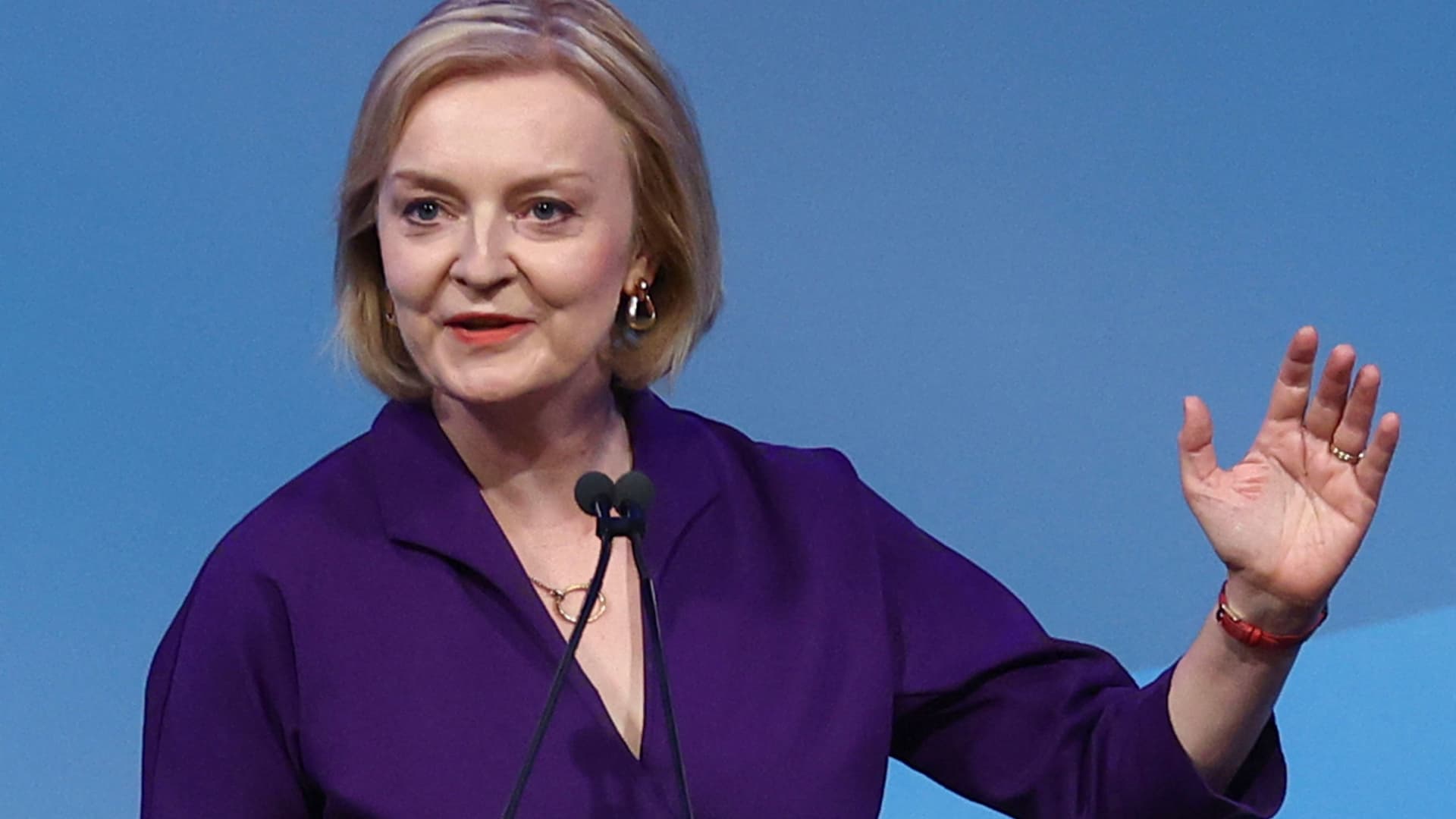
LONDON — New U.K. Prime Minister Liz Truss may have talked big on “trickle-down economics” during her campaign trail this summer, but no-one could have predicted the swathe of tax cuts unleashed just weeks into her Downing Street tenure.

Billed as a “mini-budget” by her Finance Minister Kwasi Kwarteng, Friday’s fiscal announcement was anything but with a volume of tax cuts not seen in Britain since 1972.

Truss — whose “Trussonomics” policy stance has been likened to that of her political idols Ronald Reagan and Margaret Thatcher — has now put the country on an economic road completely at odds with most, if not all, major global economies as inflation boils over and a cost-of-living crisis barrels into Europe.

It’s been seen, even by some of her advocates, as a political and economic gamble with Truss yet to face the wider British electorate in a nationwide vote — unlike her predecessor Boris Johnson.

Market players immediately predicted that Britain would have to scale up its bond issuance and significantly increase its debt load to pay for the cuts — not typical of the low-tax Conservative governments of the past.

U.K. bond markets went into a tailspin Friday as investors shunned the country’s assets. Yields (which move inversely to prices) on the 5-year gilt rose by half a percentage point — which Reuters reported was the largest one-day rise since at least 1991.

And with bonds tanking, sterling was also sent into freefall after hitting 37-year lows against the dollar in recent weeks. It ended Friday down nearly 3.6% against the greenback. On the week it lost 5% and is now down 27% since just before the 2016 Brexit vote.

Wall Street banks are now seriously considering a break lower to parity with the U.S. dollar — for the first time in history — and many commentators have likened the pound to an emergency market currency.

Left-leaning The Guardian newspaper called it “a budget for the rich” on its front page Saturday, while The Times called it a “great tax gamble.” The right-wing Daily Mail newspaper called it a “true Tory budget” while Kwarteng himself said it was a “very good day for the U.K.,” declining to comment on the currency moves.

ING analysts said in a research note that investors are worried that the U.K. Treasury has now effectively committed to open-ended borrowing for these tax cuts, and that the Bank of England will have to respond with more aggressive rate hikes.

“To us, the magnitude of the jump in gilt yields has more to do with a market that has become dysfunctional,” ING’s Senior Rates Strategist Antoine Bouvet and Global Head of Markets Chris Turner said in the note.

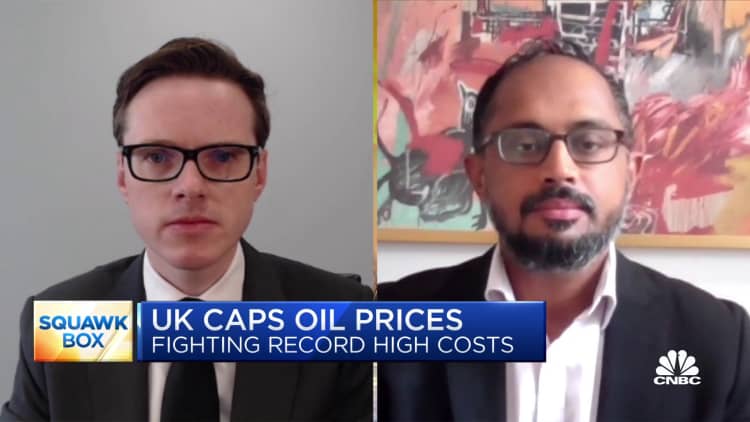
UK taxpayers will have to fund a new oil price cap, says Neuberger Berman's Jonathan Bailey

“A number of indicators … suggest that liquidity is drying up and market functioning is impaired. A signal from the BOE that it is willing to suspend gilt sales would go a long way to restoring market confidence, especially if it wants to maximise its chances of fighting inflation with conventional tools like interest rate hikes. The QT [quantitative tightening] battle, in short, is not one worth fighting for the BOE,” they added, referencing the Bank’s move to normalize its balance sheet after years of stimulus.

ING also noted that the U.K.’s long-term sovereign outlook is currently stable with the big three ratings agencies, but the “risk of a possible shift to a negative outlook” could come when they are reviewed (Oct. 21 and Dec. 9).

Deutsche Bank analysts said, meanwhile, that the “price of easy fiscal policy was laid bare by the market” on Friday.

“[Friday’s] market moves suggest that there may be a credibility gap,” Sanjay Raja, a senior economist at Deutsche Bank, said in a research note.

“A plan to get the public finances on a sustainable footing will be necessary but not sufficient for markets to regain confidence in an economy sporting large twin deficits [the U.K.’s fiscal and current account balances],” he added.

“Crucially, with fiscal policy shifting into easier territory, the onus may now fall on the Bank of England to stabilise the economy, with the MPC [Monetary Policy Committee] having more work to do to plug the gap between expansionary fiscal policy and tightening monetary policy.”

—CNBC’s Karen Gilchrist contributed to this article.

7 Steps to find & use the best Business Mentor for you !!!

0
7 Steps to find & use the best Business Mentor for you !!!

TOPICS: What is a BM? (not IBM or Independent BM) Why it’s Important, Finding, What do you Need? Networking, Attend Events, Meet to Qualify, Build a Relationship, Famous Mentors & Mentees.

by Indeed’s Editorial Team – which comprises a diverse + talented team of writers, researchers & subject matter experts equipped with Indeed’s data + insights – to deliver useful tips to help guide your Career journey from our #1 Job Site in World with > 250M Visitors every month.

a Mentor can help you develop professional goals and provide valuable insight into any challenges you might experience. Asking the right person to be your Mentor can develop a lifelong relationship that you can both learn from. It’s important to find a Business Mentor who understands your background, objectives & work ethic. In this article, we explain: 1) What a Business Mentor is, 2) Why having a Business Mentor is important & 3) how to find a Business Mentor.

What is a Business Mentor?

A Business Mentor is an experienced professional in your field who can provide you with valuable guidance & advice. They can help you achieve your professional goals, lead by example & guide you in your career. They serve as Advisors by sharing valuable input about how you are managing your Business and what you can do to grow it.

Experience: a Business Mentor often has previous experience in managing or owning a Business. They have many years of experience in their field of expertise, and they understand how to lead & manage others. Because of their industry experience, they can provide you with valuable insight into leadership & entrepreneurship. Many Mentors once had Mentors of their own, so they’re familiar with the Mentor / Mentee relationship.

Compensation? Business Mentors don’t receive monetary compensation from the relationship. They advise you because they share a similar passion for entrepreneurship or your specific field. But some give their Mentees a Men’s Tee-Shirt !!!

Why is having a Business Mentor important?

Having a Business Mentor is important because it provides you with relevant industry guidance. Business Mentors have management experience that directly relates to your industry or field. A Business Mentor teaches you additional strategies & approaches that you won’t learn in school or other sources.

Experience: a Business Mentor provides handy tips & advice about your Business. Most Mentors have experienced similar challenges & set the same goals – so using your Mentor’s journey as an example helps you understand & visualize your own future.

Good Advice. While you grow your company, you might encounter questions or issues you need to resolve. A Business Mentor provides you with useful advice from their own experience.

How To Become an Entrepreneur in 7 Steps (With FAQ)

How to find a Business Mentor

Finding a Business Mentor requires meeting many people and having conversations with other professionals. There are many options to choose from when searching for a Mentor such as informal Meetups, LinkedIn or official networking events. Consider taking these steps to find your Business Mentor.

Step #1. Establish what you need in a Mentor

A Mentor addresses gaps you find in your professional development. They teach you concepts you might not know or share tips you may not have heard. Therefore, a great way to make sure you find a good Mentor is by first establishing what you need. Consider what your priorities are in your Business career and what you need the most help with.

10 Important Qualities To Look for in a Mentor

Step #2. Network with Professionals

Networking is an excellent tool for meeting other professionals and it is especially helpful when searching for a Mentor. Networking requires you to talk to several people about their experience, skills & achievements. The more people you meet and the more productive conversations you share, the more people you have to choose from as your Mentor. Specifically, network with potential Mentors in your field to find an individual who understands your Business Ideas/, Startup challenges. Hopefully, someone who has succeeded in business.

The Complete Guide To Networking

Step #3. Attend Events & Meetups

There are many community events & meetups for professionals, which are perfect for networking with potential Mentors. During a networking event or meetup, you’ll converse with others in the same or similar fields, making connections with like-minded professionals. You can also do this thru LinkedIn.

Join. Search for possible organizations to join – where you can get involved and meet people with similar passions. Attending events & meetups will likely increase your chances of meeting your next Mentor. Even if you don’t meet your Mentor at a networking event, you can still build a variety of connections that can help you professionally.

Step #4. Consider your Institutional connections

If you have attended college, you most likely have an alumni network. Consider these groups as well as former professors, instructors & extra-curricular advisors when searching for your Mentor. These people know you and already have a general understanding of your goals. Many institutions have online groups and websites specific to their alumni network. Universities hold reunions & alumni events, which provide excellent opportunities to meet potential Mentors. Try to attend these events to continue to interact with people affiliated with your institution.

Step #5. Meet with potential Mentors to Qualify

Consider meeting with several potential Mentors to find the best fit for you. Each Mentor has their own approach to running a Business and hlping develop you professionally. Maintaining a Mentor for a long time is ideal, so take the time to speak to potential Mentors and learn all you can about them.

Informational interviews

are great for learning more about a potential Mentor in a casual setting. Initially, do a pre-qualification (interview) over the phone to determine if it looks like a match. Then do a face-to-face Interview, in the potential Mentor’s office or in a public space (ie, like a coffee shop). During an informational interview, you ask questions about the Mentor’s experiences, but doing it more as an informal conversation than an interview. This can help you get to know the potential Mentor both personally & professionally. Although a Mentor serves as an advisor, you can both learn from each other. Learning about each other’s experiences is beneficial because you each provide the other with an additional perspective.

Step #6. Think about Logistics

When thinking about your Mentor relationship, consider the logistical aspects of maintaining the professional connection. Think about your schedules & flexibility in planning meetings. If you decide you want to meet with your Mentor in person, choose someone who lives relatively close to you.

9 Questions To Ask Your Mentor

Step #7. Build a Relationship

Sometimes Mentorship happens naturally, and you gain a Mentor through mutual experience over time. This type of relationship requires a lot of time & effort put forth by both you & your Mentor parts. An unexpected Mentorship often occurs while you are in college, your jobs along the way or someone you chatted with about starting a business. A professor, supervisor, manager or co-worker could start as an advisor, then slowly grow into your Mentor. Allow your relationship to grow authentically to develop a deeper connection. Celebrate big & small victories !!!

BONUS: Famous Mentors & Mentees

Steve Jobs, mentored by two – a College Friend & Apple Designer.

Oprah Winfrey has mentored hundreds of women. She was mentored by Barbara Walters – famous TV Interviewer.

Richard Branson [Virgin Group (telecom, music, airlines, etc)] mentored by Freddie Laker – who founded Laker Airlines.

Bill Gates: was mentored by #1 Super Investor Warren Buffet – worth about $100B – and they have an World Charity together

Maya Angellou (world famous inspirational Author) mentored early by her Grade School Teacher)

Elon Musk [Tesla] was mentored by Space X’s VP of Business.


Comments: Do you know any other Steps in Finding & Using a Mentor?

from Indeed: #1 Job Site in World w/ > 250M Visitors every month 9/22 enhanced by Peter/CXO Wiz4.biz

For similar Info, click on Mentor or Mentoring.


Tim Cook Still Keeps this Habit He Learned from Steve Jobs. Why Every Leader Should Try It

0
Tim Cook Still Keeps this Habit He Learned from Steve Jobs. Why Every Leader Should Try It

It’s hard to imagine what it must have been like to take over as CEO of Apple from its iconic founder, Steve Jobs. Obviously, in hindsight, Tim Cook has done just fine. When he took over in 2011, Apple was worth around $340 billion. Today, it’s the most valuable company on earth, with a market cap over $2.4 trillion. 

Obviously, Cook and Jobs are very different people and very different types of leaders. Jobs was one of the most iconic entrepreneurs ever to start a business. He’s known as the creative force behind the iMac, the iPod, the MacBook Air, and the iPhone. Each of those are products that defined their respective categories.

Cook, on the other hand, is known as an operations guru who grew Apple through his ability to streamline its supply chain and squeeze massive profits out of every device the company sells. It’s a strategy that has worked, even if it looks very different than that of his predecessor.

However, there is one thing the two leaders have in common. Or, more specifically, there is one habit Cook has maintained all this time that he learned from Jobs. Every Monday morning at 9:00 a.m., Cook meets with the top executives at Apple–something Jobs started. 

“In many ways, it’s still run the way Steve set it up,” Cook told Kara Swisher at the Code Conference earlier this month. 

I think there are actually two lessons here. The first is that if you lead a team, it’s your job to build a structure that sets your team up for success. Getting everyone in a room to go through the business is a good place to start.

Here’s how Jobs explained it in a 2008 interview with Fortune magazine:

“I want them making as good or better decisions than I would. So the way to do that is to have them know everything, not just in their part of the business, but in every part of the business.

So what we do every Monday is we review the whole business. We look at what we sold the week before. We look at every single product under development, products we’re having trouble with, products where the demand is larger than we can make. All the stuff in development, we review. And we do it every single week. I put out an agenda — 80% is the same as it was the last week, and we just walk down it every single week.

We don’t have a lot of process at Apple, but that’s one of the few things we do just to all stay on the same page.”

Apple is a much larger company than it was when Jobs started getting his top leaders in a room on Monday mornings. That means it’s even more important to do whatever it takes to stay on the same page. In a 2015 interview with 60 Minutes, Cook told Charlie Rose that one of the reasons he continues the meeting is because of what he learned from Jobs.

“This is Steve’s company. This is still Steve’s company,” Cook said. “It was born that way, it’s still that way. His spirit will always be in the DNA of this company.”

This leads to the other lesson, which is to have the attitude of a learner. When you’re in charge–whether that’s as a manager, or especially if you become CEO–it’s easy to think that just because you make the decisions, you must be right. Sure, if you’re the boss, there’s a good chance people will do what you ask, but it doesn’t mean you have it all figured out. 

Obviously Cook had already spent years learning from Jobs before he took over. He learned the things that mattered, and the things that made Apple, Apple. Not everyone is given the job of following after such an outsized personality as Steve Jobs, but there is still someone you can learn from. 

“Among his last advice he had for me, and for all of you, was to never ask what he would do. ‘Just do what’s right,'” Cook said at a memorial service when Jobs died. Investing in your team, making sure they’re all on the same page, and giving them a chance to help you make decisions is always the right thing to do.

The opinions expressed here by Inc.com columnists are their own, not those of Inc.com.

Bears Back in Charge…What Happens Next?

0
Bears Back in Charge…What Happens Next?

A month ago the bulls were claiming victory as they created a charge back over 4,000 for the S&P 500 (SPY). Since then that false narrative has been peeled away and investors are more honestly looking at the bleak outlook formed by high inflation and a hawkish Fed. That explains why we are back retesting the June lows. Now we have to ponder what comes next and how to trade our way to profits. Read on below for the full story.


shutterstock.com – StockNews

I can count on 1 hand the # of times a bear market has not retested the bottom before the next bull market emerged.

Scratch that.

It only takes 1 finger to count it…and that was the oddity of the Covid bear market that bounced ferociously from bottom in March 2020 never to return.

This is one of the main reasons that I knew the 18% suckers rally from mid-June to mid-August was a mirage. The true problems of high inflation and hawkish Fed were not yet solved. So it pointed to a future encounter where we would revisit those June lows…if not lower.

Now that we are back near those lows…what happens next?

That will be at the heart of this week’s commentary below…

Market Commentary

Stocks flirted with support at 3,855 on the S&P 500 (SPY) for a few sessions. That was an interesting point of support because it represents 20% down from the all time highs which denotes bear market territory.

But then the Fed brought the hammer down on Wednesday with another 75 basis point rate hike and language that says expect much more to come. Perhaps the worst thing they said is how strong the employment picture looks which gives them a green light to continue aggressively raising rates with the assumption it will cause less pain.

However, investors read it correctly that the Fed will most likely inflict more pain. And that in time employment will worsen. Put that together with an ugly start to Q3 earnings season and investors are in a hurry to get back into bear territory below 3,855.

The next point of serious support is retesting the June lows of 3,636. Shocking how fast we got there as investors seemed in quite the rush to approach those levels on Friday with a session low of 3,647 before a 50 point bounce into the close.

Like I was saying even back in August with the market at 4,300, it is odd bordering on insane for a bear market not to retest the lows. Just a matter of time before it happens.

Some scoffed at that comment like I couldn’t see the new bull market forming right before my eyes. However, I am not a believer in price action as much as I am a believer in the fundamentals. And the fundamentals say that…

High Inflation + Hawkish Fed = Recession & Bear Market Ahead

Those looking for cracks in the economy may have already noticed that we have endured 2 straight quarters of negative GDP growth to start the year. However, Q3 was looking pretty solid with the famed GDP Now model from the Atlanta Fed showing a potential +2.6% read for the quarter at hand. This no doubt was part of the reason for the big bounce that ensued from mid-June through mid-August.

However, ever since the start of the month the growth outlook has been slashed lower after just about every economic report. And this week after Housing Starts rolled in the GDP estimate was cut further down to only +0.3%.

The only reason it is not currently called a recession is because there is no increase in unemployment. That level of economic pain is what would cause the National Bureau of Economic Research, the official arbiters of recessions, to ring the bell.

Now let’s remind ourselves of what the Fed has been saying loud and clear. They need to crush inflation. This can only be done with a long term battle to raise rates above normal levels which WILL lead to below trend growth and WILL lead to a weakening of labor markets.

Don’t forget that the Fed has a optimistic bias. So, if they are saying these negative things will happen…then you better believe its true. And unfortunately, it will likely be even more painful than the mild picture they paint.

This is what investors have reawakened to and explains why the market is back into bear market territory below 3,855.

And why we are so quickly retesting the June lows at 3,636.

And this is why I point out that the average bear market decline is 34% which would equate to 3,180.

And this is why you should expect more downside from current levels.

Yes, there will be bounces here or there. In fact, it would not be a shocker for one to emerge soon given how quickly we are retesting the June lows without concrete evidence of serious economic pain in hand. That being a true weakening of the employment picture or an earnings recession.

FedEx’s horrible earnings a week back may indeed be foreshadowing more ugliness ahead in the Q3 earnings season. But until Wall Street analysts start predicting earnings declines (not just slowing of growth) then it is hard to say that everyone is expecting recession…and thus likely not ready to make our way to the final bottom of this bear market.

Putting it altogether the market took a 3 month detour from the June lows. And now we are once again back to a point of determining if indeed inflation + hawkish Fed equals recession.

If yes, then stocks will fall further. Probably somewhere between 3,000 and 3,200 will prove to be the bottom.

If not, then we may be in the process of solidifying bottom at this level….but don’t count on it. The much more likely scenario is recession and deeper bear market.

What To Do Next?

Discover my hedged portfolio of exactly 9 positions to help generate gains as the market descends further into a bear market territory.

Like the +3.89% gain this portfolio enjoyed since mid August as the bears have regained control.

This is not my first time employing this bearish strategy. In fact, I did the same thing at the onset of the Coronavirus in March 2020 to generate a +5.13% return the same week the market collapsed -15%.

If you are fully convinced this is a bull market…then please feel free to ignore.

However, if the bearish argument shared above does make you curious as to what happens next…then do consider getting my “Bear Market Game Plan” that includes specifics on the 9 positions in my hedged portfolio.

Click Here to Learn More >

Wishing you a world of investment success!


Steve Reitmeister…but everyone calls me Reity (pronounced “Righty”)
CEO, Stock News Network and Editor, Reitmeister Total Return


SPY shares rose $0.29 (+0.08%) in after-hours trading Friday. Year-to-date, SPY has declined -21.63%, versus a % rise in the benchmark S&P 500 index during the same period.


About the Author: Steve Reitmeister

Steve is better known to the StockNews audience as “Reity”. Not only is he the CEO of the firm, but he also shares his 40 years of investment experience in the Reitmeister Total Return portfolio. Learn more about Reity’s background, along with links to his most recent articles and stock picks.

More…

The post Bears Back in Charge…What Happens Next? appeared first on StockNews.com

5 Smart Phrases People With High Emotional Intelligence Keep Saying Over and Over, and Why

0
5 Smart Phrases People With High Emotional Intelligence Keep Saying Over and Over, and Why

When readers took the time to track me down and ask for a follow-up to the emotional intelligence article I wrote here a week ago, I listened.

I think there are two ways people can try to improve their emotional intelligence.

  • The hard way, which involves studying the concepts, training yourself to analyze interactions, and working case by case to isolate emotions from other motivations.
  • The easy way, which involves memorizing phrases that inspire positive emotional reactions, and training yourself to use these phrases in the place of others that can be more counterproductive.

The examples speak for themselves. Here are five specific things that people with high emotional intelligence learn to say reflexively, over and over, and why they work better than the alternatives.

1.    “I apologize.”

Say “I apologize” instead of “I’m sorry.” Why? Several reasons.

The first reason is so grammatical that I’ll bet a lot of people don’t realize that they subconsciously understand it. It’s the difference between an adjective and a verb.

In short, when you say “I apologize,” you’re describing an action — something you’re actively doing. But, when you say, “I’m sorry,” you’re describing a state of being or feeling — something you may not have any control over.

Description of bold action is simply more powerful than description of a passive state.

The second reason is that in recent years, we’ve had a culture-wide acclimation to the idea that people can say they’re sorry for things in a way that explicitly avoids apology, and even carries a bit of an insult.

  • “I’m sorry if anyone was offended.”
  • “I’m sorry you didn’t understand the joke.”
  • “I’m sorry you didn’t try hard enough to make the team.”

As a result, many of us reflexively (but understandably!) get our guard up a bit when someone says they they’re sorry.

Nobody wants to be made a fool of, and our collective understanding of the phrase “I’m sorry” now has a subtle potential meaning that’s the opposite of the dictionary definition.

People with high emotional intelligence understand that “I apologize” avoids that issue and leverages emotions positively as a result.

2.    “Thanks for understanding.”

Say, “thanks for understanding” instead of “I apologize” (or “I’m sorry.”)

Bear with me here; I put the the this example right under the “I apologize” section  a reason.

People with high emotional intelligence understand that apologies can be important. But, using apology language when you don’t actually mean to apologize invites confusion — and can actually cheapen the value of apologies you do intend to give.

So, when you’re delivering disappointing news, especially news that involves what you’re willing or not willing to do, offer thanks instead of regret. Examples:

  • “I won’t be able to pick you up at the airport after your vacation. Thanks for understanding.” 
  • “I’m flattered that you asked me to go on a date with you, but I am going to decline. Thanks for understanding.” 
  • “We value your business, but we’re not going to be able to reduce the price as you requested. Thanks for understanding.”

I’m sure you can imagine how people reflexively switch out “thanks for understanding” in favor of “I’m sorry.” Heck, I’m the person writing this article and I’m tempted to do it!

But, people with high emotional intelligence recognize that offering regret along with a demurral suggests that you might be persuadable, which is probably the opposite of the signal you’re trying to send.

Plus, people with high emotional intelligence understand that any time you can end a conversation with an expression of gratitude, you’ve ended it well.

3.     “Say a little more (please).”

Credit for inspiring this phrase goes to one of my favorite college professors. In short, this is a brief, all-purpose, 4- or 5-word mechanism (depending on the “please”) that communicates interest, concern, and respect.

It especially works when the other person in your conversation has a bit of trepidation, wondering whether you really want them to share with you or not.

  • A friend tells you about a great idea she has; does she have implied permission to keep describing it? (“Say a little more.”)
  • A work colleague describes a challenging project he needs help on; are you willing and eager to hear him out and help? (“Say a little more.”)
  • Or else, perhaps my favorite: You’ve completely lost your train of thought, or you’ve been unable to follow the thread of something another person clearly wants you to understand. (“Say a little more.”)

One final point on this one: The word “little” is important.

People with high emotional intelligence understand that you want to be encouraging, but not open-ended. Give the other person permission, but not unlimited permission.

4.    “I don’t know.”

This phrase has deeper meaning than it might first appear, and it’s largely geared toward defending against your counterproductive emotions, as opposed to other people’s emotions.

Imagine you’re asked for advice. Or guidance. Or to make a decision. People with high emotional intelligence understand that the request can bring with it an implied judgment — or else, maybe a test.

In other words, when someone asks for advice about X, there’s a subtle challenge that can arise, in that you can feel yourself being judged based on how effectively you do (or don’t) respond to the request.

  • “I’m trying to decide what kind of car to buy; what do you think?” (Also: Do you know anything at all about cars?)
  • “I came into a bit of a financial windfall and I’m trying to decide how to invest it.” (Also: Are you financially successful? Yeah? How much?)
  • “There’s someone I met that I’d really like to go out with, got any ideas?” (Also: Do you have any positive experience at all with romantic relationships?)

We don’t like to admit that we can fall victim to feeling status rise or fall based on our perceived confidence, but it happens to most of us. And that leads to a temptation to offer advice or opinions even when we don’t have fully formed ones.

People with high emotional intelligence understand that this is all about a power game that nobody really wants to play to begin with. Being willing to respond, “I don’t know,” takes some of that power back. 

5.    “Can I have a minute?”

Let’s end on this one for today: a super-powerful phrase that combines silence, understanding, and agreement, and it does so in two contexts.

  • First, it carves out time for you to think more deeply about whatever is going on in the conversation. Whether you’re simply confirming your understanding, or else formulating the perfect, emotionally intelligent thing to say next, you’ve bought time. 
  • Second, it leverages what I call the four-second rule, which involves the natural awkwardness that everyone feels when a conversation involves silence. It’s even more potent, because by proactively stating that you’d like to take a minute, you’re also seizing control of the pace of the conversation.

Add to this the fact that you’ve phrased your intention to take a time-out as a permission-seeking question, and you’ve added another level of connection. You’re not just saying “wait;” you’re bringing the other person on board, but doing so in a way that’s very hard for the other person to say no.

This last example is so powerful that it leaves me once more thinking about the 2,500-year old debate, dating back to the time of Socrates, about whether it’s moral to teach people rhetorical techniques, since you don’t know whether they’re use them for good or bad.

Because as I write in my free e-book, 9 Smart Habits of People With Very High Emotional Intelligence, emotional intelligence doesn’t mean simply being nice to people.

Instead, it’s about leveraging emotions — both yours and other people’s — to make it more likely you’ll meet achieve goals. And maybe just as important, to be more aware of when other people are using it, too.  

The opinions expressed here by Inc.com columnists are their own, not those of Inc.com.

2 Best Stocks of All Time!

0
2 Best Stocks of All Time!

This bear market has me thinking back to my 2 best trades of all time. That being when I bought Amazon (AMZN) and Booking (BKNG) back in 2001 as they were tumbling down in the midst of a bear market…but now enjoying truly phenomenal gains. Let’s discuss what those investments had in common and how that will help us find more big winners in the years ahead. Read on below for more.


shutterstock.com – StockNews

Today I want to go back in the time machine all the way to 2001 when I purchased the two best stocks of my investing career.

No…my intention is not to brag. Rather, I want to focus on what went right with these investments in the hopes of helping us all find more big winners in the future.

And the 2 Stocks Are…

Amazon (AMZN) for a meager 43 cents (split adjusted) leading to a total gain of +26,525%.

Priceline (now Booking Holdings (BKNG) bought @ $14.62 and now up +11,274%.

It looks so obvious now. But what’s so funny is that back then these stocks were tumbling lower. Especially Amazon (AMZN) which many experts said would NEVER make a profit given the low margin business and competition from others. Oh how wrong they were!

Let’s dig in further to figure out what each has in common.

I hope you can see the similarity with current times. That being the purchase was made about a year into a bear market when the best growth stocks were tumbling down making for truly phenomenal entry points on long term winners.

Did I buy at the absolute bottom? No

But it was darn close enough in the grand scheme of things. And that’s why buying some great growth stocks now trading 50%+ off their all time highs is also a wise decision.

Beyond that we should also consider some other key elements of what makes them great stock picks.

Most obvious is that it was the early days of the internet and these were two pioneers of ecommerce. So, riding a big wave of innovation is certainly a part of the winning equation.

Another similarity is that they were the early leaders in their respective categories. And often that early market share lead tells you who will dominate in the long run with lesser players falling by the wayside.

This is where investing legends like Lynch, Cramer and Buffett agree. Meaning to concentrate your investments in the top industry players because quality and excellence are business advantages that can stay with a firm for many, many years.

Both AMZN and BKNG invested heavily in R&D to keep innovating. Sometimes that led to underwhelming quarterly earnings. But in the long run it kept them a step ahead of the competition. Amazon more so than Booking in this case.

The last point that stands out is that I didn’t buy them at peak valuations. I bought them after a big pullback. This is where growth and value combine to find the best long term winners.

Where to Find the Next Big Winners?

I would like to say it’s easy…but it’s not.

Meaning far too many investors believe that the solution is just to look for stocks enjoying the biggest year over year growth rates. However, academic research clearly shows that these are some of the least profitable stocks.

Why?

Too often the lofty expectations are not met and the stocks implode.

What is required is in-depth research into these growth areas like 5G, Blockchain, Medical Cannabis, Internet of Things, Cancer Drugs etc. And on top of that is a disciplined approach to the stock picking as not to chase overpriced stocks that are the next big losers.

If this approach sounds appealing to you, then you should check out our very popular POWR Trends newsletter.

This is where we blend phenomenal growth with the safety that comes from using the POWR Ratings system. And right now we are offering 3 bonus free reports on the top stocks in these exciting growth arenas:

  • Autonomous Vehicles: The Most Disruptive Technology Since Smartphones
  • Genomics: Revolutionizing the Diagnosis & Treatment of Disease
  • Augmented Reality: Technology Poised for Massive Growth

These bonus reports are only available til Sunday September 25th @ midnight. So be sure to click the link below to get them now!

Discover POWR Trends now!

Wishing you a world of investment success!


Steve Reitmeister

…but everyone calls me Reity (pronounced “Righty”)
CEO, Stock News Network & Editor, Reitmeister Total Return


AMZN shares were trading at $113.82 per share on Friday afternoon, down $3.49 (-2.98%). Year-to-date, AMZN has declined -31.73%, versus a -22.20% rise in the benchmark S&P 500 index during the same period.


About the Author:

More…

The post 2 Best Stocks of All Time! appeared first on StockNews.com