Home Blog Page 18

Export-Import Industry Updates | New Notifications & Trade Trends

0
Export-Import Industry Updates | New Notifications & Trade Trends

Exporters and importers have always demanded regular updates to stay informed about what’s happening in our industry. They want to know about new notifications and how they might impact us. We need to understand the advantages and disadvantages, as well as the compliance steps we should take. It’s crucial that we receive all this information on a regular basis so that we can make well-informed decisions.

Keeping this demand of the Exim (Export and Import) industry in mind, we are initiating a new series that’s a first of its kind. In this series, we will not only provide regular conceptual and informative blogs, but also every Tuesday, we will upload a short video lasting less than 5 minutes. In this blog, you will find all the important updates from the previous week presented in a simple and concise manner. This series will greatly benefit new Exim startups, import-export business owners, and professionals working in the Exim field. So, let’s get started.

Overall Trade Scenario

In July, there has been a decline of 16% in goods exports, and there is also a slowdown in services exports due to decreased demand.

If we look at the period from April to July 2023, the combined figure for goods and services exports has decreased by 6% compared to the same duration last year.

There is an overall slowdown in global commerce. Export activities have also significantly reduced in China and Germany.

All these factors will have an impact on India’s overall economic growth for this financial year.

General News in Exim Industry

In a significant development benefiting all holders of the Authorized Economic Operator [AEO] Certificate, India has established a Mutual Recognition agreement with Australia in addition to its agreements with the USA and UAE. This agreement allows for the recognition of AEO Holders from both countries, providing Indian AEO Holders with smoother clearance procedures within the Australian Customs.

It’s worth noting that the India-Australia Free Trade Agreement (FTA) is currently operational. A major update in its utilization has emerged recently. The update indicates that 90% of major textile and engineering goods exported from India are now availing the benefits of the India-Australia FTA. This is a substantial boost for India, signaling its proficiency in negotiating beneficial FTAs and the growing awareness within industries regarding FTA advantages.

Last year in September, India imposed a ban on the export of white rice. However, based on several news reports, it’s anticipated that the government might soon lift the ban on the export of non-basmati white rice due to favorable production conditions.

Watch this video on Export Import [EXIM] Business Weekly Updates – General News | New Notifications | 07 to 20 August 2023

DGFT & CBIC Important Notifications

 Now, let’s discuss some important DGFT (Directorate General of Foreign Trade) and CBIC (Central Board of Indirect Taxes and Customs) Notifications:

  • After imposing import restrictions on laptops, tablets, and PCs, the government has taken another significant step by imposing an export duty of 40% on the export of onions until December 31, 2023. This export duty of 40% will be applicable to onions falling under sub-heading 070310 for exports until December 31, 2023. Once again, this move is aimed at controlling domestic onion prices.
  • DGFT has previously issued notifications stating that the issuance of Non-preferential Certificates of Origin (CoO) in manual mode will only be valid until December 31, 2023. After this date, all exporters will be required to apply for CoOs through the compulsory online CoO portal. In the latest notification, DGFT has set a deadline for all agencies to onboard the common digital CoO platform by August 31, 2023.

International Logistics & Freight Rates

You can see in the image the sector-wise export freight rates for selected trade routes, which are indicative in nature.

MSC, which had previously announced a Peak Season Surcharge and General Rate Increase for the India-US trade route, has now reversed its decision. The main reason for withdrawing this decision is the weak demand, which hasn’t picked up even during the peak season.

Speaking about international logistics, vessels are facing significant delays in the Panama Canal due to reduced water levels. This problem is expected to worsen in the first half of 2024. Prime Minister Modi has held discussions with his Iranian counterpart to realize the full potential of the Chabahar Port. This is aimed at ensuring that Indian shipments reach Europe more quickly.

Who are We & Why choose us?

We at AFLEO Group, are a team of DGFT & Customs Experts having a rich experience of 10+ Years in Exim Consultancy & International Logistics [Freight Forwarding] and also deal in Buy/Sell/RODTEP/ROSCTL/DFIA License With our vast knowledge and experience in this field we can represent your case for all the activities pertaining to the services and get it in a hassle-free manner. We are well-equipped to handle the logistics of global trade with efficiency and expertise. Let us handle the logistics while you focus on growing your business. Contact us today to learn more about how we can help you streamline your supply chain and increase your bottom line. We are dedicated to providing efficient and cost-effective logistics services to help our clients.

So do get in touch with us for any of your requirements and our team will be happy to help you.

We request you to share this information with your other Industry friends, Trade associations, as this information might help them as well.

Marketing Environmental Sustainability in The Age of Cynicism

0
Marketing Environmental Sustainability in The Age of Cynicism

Three Ways to Avoid the Pitfalls of Greenwashing

Today’s eco-conscious consumer is actively seeking brands that prioritize environmental sustainability in their production, processes, and purpose. There is a proven link between sustainability claims and consumer spending, with many saying they’re willing to pay more for it, too. But Greenwashing, the deceptive act of exaggerating or misrepresenting a company’s environmental initiatives, can lead to an enhanced level of skepticism and reduced customer loyalty.

Consider the introduction of electric cars as a solution to one of the most prominent and familiar causes of carbon emissions worldwide. While their reliance on mining rare-earth minerals makes them imperfect, they are still an objectively better alternative that will reduce net carbon emissions overall. But despite their benefits, the lack of clarity, data, and holistic consideration around the marketing of their approach left many people feeling misled and skeptical of this imperfect trade-off. This sentiment is indicative of how people feel about sustainability claims in general.

If your brand is looking to market their sustainability practices, avoid the pitfalls of Greenwashing and break through a tough layer of consumer skepticism, consider these three factors:

Be Clear.

For a customer to resonate with your claims, they must first understand them. 73%of consumers say they need more information to be assured they’re making sustainable choices. Comparing the carbon footprint of competing products becomes a guessing game that gets old quickly. Marketers should avoid vague or ambiguous statements that could mislead consumers. Instead, communicate specific details about your environmental commitments, such as reducing carbon emissions, minimizing waste, or sourcing materials responsibly.

Oatly is one of the few brands that explicitly lists the carbon footprint of their product on the label. It showcases an honesty that garners trust and loyalty. It’s possible that this may become a requirement for product labels, just as calories became required on menus.

Back it Up.

Even if a company is doing the work to operate with the environment in mind, it’s not easy to convince people. Mere claims of being “green” or “eco-friendly” are insufficient in today’s discerning marketplace. More than half of consumers “sometimes” or “never” believe companies’ environmental claims. Marketers need to back their claims with solid evidence to avoid greenwashing accusations. Provide verifiable data, certifications, or third-party audits to substantiate your environmental claims.

Ecover, a cleaning products brand, shows customers everything they’d need to know about their carbon footprint and sustainability intentions. They include data points, even the ones that aren’t perfect, and list their objectives to improve. It’s a great example of transparent operations that we believe will become table stakes for businesses in the future.

Take a 360 Approach.

Greenwashing can occur when marketers focus solely on one aspect of their business while neglecting other areas that may have a significant environmental impact. Sadly, most companies’ net-zero emission plans are largely meaningless because they don’t fully account for the emissions of their operations. To remedy this, marketers must re-evaluate all touchpoints of their operations. This includes the supply chain, from sourcing raw materials to manufacturing, packaging, and distribution. It also accounts for workplace initiatives such as energy-efficient operations, waste reduction and recycling programs, and ethical labour regulations. Only once everything has been reevaluated can you identify areas where you can make meaningful improvements to reduce your ecological footprint.

Shakelee was the first company in the world to be certified climate neutral. They do everything in their power to offset CO2 emissions and ensure the environmental impact is a solid net zero, from how they source ingredients to run the company.

As marketers, we have a responsibility to promote sustainable practices genuinely. Greenwashing not only misleads consumers but also damages a brand’s reputation, and the reputation of other brands making similar—and more legitimate–claims. By putting forth clear claims, providing tangible evidence, and considering all elements of business operations, the pitfalls of Greenwashing can be avoided, and trust can be rebuilt.

About the Author

Daniel works at the cross-section of data and culture in an everlasting effort to make sense of the world around us. He’s particularly keen on seeking out modern signals and how they ripple into the future. Outside of work, you’ll find him in the woodshop or enjoying a movie at the local cinema.

This post is part 4 of a 5-part series, bringing to life our STEEP framework for 2023. The framework presents macro trends that span Socio-Demographic, Technology, Environment, Economy, and Politics to account for each letter in our STEEP acronym. Within this series, we will explore how each one of these macro trends trickle down into our daily lives and provide the modern marketer with cues to help them navigate this evolving reality. Read our last blog on marketing to the complicated consumer.

We make it our business to stay on top of the trends that impact your business. Through our proprietary Disruption Audit and Trends Analyses services, we help decode what is happening in our world to give you a more fulsome view of the future and chart a clear path forward with actionable business strategies. Learn more or email us at [email protected]

As Tech Advances, Inbound Strategies Must Shift

0
As Tech Advances, Inbound Strategies Must Shift

Founder & CEO of 42DM, a B2B digital marketing agency for tech companies.

To build successful marketing campaigns that yield results, it’s crucial to deeply understand one thing: how people search for solutions to their problems. From research through physical documents to online searches in Google, major technological innovations have catalyzed changes in search behavior.

This fundamental concept of Google as the primary search point has largely shaped modern marketing. HubSpot’s founders were among the first to recognize this shift in search behavior and used this insight to develop inbound marketing methodology for B2B tech growth.

Why is inbound marketing so effective? Because it facilitates the connections people are seeking and addresses existing problems rather than interrupting the audience with unwanted content, as outbound marketing often does. As a HubSpot partner, my agency and I have been implementing inbound marketing for our clients for seven years. It has proven to be a highly successful solution, despite the gradual changes in buyer behavior due to the rise of social networks—until now.

What has changed? The AI boom in 2023 has acted as a catalyst, reinforcing the idea that traditional inbound marketing is no longer sufficient. This trend didn’t happen overnight; it evolved gradually as market behavior shifted with the advent of social media and AI tools. ChatGPT in particular has played a pivotal role, and search behavior has evolved.

In addition to ChatGPT, TikTok has garnered considerable attention as a platform for awareness-level search, driven by the generational patterns of Gen Z. For example, 58% of Gen Z TikTok users leverage the platform to learn more about new products or brands, while 60% of Gen Z TikTok users have bought a product because they saw it on the app.

The buyer’s journey has become more intricate and has undoubtedly evolved. In addition, budgets are now tighter, and decision-making processes have lengthened due to the ongoing crisis. One of the central insights at the Inbound 2023 Conference in Boston, which I attended last month, was that people no longer wish to read websites; they desire immediate answers to their questions. Users prefer real-time, concrete conversations, even with AI, over navigating lengthy texts. Consequently, our beloved inbound marketing must adapt as well. But how?

The New Inbound Marketing

There is a clear necessity to adapt inbound marketing to address current market challenges. To achieve this, I propose an evolved version of this strategy: Inbound Marketing 2.0.

What we’re doing is taking the three traditional stages of inbound marketing—attract, engage, delight—and tailoring them to meet the demands of the fragmented inbound landscape and the intricate decision-making processes within the B2B tech market.

Inbound marketing 2.0 combines the art of attracting customers through the creation of valuable, tailored content and experiences, while seamlessly integrating into the information sphere and decision-making environment at all stages of the buyer’s journey.

Stage 1: Attract

The goal: Attracting the target audience(s) across all relevant channels (i.e., social media, websites, events) during their research process.

Traditionally: Drive more traffic to the website.

New strategy: Focus on ideal customer profiles (ICP) and buyer persona pains and adjust them to the nature and purpose of the channel.

Channels & Tactics

• TikTok, where users search for simplified answers even for complex questions.

• YouTube, to publish videos that humanize brands.

• LinkedIn for thought leadership, to increase the visibility and role of experts, and build brand trust.

• Quora, where huge B2B companies can uncover their potential to empower those at the awareness stage.

• Generative AI, for new opportunities for brand visibility.

• SEO and SEM, which are still important for overall reach no matter the demand redistribution.

Metrics

• Engagement rate.

• Followers.

• Organic traffic.

An illustration of an adapted Attract stage is Salesforce’s EinsteinGPT. To raise awareness, the company employs a multichannel approach. Salesforce initiates the journey by using TikTok to educate users about the fundamentals of generative AI, making it accessible to beginners. Next, they transition to LinkedIn to emphasize the business value of AI implementation, demonstrating how EinsteinGPT can benefit businesses. Finally, on their website, they delve into in-depth product features and present user testimonials, providing advanced product information.

Stage 2: Engage

The goal: Optimize for a multichannel conversion path to grow the community and increase sales.

Traditionally: Convert users through the funnel and acquire more customers.

New strategy: Improve campaign cost-efficiency through personalization. Develop the community and then integrate martech and advanced analytics to convert where the audience is.

Channels & Tactics

• LinkedIn to convert C-level decision-makers through deep personalized insights.

• Quora, Reddit and Slack to develop a strong community by highlighting common pain points and providing solutions to them.

• Chatbots for personalized experiences.

• Re-marketing efforts to consistently convey your messages.

• Lead nurturing and email marketing.

• Marketplaces, for a boost in targeted traffic among consideration and decision stage users.

• Thought leadership content to establish expertise and build brand trust.

Metrics Subscribers.

• Open Rate.

• Leads.

• MQLs.

• SQLs.

• Opportunities.

Stage 3: Delight

The goal: Go beyond the lifetime value (LTV) and reviews to strategize customer advocacy.

Traditionally: Enhance LTV and garner more positive reviews.

New strategy: Foster a happy community that contributes to future growth.

Channels & Tactics

• Email nurturing to foster relations.

• Social media to share success cases and company news.

• Chatbot for a personalized experience.

• Self-serve knowledge base for easy navigation with the service/product.

• On-page support widget for easy problem-solving.

Metrics

• Reviews.

• Brand mentions.

• LTV.

• New users.

• CAC (customer acquisition cost).

Сonclusion

Things are changing faster than ever, presenting a challenge to marketing agencies. However, we can definitely see the positives in this. As marketers, we should now focus on revising the process of strategizing, going from a yearly or biyearly event to an ongoing iterative, keeping your business flexible and best-placed to deal with any shifts in the market landscape.

Real-time data can feed your decisions, and employees can then benefit from all the amazing developments that technology presents. So let’s start implementing inbound marketing 2.0 together to grow in 2023-2024!


Forbes Agency Council is an invitation-only community for executives in successful public relations, media strategy, creative and advertising agencies. Do I qualify?


A qualitative study of dental internships in Saudi Arabia: moving beyond perceptions to the reality of the practices of …

0
A qualitative study of dental internships in Saudi Arabia: moving beyond perceptions to the reality of the practices of …

The current work marks the first qualitative research to apply a performative knowledge approach to the exploration of dental internships with a focus on the practices of dental interns. Five key themes emerged from the data: exploration, addressing knowledge gaps, responsibilities, decision-making and social connections. Regarding the theme of exploration, the findings suggest that dental interns perform both clinical and personal exploration. Clinical exploration refers to the fact that dental interns practice outside their universities in diverse clinical settings where they learn from more experienced colleagues and are exposed to different skills and knowledge. In contrast, personal exploration refers to the fact that dental interns pursue and form new hobbies and interests during their internships. Dental interns also use their internships to bridge any gaps in their undergraduate education. They achieve this by observing others and engaging in activities that give them the practical experiences their undergraduate degrees did not. Moreover, the practices of dental interns reflect the new responsibilities they are given during their internships regarding clinic management and patient care. While supervisors are available if required, interns do not need to seek their guidance for day-to-day clinic management. Regarding patient care, the data reveals that interns prioritize patient care over their own needs. Furthermore, the research results reveal that dental internships represent a stage in dental interns’ education where they can make important decisions regarding their careers and the specialist areas they wish to work in.

Finally, dental internships are found to be a period during which interns forge professional connections with doctors and colleagues and seek out a romantic life partner.

Only a relatively small amount of the existing literature [12,13,14, 23, 24] has explored dental internships and dental interns’ experiences. Nonetheless, despite the limited number of studies, their aims and research approaches vary significantly. Shenoy KS et al.’s [13] qualitative study and Ramalingam et al.’s [14] quantativatve study, for example, aimed to understand dental interns’ experiences regarding specific clinical elements of their internships. The focus of Shenoy KS et al.’s [13] research was interns’ experiences and perceptions of emergency rotations while Ramalingam et al. [14] were interested in exploring the knowledge and opinions of interns regarding a specific procedure, namely, placing dental implants in patients who were medically compromised. A further qualitative study by Ali et al. [12] was more general in scope and sought to understand the benefits and challenges of internships for dental interns. The present work overlaps to some degree with Ali et al. [12] as it also applies a qualitative approach and is not exclusively concerned with the clinical elements of dental internships.

Importantly, the findings of the research in this area [12,13,14, 23, 24] address various elements relating to dental interns and their internships, ranging from clinical and professional to social and personal. To illustrate, Ramalingam et al. [14] are primarily concerned with clinical elements and how interns perform regarding a specific clinical procedure, while other research [12, 24] explores the personal and social elements as well as the clinical aspects of dental internships. For example, study [24] found that dental interns (74% of participants) consider the clinical experience they gain during their internships to be the most valuable part of this experience with social interactions (42% of participants) considered the second-most important and personal experiences considered one of the least valuable (13% of participants). However, as this was a quantitive study, it was not able to report any details regarding the personal, social and clinical experiences of the participants. In contrast, study [12] covers the personal, social and clinical aspects of dental internships. On the clinical side, for instance, it explored dental interns’ viewpoints regarding increased patient loads. On the social side, it [12] dicussed the establishment of professional relationships, and regarding the personal, it highlighted the importance of personal traits in the creation of personal relationships.

The findings of this research support the results of other studies [12, 24] that show that dental internships are not solely clinical experiences but also include strong and vital social and personal components. However, this study goes further to present the novel discovery of previously unacknowledged aspects of the personal and social components of internships. Specifically, the sub-theme of personal exploration reveals that dental internships are a period when interns explore new interests and hobbies outside the clinical space and pursue their personal interests. At the social level, this research also reveals that dental interns seek romantic life partners during their dental internships. This research was able to identify these findings because of the wide scope of qualitative methodologies and, in particular, the flexibility of the topic guide the researchers used to gather data, which allowed the participants the freedom to address a broad variety of their activities as interns.

According to the findings of this research, dental interns complete their internship programmes in various settings and centres where they can learn directly from seasoned healthcare professionals. Through these experiences, they acquire a variety of oral health skills and knowledge. This result is in line with the existing literature on dental internships [25, 26], which similarly reports that dental interns benefit from a valuable diversity of training contexts during their internships, as well as insights and guidance from experienced healthcare professionals.

The evidence reported in this research plainly shows that dental interns actively use their practical clinical knowledge in their internships. In this way, they can fill gaps in their knowledge that were not addressed in their undergraduate course. The existing literature [24, 27, 28] also finds that undergraduate dental students can have gaps in their knowledge of certain areas of oral health and dental practice. Importantly, the existing research [24, 27] finds that prosthodontics and minor oral surgery are insufficient in dental courses. Among vocational dental professionals, research [28,29,30] has also found that education and training in surgical extractions, endodontics, prosthodontics and orthodontics can be lacking. The present study confirms the need to improve the education and training of undergraduate dental students in key areas. The problem of persistently low knowledge and self-confidence among dental students in key areas has not been adequately dealt with in recent years [29, 30]. To address this, dental education institutions should consider the use of internships as the optimal way to allow their students to develop the necessary knowledge and skills. This will achieve the primary objective of internship or vocational training, namely, to enhance interns’ confidence in clinical practice [8, 9]. Interestingly, the vocational training students surveyed by Patel et al. [31] reported that their education had, in their opinion, sufficiently addressed the knowledge and skills that they needed. These opposing findings about the adequacy of the education and training dental interns receive before their internships may be due to variations in the undergraduate courses completed by the research subjects.

The importance of the role played by supervisors during dental internships and their availability to interns is recognised in this as well as the existing research [25]. However, the current study and existing work on this topic have explored different elements of internship supervision. For example, existing research [25] has found that dental interns’ learning experiences can be improved if the supervisors fully understand the learning outcomes of the internships. However, the dental interns surveyed in this research benefited from readily available supervisors but showed a reduced dependence on supervision. In particular, it was found that the interns assumed primary responsibility for clinical tasks related to the management of their dental clinics without actively seeking guidance from supervisors. This suggests that the subjects of this research may, to a large extent, have achieved their professional aims during their internship.

An important consideration when comparing this work to the existing literature is what was deemed to constitute ‘knowledge’ in the other studies, which impacted what type of data they collected. To a large extent, all the studies discussed [12,13,14, 23, 24] adopted the perception-based approach. The perception-based approach is very valuable and completely valid if it is used in the right way. However, it can be problematic if it is used inaccurately. Nonetheless, proper use of this approach can be found in the existing literature in study [12], in particular, in that participants’ perspectives on recruitment for internships were captured to reveal that heavy competition made recruitment challenging. This is an example of the valid use of the perception-based approach as one of the best ways to capture information on the challenges confronting participants is by asking them for their perspectives on the challenges they face.

Another example of how this approach is implemented in this area of study can be found in a study [13] on emergency dental rotations that found that, after completing the rotation, dental interns ‘felt’ sufficiently confident to manage emergency cases. Another example is seen in the discussion section of study [14] where it is stated that 78.1% of the dental interns surveyed ‘perceived’ that they had a good amount of knowledge regarding the placement of dental implants in medically compromised patients. It is worth noting that the findings of these two examples [13, 14] are interesting and informative. However, from a knowledge perspective, this approach is not ideal. The finding of study [13] that interns feel able to manage emergency cases following completion of an emergency internship rotation has some limitations. The obtained knowledge here could be correct but it could also be incorrect as it may not reflect the reality. In simple terms, yes, the interns ‘feel’ confident but a consultant may evaluate them in practice and find that there are, in reality, not competent to manage such cases. This limitation is the same for study [14], which argues that dental interns feel confident that they can place implants in medically compromised patients.

In contrast to the above, the approach applied here is based on performative knowledge. This approach avoids perceptions and feelings to a large extent if not completely. It directly captures the reality of what dental interns do in practice during their internships by asking them to recount real stories and conclusions are then made based on what the interns do in practice.

To better illustrate this approach in comparison with the perception-based approach, one can look at Ali et al.’s [12] study, which identifies establishing professional relationships as a theme. This study captures data on the participants’ perceptions to underline the importance of good communication and teamwork skills in establishing professional relationships. This result reveals the participants’ viewpoints and is thus valuable. However, it is suggested that the social connections theme identified in the present research using the performative knowledge approach has greater value. This is because this theme emphasises the actions taken by dental interns regarding their relationships and not their opinions of whether communication skills are vital for relationship-building. In particular, the social connections theme directly explores what interns do and finds that interns form connections with a variety of colleagues. In sum, the performative knowledge approach raises the quality of the knowledge obtained in this study as it is not concerned with the participations’ opinions on the value of communication skills to relationship-building (these may be right or wrong as they reflect a point of view) but instead goes directly to the point by capturing the action of dental interns establishing relationships with colleagues. The knowledge that interns establish professional connections is thus unquestionably correct. It is real; it is something that has happened and still happens.

All the findings of the current work reflect the performative knowledge approach. The theme of responsibilities is a particularly clear example. The data captured under this theme does not show whether the participants ‘feel’ that they have greater responsibilities as interns than they did as students, it shows the actions they take that reflect their new responsibilities. The research reveals that dental interns have a different role to play than they did as students regarding clinic management and patient care. Specifically, they do not need to seek guidance from their supervisors before taking action in their clinics and their supervisors do not monitor their work. Moreover, dental interns prioritize the care of their patients, sacrificing their own needs to make sure their patients are comfortable by, for example, working additional hours to do the work needed to help the patient or take a full medical history, as shown in the ‘ Results’ section. As regards the theme of decision-making, this theme again demonstrates how decision-making takes place as a practical process through the actions of dental interns. For example, one intern wrote a list of specialties to help them choose what career path suited them best, observing their colleagues and removing the specialties that did not appeal to them until they had only a couple left to choose from.

Other valuable and interesting studies [32, 33] in this area do exist but they are unlikely to add much to our understanding of dental interns and internships as they do not explore either the practices or perspectives of dental interns but assess internships from the perspective of ‘outsiders’. To illustrate, one study [32] examined the opinions of students on mandatory internship programmes. While such research can build on the existing literature in various ways, it offers limited insight into internships. Preferably, the need for compulsory internships should be evaluated by interns who have or are completing an internship. They experience internships first-hand and are thus the best people to ask about their value. Educational specialists may also be able to offer valuable insights into the advantages and challenges of internships but students who have no experience of mandatory internships are not in a position to provide useful data on this topic.

The present study and the existing literature on dental internships [12,13,14, 23, 24] cover many of the same research areas as the literature on medical internships [34, 35] and pharmacy internships [36, 37]. The clinical elements of internships is one area where these studies overlap. One study [35], for instance, examined the perceptions of medical interns regarding the clinical training they were receiving as interns and whether it was sufficient. The same topic has been explored concerning dental interns [14] who were asked their opinions on the adequacy of their clinical knowledge after their internship was complete. The difference between these two studies is the clinical procedures involved as one was concerned with medical specialties [35] and the other [14] with dental procedures. Relating to the same topic, research on pharmacy interns [37] concluded that internships helped interns to improve their professional and clinical skills. The confidence concept in internships has also been explored in relation to pharmacy interns [36] and dental interns [12]. As internships in the areas of pharmacy, medicine and dentistry have common objectives as well as similar training environments and approaches to supervision, studies on pharmaceutical, medical and dental internships will undoubtedly address similar topics. Consequently, knowledge-sharing and cross-disciplinary collaboration between researchers in these areas have the potential to enhance internship programmes and create better-trained professionals in various healthcare fields.

Study implications

The findings of this research have several implications. This research finds that internships play an important role in bridging the gaps in dental interns’ knowledge and provide them with the education and training that was lacking from their undergraduate courses. Thus, the curricula of dental education courses should be reviewed to make sure that students are being taught real-world, practical knowledge. Moreover, this study’s results regarding the personal and social elements of dental internships stress the value of taking a holistic approach to dental education to ensure that social and personal as well as clinical development is addressed.

A further implication of the findings of this research concerns the value of developing a flexible topic guide to help capture data in qualitative research. This approach can help reveal unanticipated results as was the case in this research regarding the personal and social elements of dental internships. In addition to the above, this research validates the usefulness of the performative knowledge approach as a means of discovering integral findings about dental interns’ real-world experiences, for example, as seen in the findings on the themes of responsibilities and decision-making.

Finally, the participants of this research were dental interns in Saudi Arabia’s Riyadh Province currently completing a mandatory internship but the study findings have implications for a wider population. What happens in one sphere can inform what happens in another. This concept was discussed by Mol [20, 21] and Silverman [38] and their discussions on the notion of generalizability. To expand, where there is an internship programme, whether it be in medicine, dentistry or pharmacology, there is decision-making, responsibilities, training and so on. Minor variations between these contexts (dentistry, medicine, pharmacology) do not prevent the experiences and lessons learned from one context from being transferred to another, for example, from a dental intern deciding during their internship to specialize in orthodontics or periodontics to a medical intern choosing between family medicine and public health. Nor do these small variations prevent the transferability of the experiences of a dental intern in one country to a dental intern in another country. What matters here is the existence of, for example, the decision-making concept across all contexts. Conclusions can be drawn here and applied there, but the question is to what extent?

The results of this study and their current alignment with medical internship literature support this assertion. To illustrate, the theme of “Clinical Exploration” identified in this study discusses the opportunities that dental internships provide for interns to practice in various clinical settings beyond their universities, allowing them to learn new and varied knowledge and skills. The studies on medical internships [39, 40] reveal similar findings, namely that internships give interns practical experience and expose them to various duties (or rotations) in a range of contexts. Additionally, our results show that dental interns assume new responsibility for duties regarding clinic management and patient care. The medical internship literature [39, 41] reflects this finding, highlighting the broader span of responsibilities that medical interns adopt.

Study limitations

It must be noted that there are two key limitations to this research. To begin, it does not capture data on the participants’ subjective experiences, information that could help to better understand the participants’ viewpoints regarding, for example, their needs and concerns. Also, the research only collected data using diaries and interviews. These collection methods are widely used and valid but observation could also have been used to enhance the study results’ validity. The study participants’ statements about their practices as interns (captured via diaries and interviews) could have been combined with the observation of their practices to strengthen the data that was collected.

Suggestions for future research

The researchers of this study have one key recommendation regarding future research in this field. Increasing numbers of studies are being conducted on internships but the specific dimensions of internship programmes have still not been properly defined. Future research should thus aim first to clarify the dimensions of internship programmes, such as personal, social and clinical elements, and benefits and challenges, creating a valid theoretical framework that covers all aspects and dimensions of internships. Consequently, these dimensions could then be systematically explored through empirical research to enrich the literature in this area.

Judge in Trump NY fraud trial extends gag order, cites threats to his office

0
Judge in Trump NY fraud trial extends gag order, cites threats to his office

A New York judge ruled Friday that a limited gag order on Donald Trump should also apply to his attorneys, citing their remarks about his staff and the deluge of threats and harassment directed at his office since the former president’s fraud trial began.

“The threat of, and actual, violence resulting from heated political rhetoric is well-documented,” Manhattan Supreme Court Judge Arthur Engoron wrote in a fiery court order Friday afternoon.

“My chambers have been inundated with hundreds of harassing and threating phone calls, voicemails, emails, letters, and packages” since the trial started, he wrote.

Friday’s order prohibits attorneys in the case from making any public statements, in or out of court, about confidential communications between the judge and his staff. But they can still refer to the clerk in the context of court schedules and procedure.

“The First Amendment right of defendants and their attorneys to comment on my staff is far and away outweighed by the need to protect them from threats and physical harm,” wrote the judge.

Violating the gag order “shall result in serious sanctions,” he added.

Engoron imposed similar restrictions on Trump on Oct. 3, after the former president shared a social media post attacking the judge’s principal law clerk. Since then, Trump has violated the gag order twice, and Engoron has imposed fines of first $5,000, and then $10,000.

Engoron’s newest order singled out two of Trump’s lawyers, Christopher Kise and Alina Habba, for making what he said were “repeated, inappropriate remarks” about the same clerk Trump attacked.

Kise and Habba say their chief complaint is the judge’s habit of using handwritten notes to communicate with his law clerk, which Kise said creates “an appearance of impropriety.”

The clerk sits to Engoron’s right, opposite the witness box. Passing written notes allows them to communicate without disrupting the proceedings.

Nonetheless, Kise has tried to paint the notes as something sinister and conspiratorial, as if the law clerk is a puppet master.

“There is someone else who is sending you information on a very, very frequent basis,” he said to Engoron in court Thursday.

These insinuations infuriated the judge, who warned Kise that he was considering a supplement to the gag order.

“Sometimes I think there may be a bit of misogyny the fact that you keep referring to my female principal law clerk,” he told Kise.

“I’m not a misogynist. I’m very happily married and I have a 17-year-old daughter,” Kise said.

Trump’s order merely bars him from attacking Engoron’s court staff. The former president is free to continue sounding off about the judge himself, as well as New York Attorney General Letitia James, who brought the sweeping civil case.

James alleges a decade-long scheme by Trump, his two adult sons, the Trump Organization and others to inflate his net worth in order to get various financial perks, including tax benefits and better loan terms.

James seeks about $250 million in damages, and wants to bar the Trumps from running another New York business.

Engoron has already found the defendants liable for fraudulently misstating the values of real estate properties and other assets on financial records. The trial will resolve six other claims alleged by James.

Trump is expected to be called to the witness stand Monday, following testimony this week by his sons Donald Trump Jr. and Eric Trump.

In the days leading up to his testimony, Trump Sr. has frequently attacked Engoron as a biased and “Trump hating” judge.

Tesla, Toyota in UAW’s sights for organizing after Big 3 wins

0
Tesla, Toyota in UAW’s sights for organizing after Big 3 wins

United Auto Workers President Shawn Fain gestures in solidarity with striking workers during a rally at UAW Local 551 on Saturday, Oct. 7, 2023, in Chicago. 

John J. Kim | Tribune News Service | Getty Images

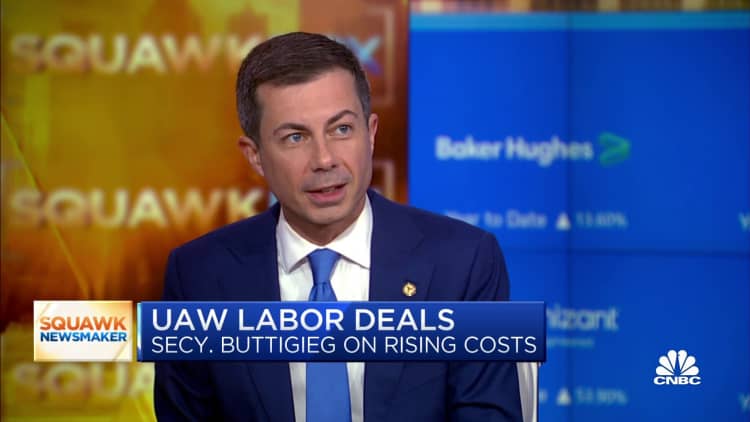
DETROIT – United Auto Workers President Shawn Fain wants to expand the union’s battle from the Detroit automakers to Tesla, Toyota Motor and other non-unionized automakers operating in the U.S.

The outspoken leader plans to use record contracts recently won after contentious negotiations and U.S. labor strikes with General Motors, Ford Motor and Chrysler-parent Stellantis to assist in the union’s embattled organizing efforts elsewhere.

“We’ve created the threat of a good example, and now we’re going to build on it,” Fain said Thursday night when discussing Stellantis’ tentative agreement. “We just went on strike like we’ve never been on strike before and won a historic contract as a result. Now we’re going to organize like we’ve never organized before.”

Doing so would greatly assist the union’s bargaining efforts and membership, which has been nearly halved from roughly 700,000 members in 2001 to 383,000 at the beginning of this year. UAW membership peaked at 1.5 million in 1979.

The UAW has previously failed to organize foreign-based automakers in the U.S. Most recently, plants with Volkswagen and Nissan Motor fell short of the support needed to unionize. The UAW has previously discussed organizing Tesla’s Fremont plant in California with little to no traction in those efforts.

It remains to be seen whether the recent efforts are gaining traction at any other automakers, but Fain has vowed to move beyond the “Big Three” — Ford, GM and Stellantis — and expand to the “Big Five or Big Six” by the time its 4½-year contracts with the Detroit automakers expire in April 2028.

The deals include 25% wage increases that would boost top pay to more than $40 an hour, reinstatement of cost-of-living adjustments, enhanced profit-sharing payments and other significant pay, healthcare and workplace benefits. The contracts must still be ratified.

The union has already received significant interest from non-union automakers in light of the tentative agreements, Fain said. And last month, he rejected comments from Ford Chair Bill Ford arguing the company and union should be working together to battle non-American automakers.

“Workers at Tesla, Toyota, Honda, and others are not the enemy — they’re the UAW members of the future,” Fain said.

Toyota

UAW President Shawn Fain marches with UAW members through downtown Detroit after a rally in support of United Auto Workers members as they strike the Big Three auto makers on September 15, 2023 in Detroit, Michigan.

Bill Pugliano | Getty Images

“Toyota isn’t giving out raises out of the goodness of their heart,” Fain said. “They could have just as easily raised wages a month ago or a year ago. They did it now because the company knows we’re coming for ’em.”

Toyota, which has 49,000 hourly and salaried U.S. workers, said the “decision to unionize is ultimately made by our team members.”

“By engaging in honest, two-way communication about what’s happening in the company, we aim to foster positive morale which ultimately leads to increased productivity,” the company said Friday in an emailed statement. “Working together has provided a history of stable employment and income for our team members.”

Tesla

The UAW has so far not been able to establish enough support to force an organizing vote at Tesla’s facilities, including its Fremont, California, plant where the union previously represented workers when it was a GM-Toyota joint venture.

Fain on Thursday told Bloomberg News he believes organizing Tesla and taking on CEO Elon Musk is “doable.”

“We can beat anybody,” Fain told Bloomberg. “It’s gonna come down to the people that work for him deciding if they want their fair share… or if they want him to fly himself to outer space at their expense.”

Still, Musk has historically clashed with union proponents.

As some workers sought to form a union at the company’s Fremont factory in in 2017 and 2018, Tesla was paying a consultancy named MWW PR to monitor employees in a Facebook group and on social media more broadly, as CNBC previously reported.

Elon Musk, CEO of Tesla and owner of X, arrives for the Inaugural AI Insight Forum in Russell Building on Capitol Hill, on Wednesday, September 13, 2023.

Tom Williams | Cq-roll Call, Inc. | Getty Images

Tesla also terminated the employment of a union activist named Richard Ortiz in 2017. And in 2018, Musk said in a tweet, “Nothing stopping Tesla team at our car plant from voting union. Could do so tmrw if they wanted. But why pay union dues & give up stock options for nothing?”

The tweet violated federal labor laws, the National Labor Relations Board later found.

An administrative court ordered Tesla to reinstate Ortiz and to have Musk delete his tweet, which it concluded had threatened workers’ compensation. Tesla appealed the ruling, and Musk’s offending post remains on the social media platform which Musk now owns, has rebranded as X and runs as CTO and executive chairman.

In February, a different group of organizers filed a complaint with the NLRB claiming that Tesla had fired more than 30 employees at its Buffalo facility in retaliation for a union push there by Tesla Workers United. Tesla called the workers’ allegations false, saying 4% of its Autopilot data labeling team in Buffalo had been terminated due to performance issues.

The Equal Employment Opportunity Commission, the federal agency responsible for enforcing civil rights laws against workplace discrimination, sued Tesla in September, alleging widespread racist harassment of Black workers, and retaliation against those who spoke out.

And in late October, just over 100 of Tesla’s service employees in Sweden, members of the industrial labor group IF Metall, walked off the job for a short strike. Hundreds of mechanics and technicians at non-Tesla shops also agreed not to repair any of the EV makers’ cars in solidarity. However, Tesla has so far refused to negotiate with IF Metall.

Tesla did not immediately respond to a request for comment.

Ozempic effect has hurt a weight loss stock that’s still a top pick

0
Ozempic effect has hurt a weight loss stock that’s still a top pick

What Is The Difference Between Accounting Software and ERP?

0
What Is The Difference Between Accounting Software and ERP?

What Is The Difference Between Accounting Software and ERP?

The fact that there is a wide variety of accounting software available in the market makes it difficult for entrepreneurs to differentiate between software that supports accounting operations and Enterprise Resource Planning (ERP). Additionally, the confusion among business owners and company executives becomes profound when they realise that there are third-party modules capable of performing accounting functions that are not necessarily ERP software.

As such, there is a distinct difference between ERP and accounting software and here is some insight on how to separate the two.

Sales Management and Order Processing

Accounting Software – Sales Management and Order Processing options are some of the missing provisions for those who depend on accounting software.

ERP – Part of the core provisions for ERPs includes Sales Management and Order Processing. ERP sales order management incorporates such as promotional pricing, management of complex orders, kitting and inventory allocation apart from attending to customer orders and shipping requirements.

Lead Management

Accounting Software – It is impossible to manage leads using accounting software because this solution initiates interactions with existing customers only or those who make purchases through a purchase invoice or sales invoice.

ERP – The ability to track leads is made possible with ERPs because the system establishes contact with individuals even before they become customers. ERPs have a dedicated CRM module that allows users to identify campaigns that generate leads, write and track emails as well as access up-to-date lead contacts for effective management.

Manufacturing Management

Accounting Software – Acquiring necessary software for management of production processes is a critical requirement for those who operate production factories. This is a function that accounting software does not constitute. As such, the absence of manufacturing management capabilities in accounting software poses limitations to efficiently controlling operations.

ERP – Monitoring the floor space in a factory will help workers gather details regarding machine breakdowns, customer orders, deliveries, stock levels, availability of resources, changes in requisitions among other things. ERP software gives you visibility to all factory operations making it a resourceful manufacturing management tool.

If you would like to learn more about how to differentiate between accounting software and ERP, contact us today! We can also guide you in ensuring your business invests in the right business software that will support your business operations and goals.

  • erp buyers guide

    Build up your knowledge of ERP functionality, emerging technology and industry insights with the ERP Buyers’ Guide. Save time and effort by getting things right the first time with trusted ERP advice.

    Read Now

  • SAP Business One is an affordable Enterprise Resource Planning (ERP) software designed for small to midsize businesses. As a business management solution, SAP B1 streamlines business processes, provides real-time information, and help boost overall business performance. The solution covers finance, sales, customer relationship, purchasing, procurement, inventory and manufacturing in one centralised system, enabling accurate and precise information retrieval that assist in reporting, forecasting and analysis.

    sap business one modules

    SAP B1 Modules:

    • Accounting
    • Sales
    • Warehouse & Production
    • Purchasing & Procurement
    • Inventory & Distribution
    • Reporting & Admin

    Read More on SAP Business One

  • sap business one
  • free trial sap business one

How business leaders can take control of their company’s spending habits

0
How business leaders can take control of their company’s spending habits

Financial decisions can’t be taken lightly by businesses of all sizes. Every dollar spent is a dollar that could be invested elsewhere, making every spending choice a moment with both opportunity and risk attached.

Whether it’s a decision to upgrade software, invest in staff development, or launch a new marketing campaign, each expenditure has the potential to move the company forward. However, there’s a flip side. Poor spending choices can lead to cash flow problems or even business failure.

One of the most effective ways to balance the opportunity and risk in each spending decision is the use of automated solutions for expense reports and invoice approvals. By implementing safeguards, the process becomes both efficient and directs employees to make better spending choices. This way, company policies are adhered to, budgets are kept in check, and the risk of bad spending is mitigated before it becomes a problem.

Harnessing the power of automation

Real-time or near-real-time visibility into expenses can provide a clear picture of financial health, helping business leaders make more informed and timely decisions. With a comprehensive view of what is already spent, what’s pending, and what’s planned, business leaders can adjust strategies in response to market conditions and seize new opportunities without endangering cash flow.

To make the most out of every spending choice, businesses need a clear understanding of their financial landscape. By automating expense reports and invoice approvals, businesses can:

  • Spend with confidence: with intelligent safeguards and clear guidelines, businesses can ensure that every expenditure aligns with policies to protect budgets.
  • Trust forecasts: real-time insights into expenses means businesses can trust financial forecasts, knowing that they are based on accurate and up-to-date data.
  • Seize opportunities: with a clear view of financial health, businesses can quickly jump on new opportunities without fear of overextending.

The hidden costs of spending

While major expenditures often get the most attention, it’s crucial not to overlook the smaller, recurring costs. For instance, employee expenses can quickly add up and, if not managed effectively, can become a significant drain on resources. By consolidating all spending data in one place, business leaders can achieve a holistic view of their finances, ensuring nothing slips through the cracks. This helps in controlling costs, as well as in planning and forecasting, laying a stable foundation for future growth.

To effectively manage company spend, there are some practical steps business leaders need to consider:

1. Consolidate company spend data: gathering all spending data in one centralised location makes it easier to manage and make sense of the financial landscape. This single repository should be easily accessible and display detailed, collated data from various sources. 

2. Stick to budgets: timely and accurate attribution of costs against a budget is crucial for its effectiveness. Capturing expenses in real-time provides an accurate picture of available budget at any given moment. 

3. Optimise invoice processes: regular audits of vendor payment processes can reveal weaknesses and opportunities for cost savings. For example, it will show not just how much is being paid out, but also the time and resources spent collecting and analysing that information. 

4. Analyse spend data for insights: regularly scrutinise spending data can uncover hidden opportunities or trends. The ability to view this data from different angles is vital, as different departments within any business will have varying needs and perspectives.

By implementing these steps, businesses can create certainty in uncertain times. Employees’ spending choices can be guided by intelligent controls to stop bad spending before it happens and ensure tax and regulatory requirements are automatically taken care of. This way, businesses can spend with confidence, trust forecasts, and harness new opportunities without worrying if cash is being spread too thin.

Choices about where and how to spend a company’s money are filled with both opportunities and risks. The key to managing these effectively lies in automating financial processes, setting intelligent controls, and empowering spending decisions with accurate, near-real-time data. Automated travel, expense, and invoice management solutions offer businesses of all sizes a robust, integrated approach to manage every spending moment, turning those moments into a better future for the company.

With the right tools and strategies in place, business leaders can bring control to each spending moment. Every financial decision made—whether it’s an investment in new technology, a marketing campaign, or employee development—can then become a stepping stone to long-term business success and sustainability.

Keep up to date with our stories on LinkedInTwitterFacebook and Instagram.

Wealth Building Insights from Latest Federal Reserve Study

0
Wealth Building Insights from Latest Federal Reserve Study

The Federal Reserve’s newest Survey of Consumer Finances provides at least a couple of big, actionable, wealth building insights.

Ironically, much (most?) of the news coverage of the survey misses or ignores these insights. So, I want to talk about them here.

Wealth Building Insight #1: A College Degree

A first big insight from the survey: A college degree makes a huge difference to both your and my income and our net worth. I want to quote an actual statement from the survey:

…families in which the reference person had a college degree had twice the median income of those with some college but over three times the median net worth

The reference person by the way is the person in a family who the researchers guess is the primary breadwinner. And a college degree, according to the survey documentation, refers both to a two-year associate’s degree or a four-year bachelor’s degree.

But the big point here:  Obtaining and then selling higher-level skills into the labor market? A gamechanger in terms of both income and wealth building. (I know we all guessed a college degree probably made a difference… but a doubling of income and a tripling a wealth? Wow.)

Wealth Building Insight #2: Small Business Ownership

A second big insight from the survey: Small business ownership on average doubles your net worth—and that’s before counting the value of the business. Again, I want to quote an actual statement from the survey:

The mean net worth of families without a business was about $570,000 in 2022, while the mean net worth—excluding the value of businesses—of families that owned a nonemployer business was nearly $1.1 million.

Note that word “nonemployer” means a business without employees other than the owner. And most businesses are “nonemployer” firms.

But businesses with employees? Those families enjoy even higher mean net worths. Families owning a business employing from two to five employees? They average a net worth of $1.6 million before considering the business. Families owning a business employing more than five employees? They average a net worth of $4.1 million again before considering the business.

Again, I’m not surprised that entrepreneurs enjoy better balance sheets. But I am impressed with the size of difference.

Closing Comments

Two quick comments to close: First, I don’t think it has to matter much where you got your degree. An online degree works fine, for example. (Our small CPA firm has regularly paid for employees to get accounting degrees from online Western Governors University and those students have become good team members. Someone with some college credits can maybe finish their baccalaureate accounting degree in a year for $6,000 to $8,000.)

Second, I think you get a compounding effect if you combine a college degree with small business ownership. In other words, if a college degree triples wealth and a small business doubles wealth? I think someone who both gets a degree and establishes a small business ends up with six times the wealth. (Three times two equals six.). That’s a hunch. I admit it. But people should get synergies from a combination.

Additional Resources

The short summary I’m quoting from for this blog post appears here: 2023 Survey of Consumer Finances.

The actual Survey of Consumer Finances includes a bunch of publications and resources. You can get a list of those here: full list

We’ve talked before here at the blog about how to view college degrees as investments and how to maximize your return: What Lifetime Earnings Data Say About College Majors and Graduate Degrees.

Finally, we’ve also talked here at the blog before about the idea that we all (you, me, your kids, my kids and so on) ought to focus more on our human capital. If the latest Federal Reserve research makes you think the same thing, you might find this earlier blog post interesting: Human Capitalists in the Twenty-First Century

Benefits of Engaging A Competent ERP Implementation Partner

0
Benefits of Engaging A Competent ERP Implementation Partner

Benefits of Engaging A Competent ERP Implementation Partner

Acquiring the right ERP software does not guarantee that it will enhance the operations of your organisation. The reason is that after identifying the appropriate ERP solution to support your business operations, you need to team up with the right ERP implementation partner for the software to deliver desirable results. To help you understand the importance this, take a look at these top 3 benefits of collaborating with the right ERP Implementation partner:

Access To Agile Methodology In Software Development

As you adopt ERP software, you already have an understanding of the issues that the software will address within your enterprise. However, the needs of your organisation are subject to change over time and the ERP software you adopt should respond accordingly to such changes. Therefore, engaging the right ERP implementation partner will encourage modification of the ERP software as well as the implementation process to best meet your unique business needs.

As a result, the ERP software you use for your business operations will respond to new demands effectively due to enhanced flexibility.

Partners Bring A Wealth of Knowledge Regarding Your Industry

When you engage an ERP implementation partner with an understanding of the industry you operate in they become an immense resource for your business. The reason is that they can offer recommendations on the features that your ERP software should have and provide professional guidance on how to use the solution effectively.

Additionally, a partner with insight into your industry operations keeps track of changes affecting the sector as a whole, to identify the necessary adjustments your software needs to match new requirements. Consequently, your ERP software remains up-to-date, which is an added advantage.

The long-term viability of your solution is essential. For maximum return on investment, you need a technology solution that will grow with you. Therefore, your solutions implementation partner must also have a sound understanding of the vendor’s long-term development and future support for the technology you’re investing in.

Access to Expert Experience & Services

Hiring a competent and reliable ERP implementation partner can give your business access to the services of experts with experience in handling enterprises using similar ERP solutions and those that are the same size as your company. Also, specialised knowledge and a demonstrated track record of success are part of the advantages you will reap as a result of engaging the right ERP implementation partner.

If you need more information on the benefits of hiring the right ERP implementation partner, contact us today!

  • erp buyers guide

    Build up your knowledge of ERP functionality, emerging technology and industry insights with the ERP Buyers’ Guide. Save time and effort by getting things right the first time with trusted ERP advice.

    Read Now

  • SAP Business One is an affordable Enterprise Resource Planning (ERP) software designed for small to midsize businesses. As a business management solution, SAP B1 streamlines business processes, provides real-time information, and help boost overall business performance. The solution covers finance, sales, customer relationship, purchasing, procurement, inventory and manufacturing in one centralised system, enabling accurate and precise information retrieval that assist in reporting, forecasting and analysis.

    sap business one modules

    SAP B1 Modules:

    • Accounting
    • Sales
    • Warehouse & Production
    • Purchasing & Procurement
    • Inventory & Distribution
    • Reporting & Admin

    Read More on SAP Business One

  • sap business one
  • free trial sap business one

Improving Your Supply Chain Management with ERP Systems

0
Improving Your Supply Chain Management with ERP Systems

Improving Your Supply Chain Management with ERP Systems

Supply chain management can be very challenging with so many intricacies across markets. Configuring your ERP to help your processes may not be what you’d want to add to the workload. However, a rigid system can significantly burden your labour and disrupt coordination and consistency. Here are a few pointers to account for in your supply chain system when deploying your ERP solution.

Adjusting for Compliance

Not all markets have the same rules and regulations. Each territory may have specific reporting, operations, and financial guidelines to abide by. Accounting for them in your ERP system helps to streamline your logistics and administrative processes. One instance would be to have your input parameters customised to add data fields required by audit in specific regions. They may need proof that you followed their quality control guidelines. Instead of searching for this information in scattered applications, you may have a custom report generated for that purpose.

Centralising Supply Chain Data

When you are dealing with a supply chain system, a centralised database is critical to monitoring your services. You can monitor your system globally and in real-time. Tracking buffer stock, expiration dates and sales trend can help you quickly adjust productivity. As employees in the field are inputting transaction records, you’ll remain aware of the potential for waste and prevent it.

Forecasting

Future demands dictate your supply chain, so you evidently factor in supply chain analysis in your forecast. The more you account for your supply chain history in your ERP predictive calculations, the better its results. Your ERP system refines its results with market metrics injected into its calculations. Some of those metrics can include sales trends, distribution timeline, and raw material cost. They can help plan your supply chain to cater to your future target market.

Conclusion

An ERP is a robust tool that can serve your supply chain well. Using it at its optimal capacity can make a massive difference in your processes. For this to happen, your ERP functionality must align with your supply chain workflow. Discuss with a ERP software provider about ways to improve your supply chain management.

  • erp buyers guide

    Build up your knowledge of ERP functionality, emerging technology and industry insights with the ERP Buyers’ Guide. Save time and effort by getting things right the first time with trusted ERP advice.

    Read Now

  • SAP Business One is an affordable Enterprise Resource Planning (ERP) software designed for small to midsize businesses. As a business management solution, SAP B1 streamlines business processes, provides real-time information, and help boost overall business performance. The solution covers finance, sales, customer relationship, purchasing, procurement, inventory and manufacturing in one centralised system, enabling accurate and precise information retrieval that assist in reporting, forecasting and analysis.

    sap business one modules

    SAP B1 Modules:

    • Accounting
    • Sales
    • Warehouse & Production
    • Purchasing & Procurement
    • Inventory & Distribution
    • Reporting & Admin

    Read More on SAP Business One

  • sap business one
  • free trial sap business one